
I remember riding in a then-new VA we had as a press loaner a few years ago.
In a good way, it felt like a totally "normal" car–definitely usable as a daily.


Photography courtesy Subaru
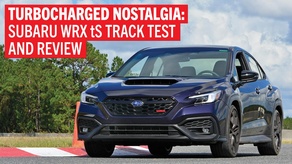
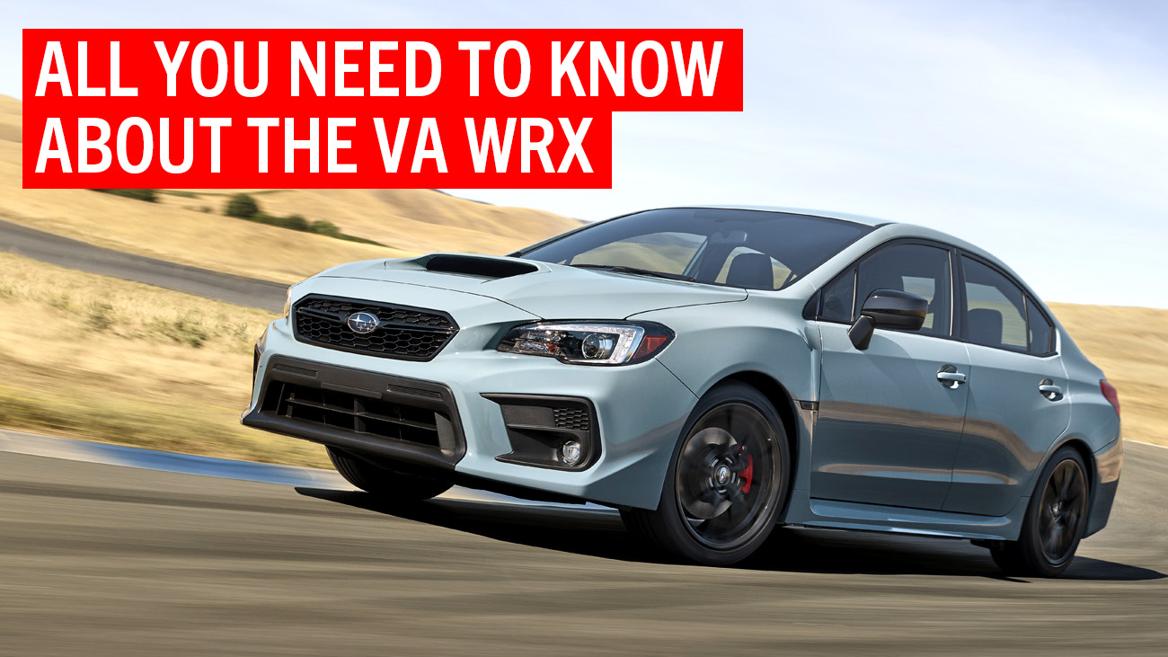
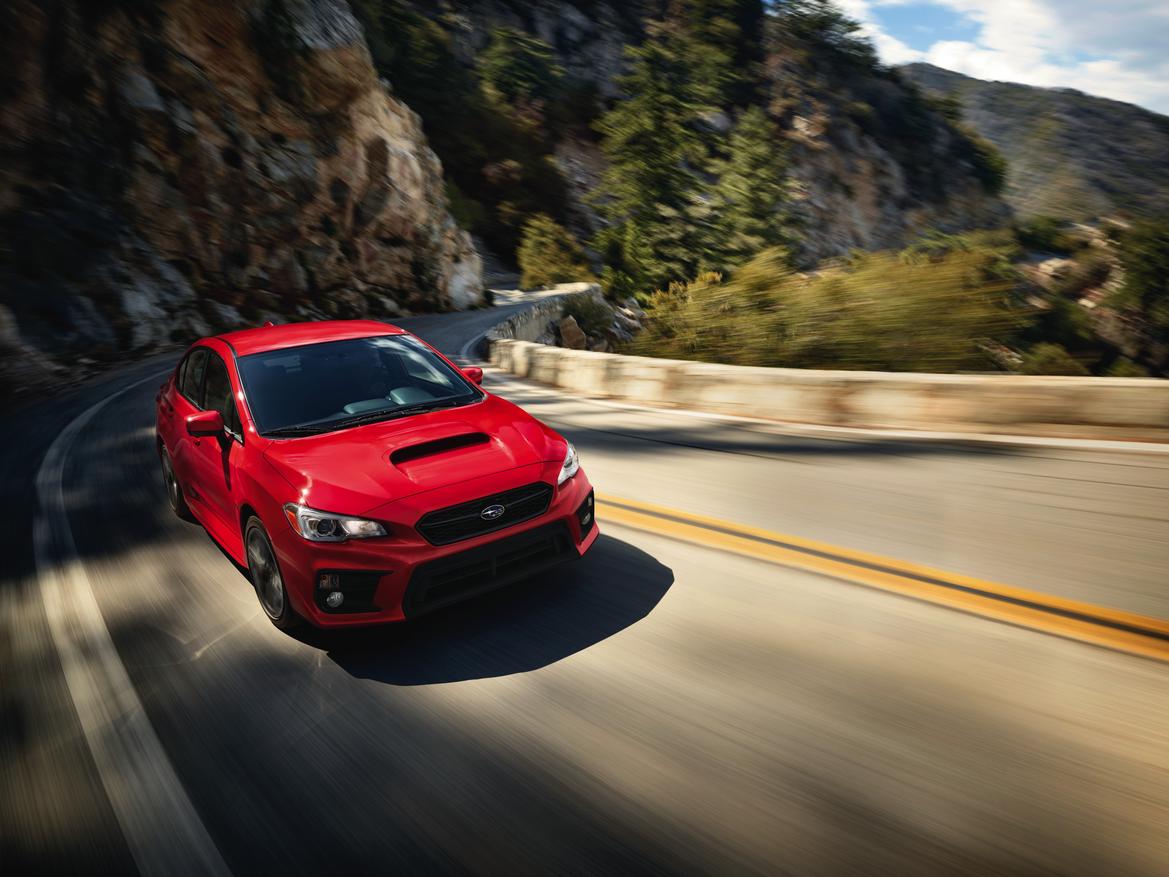
A possible sleeper in today’s performance car market, an icon boasting rally pedigree, all-wheel drive and turbo performance? Look at a 2015-’21 Subaru WRX–and since we’re counting our pennies, we’re talking about the standard VA-chassis WRX, not the STI.
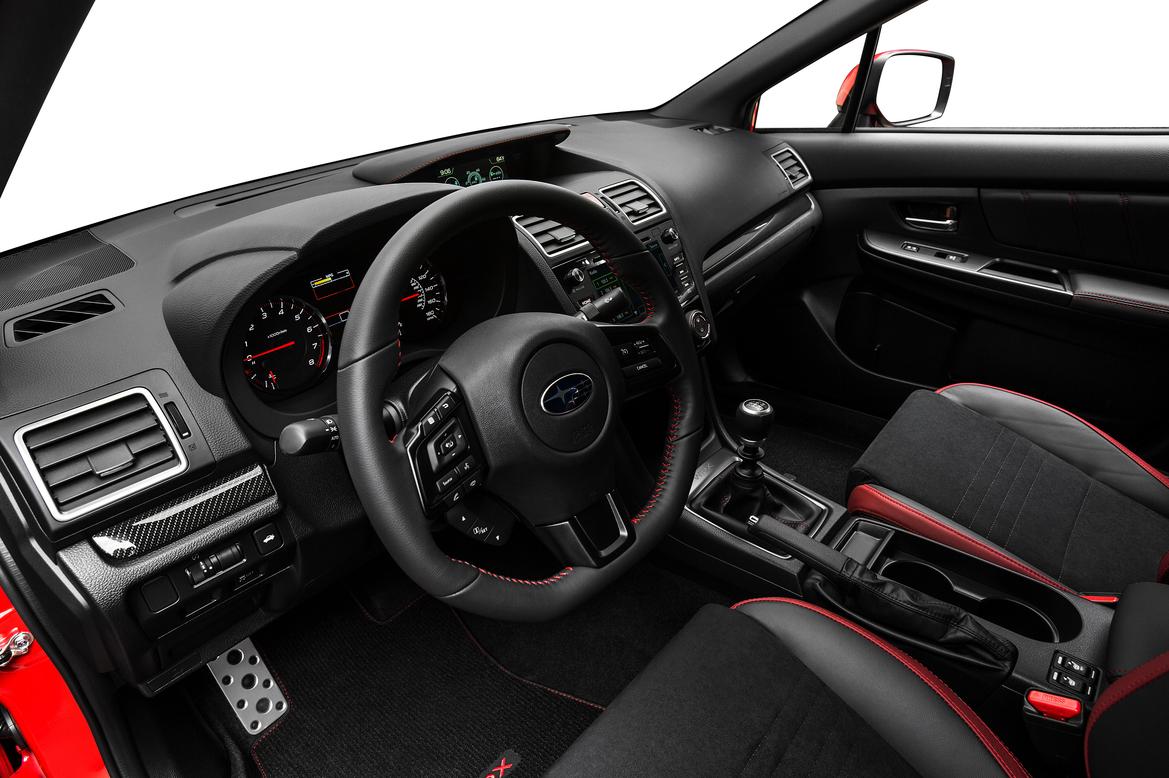
“Compared to the older WRX, it’s a lot more modern,” notes Dan Hurwitz. He should know. He owns Mach V Motorsports, the longtime Subaru tuning house. “Sure, it’s gained a little bit of weight and the wheelbase is longer, but it is roomy. The trunk is big. The back seat is usable for adults. It’s a great daily.”
This standard WRX, he continues, can be just as fun as the faster STI variant–but at a lower price point. “We’ve seen used ones for as low as $9000,” Dan says. “The STI generally is going to stay in the mid $20s or higher. That’s a whole different category of used car shopping.”
Another benefit of the WRX over the STI? Better gas mileage and less expensive consumables.
Our first question: Which year?
The VA-chassis WRX saw very few changes during the model run, with the biggest being a cosmetic facelift for 2018. Another key change was to the Performance Package, only available on Premium models, in 2020. It swapped out red-painted sliding calipers with better-feeling, fixed Brembo calipers–four pistons up front and two pistons out back.
When inspecting the cars, keep an eye out for oil leaks, which Dan notes are common. “There aren’t gaskets on the engine–it’s all RTVed together,” he says. “Lower-mileage and newer cars will be less prone to leaks, but all will eventually leak. Resealing the engine is expensive.”
The WRX’s FA20 engine also features direct injection, which means eventual carbon deposits on the intake valves. Dan recommends walnut-blasting those intake valves every 40,000 to 50,000 miles for maximum performance.
Lastly, nuisance codes can develop related to the timing chain and cam/crank position. “These can be tricky to diagnose,” he warns.
Do you want to consider the CVT over the six-speed manual? “The CVT is not terrible,” Dan admits. “It’s got paddle shifting and simulated gears. Of course, from a performance standpoint, you get the manual.”
We’re starting with the brakes. “They work okay,” Dan says of the standard WRX brakes, “but feel mushy and are hard to modulate at the limit.”
Fortunately, bolt-on aftermarket solutions exist, including the fixed-caliper Brembos found on the STI. Check the Mach V’s FastWRX site for upgrade kits. If sticking with the stock brakes, at least fit high-performance brake fluid as well as appropriate pads.
Other low-hanging fruit include wheels and tires. The WRX came with either 17x8- or 18x8.5-inch wheels, weighing 23 to nearly 27 pounds apiece. Go with something like Mach V’s Wicked Awesome Wheel, which measures 18x9.5 inches, and that weight drops to 19 pounds. That’s a savings of 16 to 32 pounds overall on a 3270-pound car.
Those stock wheels came wrapped with 235/45R17 or 245/40R18 tires, but you can certainly go wider. Dan says a 265/35R18 is a go-to.
After that, an upsized intercooler is a good mod: better airflow along with cooling intake temperatures. Want to know just how much that new intercooler helps? The car’s FA20 engine has temperature sensors located both before and after the intercooler. Your scan tool is your friend here.
How about upgrading the stock shifter, too? The cable-actuated shifter found in the standard WRX doesn’t offer quite the directness of the rod-actuated setup found in the STI, but the Kartboy catalog offers a short-shifter.
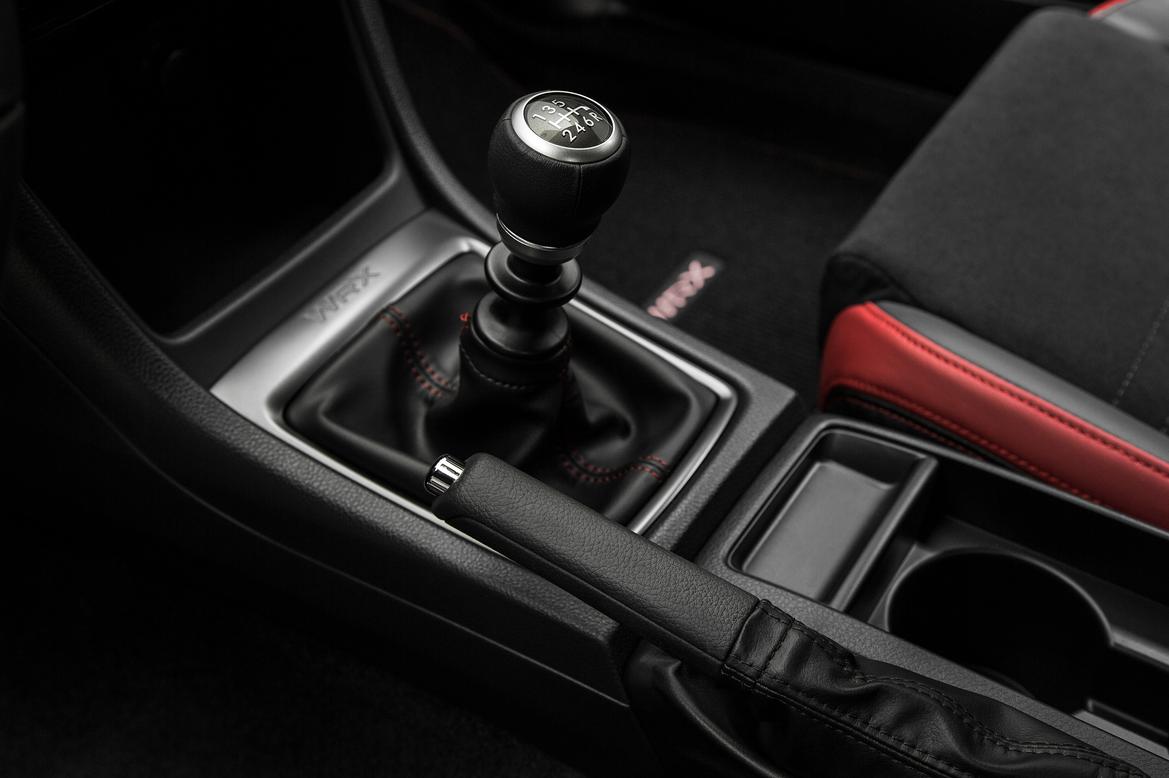
Stock shifter.
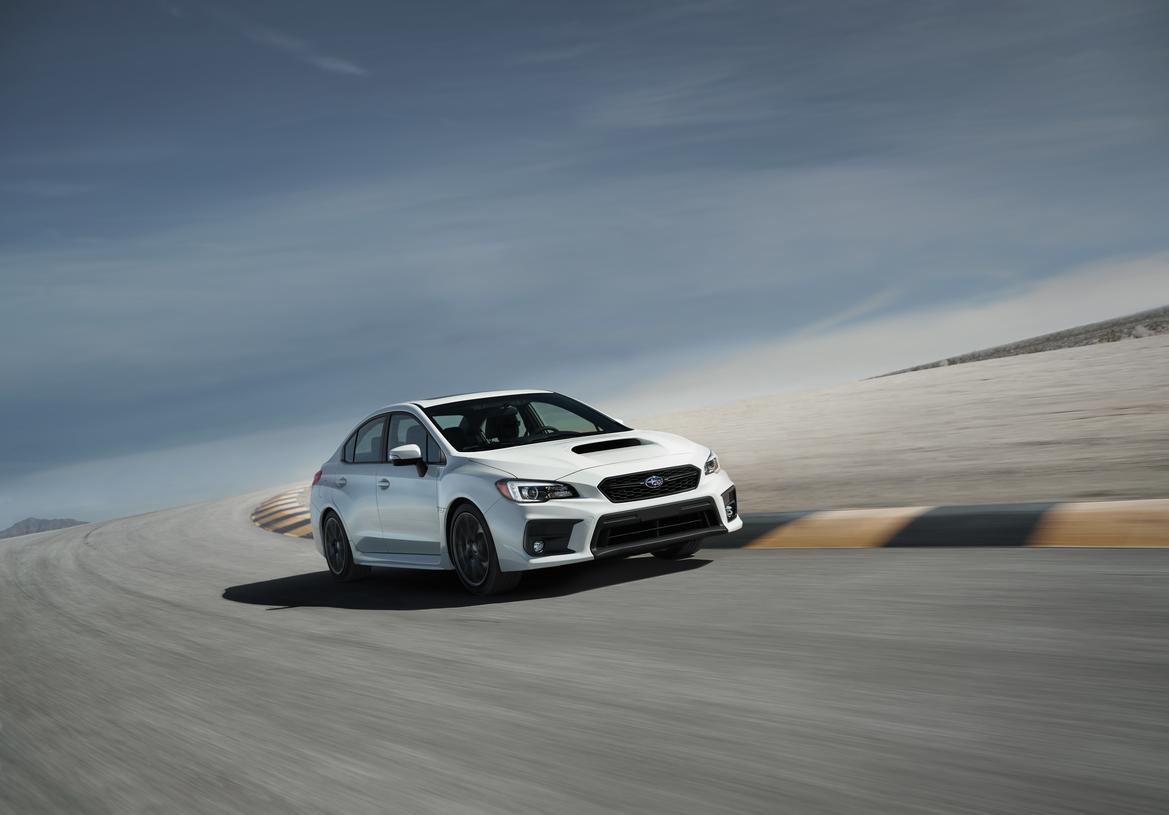
The stock suspension performs well, Dan says, as it balances performance with comfort. “Even a stock WRX can be driven pretty fast on a road course or autocross,” he notes. We can always do better, of course, while those stock shocks might well be 10 years old by now.
A coil-over kit is a popular option, and Dan particularly likes the ones from Racecomp Engineering. “Coil-overs are popular because the springs and dampers are matched, and in most cases, threaded shock bodies mean you can set ride height independently at each corner, which allows for corner balancing,” Dan says. Plus, most coil-over kits feature adjustable valving.
Those coil-overs will also allow for easy ride height adjustments, but Dan warns not to go too far: “You can lower the car more than an inch, but it will require more adjustable hardware to mitigate bumpsteer and get the rear camber back into spec.”
A coil-over kit with front camber plates will also allow for more negative camber. Stock camber is limited to -1.2°, but camber plates can take that to -4°.
You could also simply run lowering springs. Dan notes than they’re inexpensive, quiet and maintenance-free. “The stock struts/shocks were not designed with lowering in mind, so the combination is usually not optimized as well as a set of coil-overs would be,” he adds. “You could get performance shocks to match, but then the prices go up a lot and you start getting into coil-over shopping territory.”
Beefier anti-roll bars also are a good upgrade, especially in the rear. They’ll help reduce understeer and even instill some oversteer in the chassis.
Dan says that it’s okay to stick with the OEM bushings. “The stock rubber bits on the car aren’t that mushy,” he explains, “so unless it’s an all-out track build, I would leave the polyurethane suspension bushings until such time as the stock bushings tear and need to be replaced.”
Lastly, to stiffen the chassis a bit, Dan suggests front and rear strut tower bars plus undercarriage bracing. “[They] don’t have much of a downside other than the cost,” he says, “so we like those as an affordable and effective improvement to chassis rigidity. Cusco makes a popular line of products to fit the car. They are good quality and fit well.”
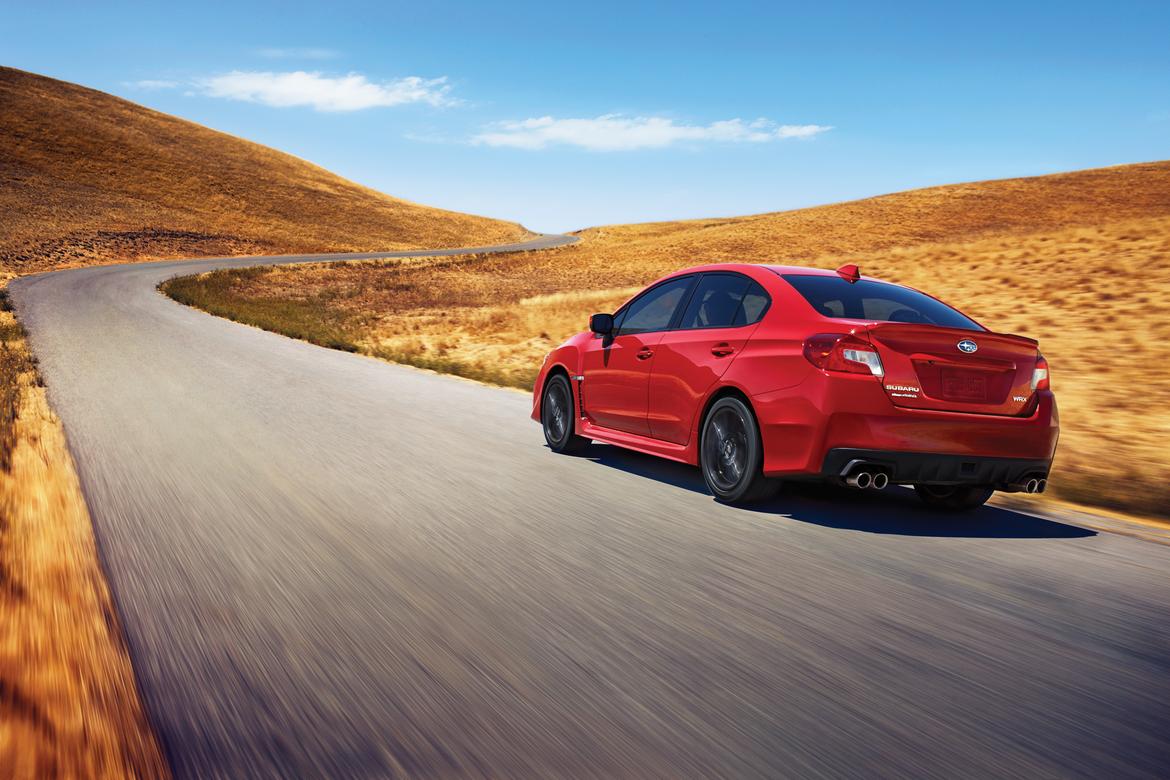
Power is next, but we must understand our limits with the FA20: Too much torque, and we grenade the engine. “It has little, teeny, spindly connecting rods,” Dan says. “Make too much torque, and you’ll bend them.” Nevertheless, he adds, there is some room to play with–roughly 50 to 100 lb.-ft. over stock.
He recommends starting with a Cobb Tuning Stage 1+ kit. It includes an intake system and Cobb Accessport. The Accessport opens up the ECU for tuning and comes with pre-installed tunes. Cobb claims an 18% maximum power gain with this kit, roughly 48 horses over the stock 268. Dan says that his dyno work backs up that claim.
Next, Dan says to replace the turbo’s intake piping for improved airflow efficiency.
“You’ll notice that I didn’t mention anything about the turbo itself,” he says. “The turbocharger on this car is not easy to upgrade,” he explains. Not many options exist, while the direct injection adds to the complexity. In almost all cases, he’d retain the stock turbo.
Swap out the exhaust to unleash that famed Subaru burble? Dan says it won’t increase power that much, although a titanium exhaust–which can be pricey–can shed some 25 pounds.
Running ethanol is an option, although the conversion requires special hardware and ECU tuning. Ethanol can gain 20 to 30 horsepower at the top end, though. “One benefit of ethanol fuel is that it’s very resistant to detonation,” Dan says, “so the power delivery will be smoother as the engine will be leaning on the knock sensor less, meaning fewer on-the-fly ignition timing adjustments.”
Eventually, though, the FA20 becomes the limiting factor–again, blame those connecting rods. Dan recommends not exceeding 350 lb.-ft of torque at the wheels. Beyond that, you should consider aftermarket connecting rods and pistons, which gets you into built engine territory–but that probably defeats the appeal of the standard VA-chassis WRX.

I remember riding in a then-new VA we had as a press loaner a few years ago.
In a good way, it felt like a totally "normal" car–definitely usable as a daily.

Walnut blasting the valves every 40k? Ooof...

I had one of these after I sold my STI. It was def a downgrade in performance but in upgrade in livability and drivability. Better MPGs, smoother driving dynamics, etc. I enjoyed it as a DD despite all the sacrifices you make buying a Subaru in terms of ergonomics, cheap plastics, and pleather lined things like the steering wheel that start flaking. You can never forget the squeaks and rattles from the factory, the throwout bearings that squeak like hell and fail early, and the steep power falloff at 5500rpm. Other than that, fantastic cars. I still borrow my brothers whenever I have a work road trip to save on gas and make parking easier in cities vs. a truck. With a intake, downpipe, and tune it makes like 350whp with the quietness of stock exhaust.

A couple of corrections/additions: The steering system on the WRX did not change to a hydraulic assist for the 2018 model year. It was changed to a newer design electric assist with a control unit that is internal to the EPS motor, rather than the external EPS control unit used on the 2015-17 model years. By contrast, all 2015-2021 WRX STi have hydraulic power steering.
The Performance Package was also available on the 2018-19 WRX too. The difference for those model years is that the brake calipers were not Brembo fixed-caliper type. Rather, the 2018-19 Performance Pack had red-painted versions of the standard sliding calipers with upgraded Jurid pads.

Stueck0514 said:Walnut blasting the valves every 40k? Ooof...
That's what most shops recommend for any DI vehicle.
I've only ever seen it done once, on a used engine (2.0 Ecoboost) getting readied for installation.

Widgetsltd said:A couple of corrections/additions: The steering system on the WRX did not change to a hydraulic assist for the 2018 model year. It was changed to a newer design electric assist with a control unit that is internal to the EPS motor, rather than the external EPS control unit used on the 2015-17 model years. By contrast, all 2015-2021 WRX STi have hydraulic power steering.
The Performance Package was also available on the 2018-19 WRX too. The difference for those model years is that the brake calipers were not Brembo fixed-caliper type. Rather, the 2018-19 Performance Pack had red-painted versions of the standard sliding calipers with upgraded Jurid pads.
Thanks! That's right. We have made those corrections to the piece. Thanks once again.
I had a 2015 WRX and it was a good car for me. I got a consistent 8 L/100km with it, no problems in the years I owned it. The first things I did was to swap the lower steering shaft with the STI one and install a shift stop. The stock WRX steering shaft has a rubber joint in it and the STI is solid, makes for much more precise feeling steering. The shift stop, combined with adjusting the factory reverse lockout one takes up a lot of the side to side wiggle in the shifter and gives it a much nicer feel. Together these made the driving experience much nicer. I also did all the bushing inserts I could find, but I can't say how much that really changed anything, but hey, it was cheap.
I did track it a couple times and it handled that quite well. I did run race pads and put a home brew brake duct setup on it using the fog light holes, C6 Z06 ducts hacked up to get past the tires and some hardware store duct riveted into the brake backing plates. I never had any issues with the brakes and if I was serious about tracking it I would have likely upgraded them. Suspension was stiff enough for track use and the stock handling was great. In the wet on Continental ECS I was seeing just over 1G in the corners. For hot weather I'd say upgraded cooling is going to be needed. I only ever upgraded the radiator, but sold it before I got around to installing an oil cooler.
Overall Subaru did a great job of making a fast street car that can handle some motorsports right out of the gate for an affordable price.
I've been driving a 2016 as my daily driver to this day so I have a lot of experience with it. Good MPG, did a 30 mile round trip to work daily 4/5 highway and was rather aggressive. I would get combined about 22mpg. Strick Highway I was able to get 26 to 30MPG doing no less then 70MPH. Car is great in the snow with out having an overly complicated 4WD system, I drive it through Chicago snow. No real issue I had to take it in for, its been solid fun to drive. Below are my only complaints with the car.
1) Rattle over some bumps in front suspension. Many other uses have this issue and after trying every thing to fix in on numerous cars Subaru declared this normal.
2) Breaks need an upgrade, they are OK but could be so much better with out going the Brembo route. Subaru should have out fitted better breaks for this level of car.
3) Paint is weak and chips easily.
4) Steering is not as responsive as I would like but this could just be physics with the layout, I came from an RX-8 which was outstanding.
5) My entrainment system has a button for CarPlay but they never finished before the 2016 was released. This on kills me.
6) Subaru needs to install a second FI in the manifold like Toyota and the Germans. The German DI cause terrible intake valve fouling so they when the dual FI injector route and Toyota build cars to drive a long time so they did the same. Subaru don't foul as quickly with their DI but they do foul. They need to correct this.
On the plus side:
1) Very practical to live with.
2) Good looking car, best of all the WRX IMHO.
3) Great performance and easy to get another 50 to 80 HP/Torque with a management flash.
4) Performance year round.
5) Due to the DI and duel scroll turbo the car build s power faster then a STI. Making it faster of the line and accelerating in stop and go traffic, less lag. Once the STI gets going it will develop more power
6) Usually we replace a car after 10 years but I plan to keep this one for at least the next couple of years, I enjoy it that much and am having no problems with it.
7) Love the fact that a BMW or Audi owners need to spend minimally twice as much on thier cars to be able to take me off the line and thier cars are in the shop every several months.
I own the VB WRX version. 23,000mi on and it’s fantastic. Even against the TT’s in GST.
kbabcock said:4) Steering is not as responsive as I would like but this could just be physics with the layout, I came from an RX-8 which was outstanding.
Swapping in the STi lower steering column makes a big difference. There's a rubber donut in the WRX column that the STI lacks. There's also various aftermarket solutions that seek to restrict the motion of the donut, but it's not much harder or more expensive to just swap the part out.
Displaying 1-10 of 16 commentsView all comments on the GRM forums
You'll need to log in to post.