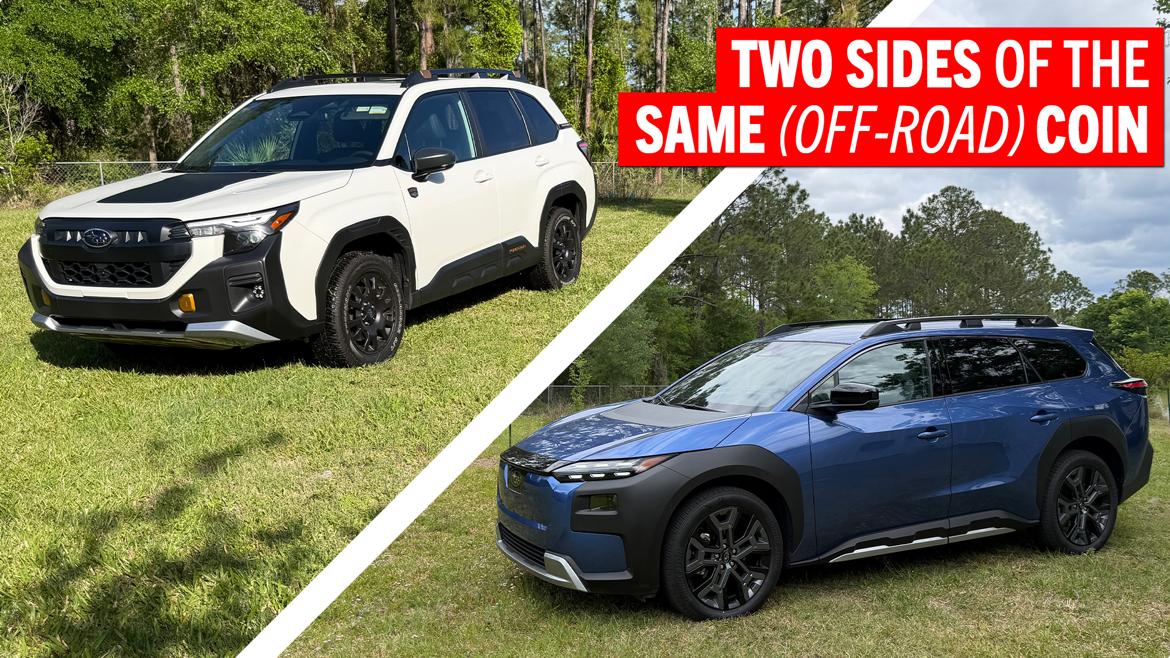
Similar but different. Our media fleet provider dropped off two different Subaru crossovers/wagons/utility thingies over the past couple weeks, and while my first inclination was to compare each to their nearest market competitors, I kind of realized that they were basically their own nearest market competitors.
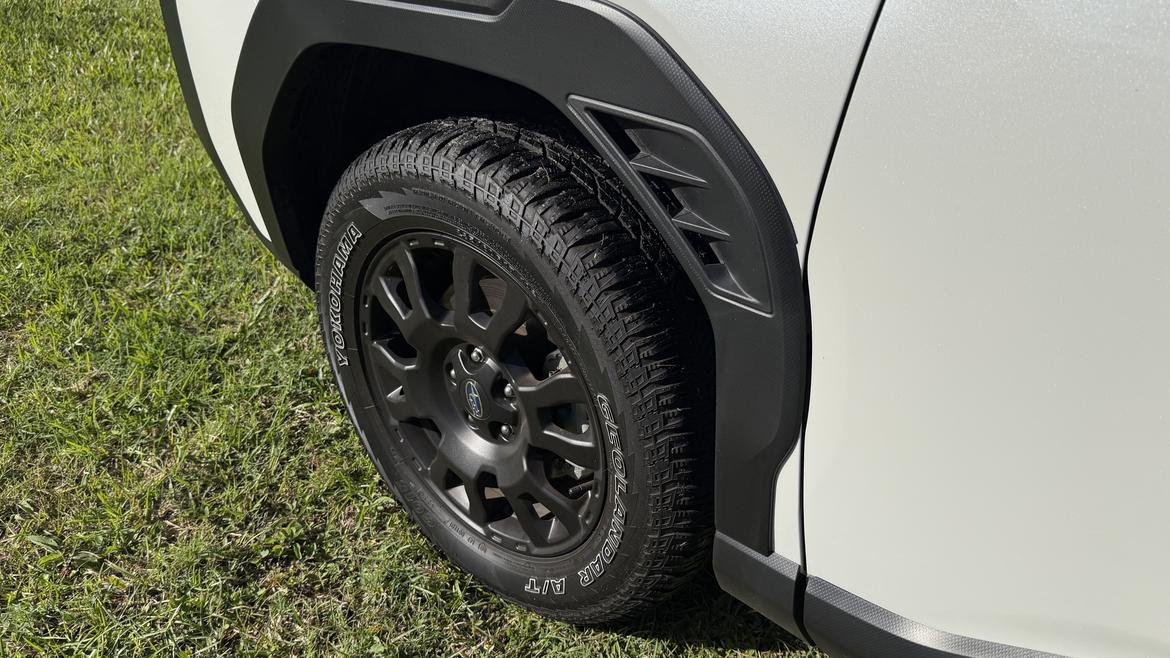
In the traditional corner, we have the Subaru Forester, offered for our consideration in Wilderness trim spec, which nets it some additional off-road cred through more aggressive tires (Yokohama Geolandars), a more aggressive final drive (4.11:1 versus 3.70:1), revised bodywork that allows steeper approach and departure angles, and some suspension tweaks to increase ride height and off-roadiness.
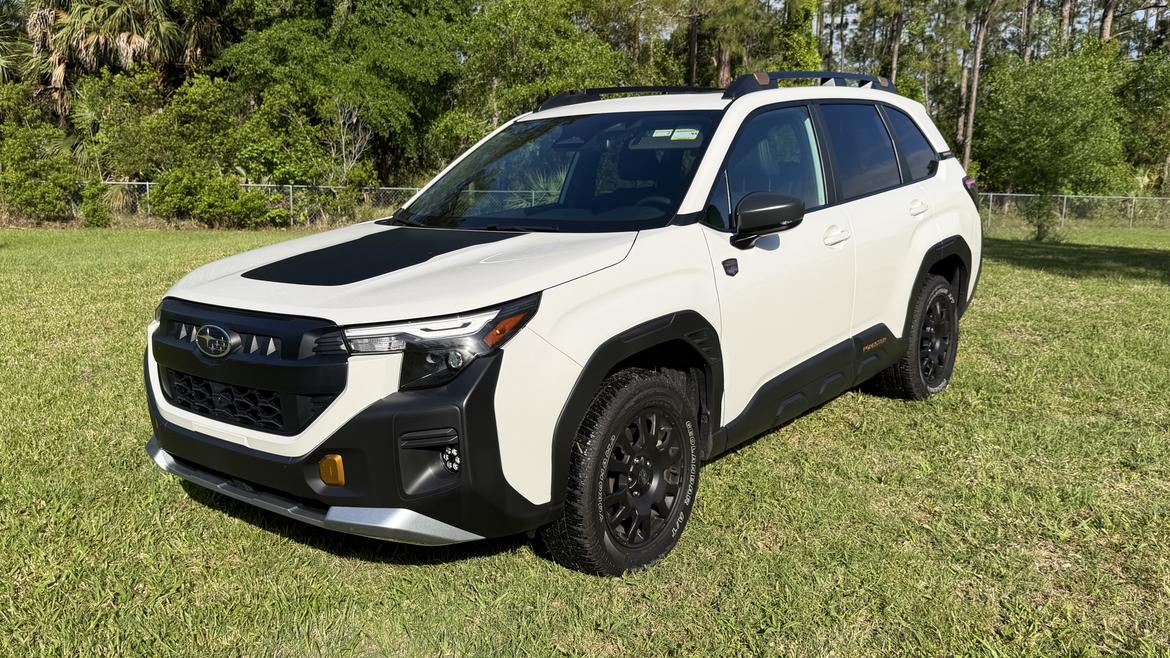
It’s basically the factory version of the mildly tweaked Foresters you’d see in Bremerton or Stowe. Think of it as the off-road equivalent of the BRZ tS. Subaru takes some of the favorite upgrades of its hardcore user base and wraps them into a factory package with a warranty that you can finance all in one payment from the dealer.
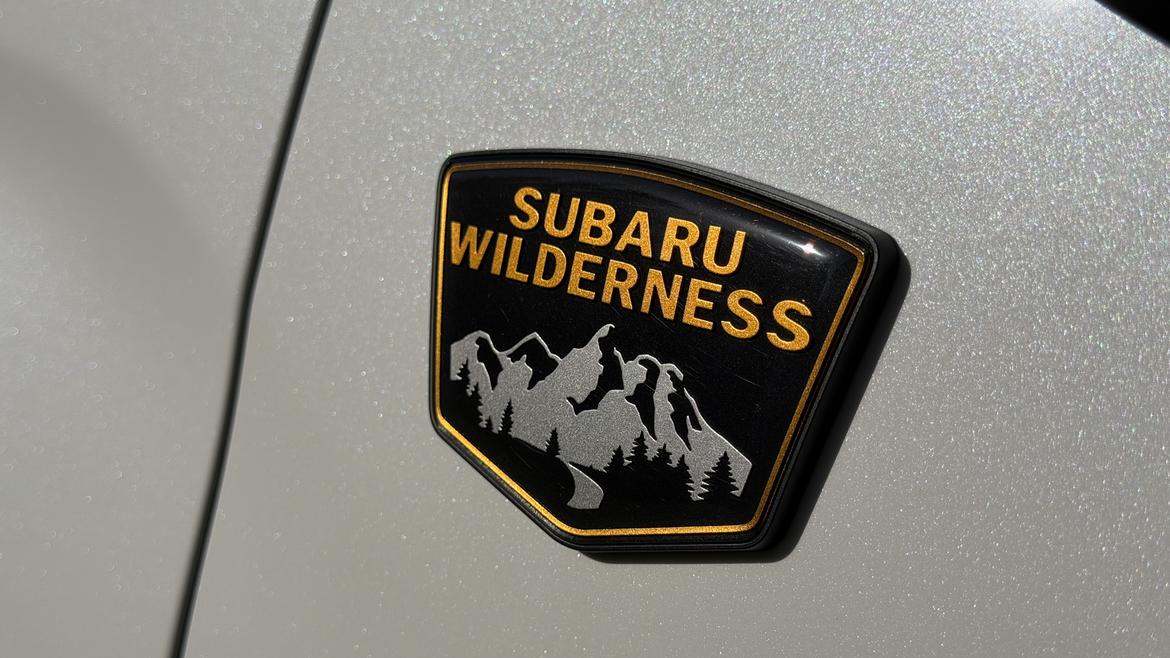
In the other corner, we have the challenger, the Subaru Trailseeker. It’s also a crossover/wagon/ute thingy with a slightly aggressive stance and all-wheel drive, although the more road-focused tires don’t make the trail busting promises that the Forester’s do.
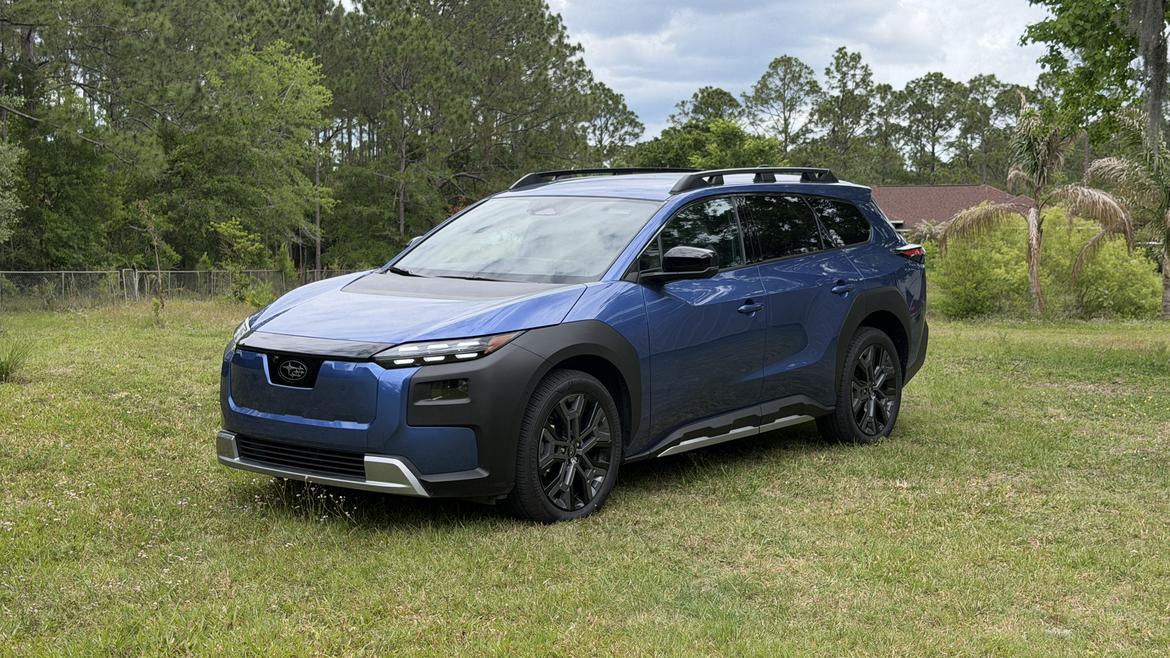
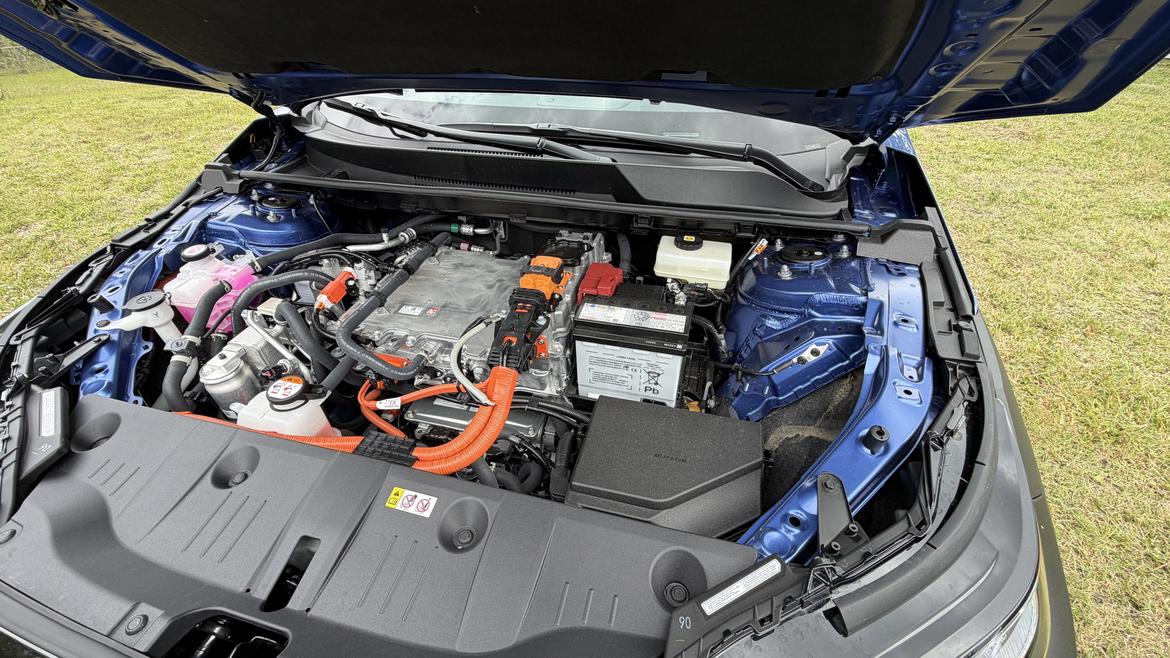
The Trailseeker’s hidden killer app, though, is its drivetrain, which is a pair of 224-horsepower AC electric motors powering each end of the car via a 74.7 kWh battery pack.
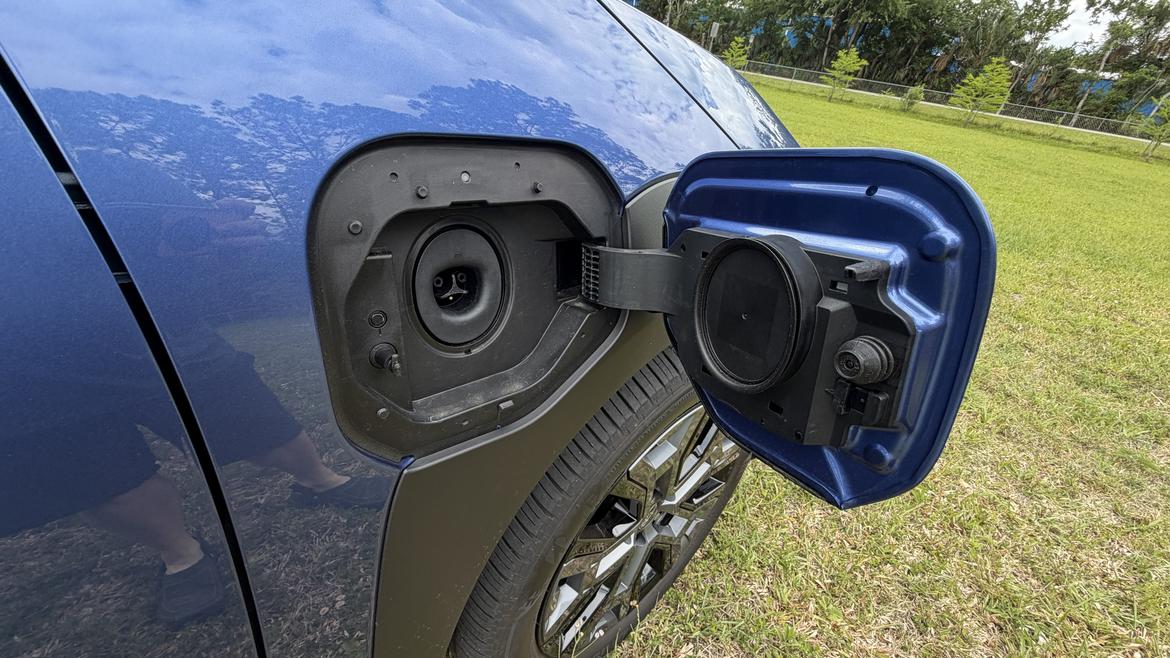
Initially I was tempted to compare the Trailseeker to my own Hyundai Ioniq 5, as they’re both midsize, electric, SUV-like vehicles, but the Subaru seems to defy that comparison. In fact, from the outside, you’d almost be excused for not even realizing that the Trailseeker is an EV at all: No “EV” badging shows up anywhere on the body, and the only giveaway is the door covering the NACS charge port on the left-front fender.
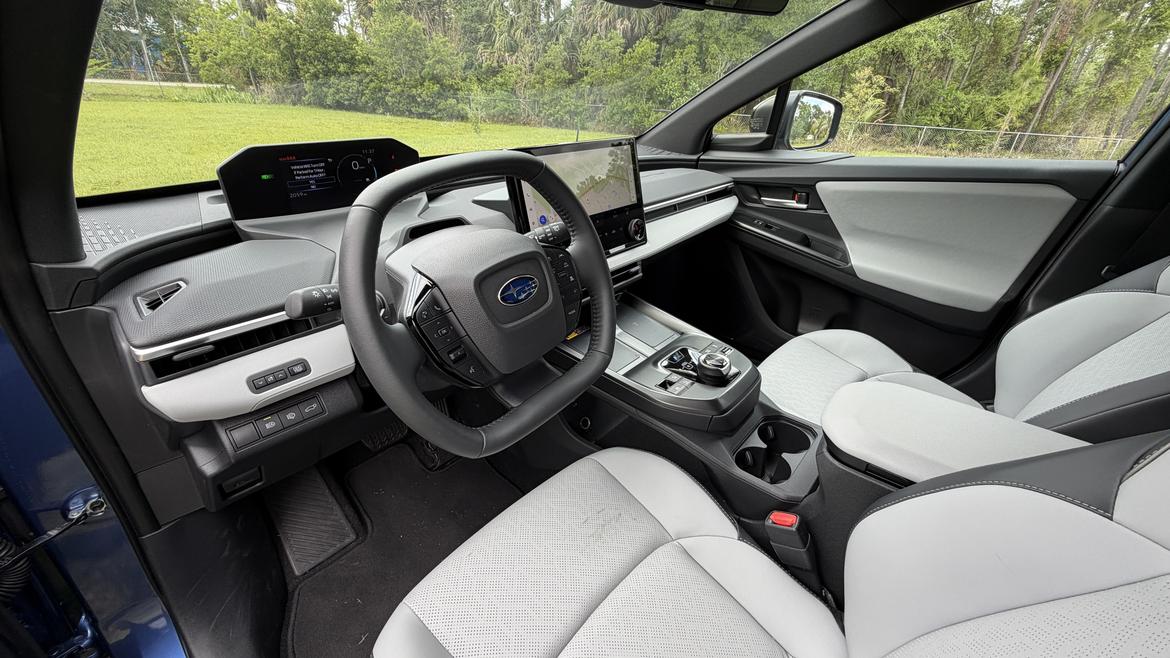
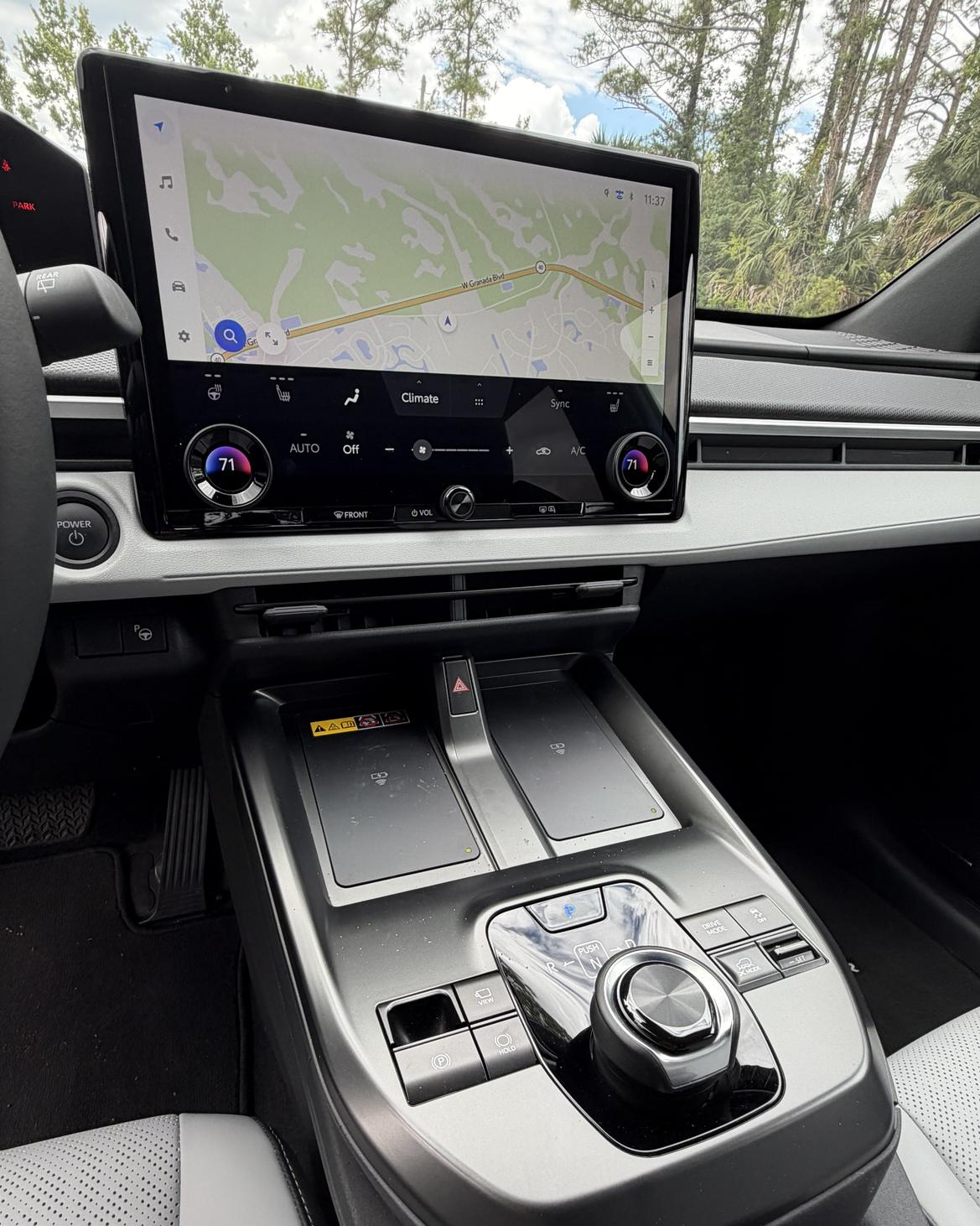
Inside, the Trailseeker is a bit more EV-like, with a squared-off steering wheel, a deep dash with a small driver display, and a large center touch screen. But it’s not the high-tech spaceship interior of so many modern EVs, which seem to want to remind you at all times that you’re driving an EV. Instead, the Trailseeker wants to remind you at all times that you’re driving a Subaru, and the propulsion is merely a tertiary detail.
That propulsion is hardly tertiary when you stomp the throttle, though. In fact, when all 375 horsepower–the total available at one time in Sport mode–is unleashed, the Trailseeker suddenly transforms into what could be the fastest-accelerating production Subaru ever. It would absolutely give the spiciest STI-badged factory special a run for its money.
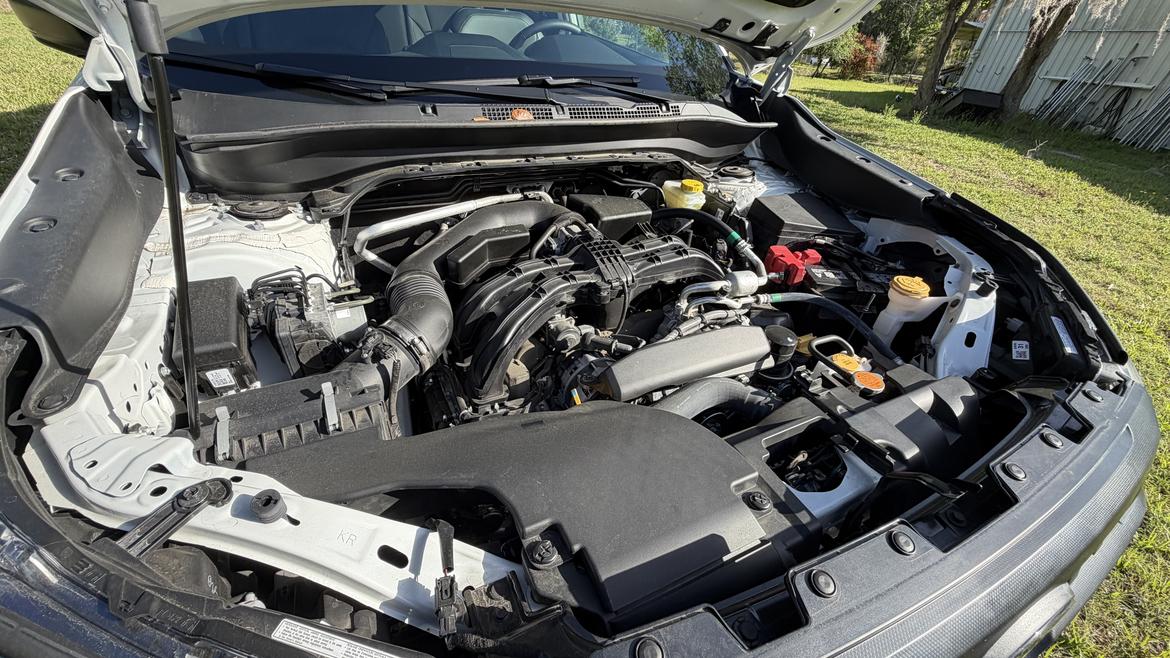
On the other hand, mash the gas in the 180-horsepower Forester Wilderness, and even the 4.11 final drive can’t save you from the minivan in your rearview. The engine gets louder and honkier, but little else happens as the CVT shifts its way up through its fake gears and you approach the end of the on-ramp still not at highway speed.
Sadly, the trade-off for this lack of acceleration isn’t great economy, either, as the knobby tires and tall stance combine to create a lot of resistance. We saw barely 25 mpg in combined driving, and that was mostly lightfooting it trying to get the Forester to produce a decent economy number.
The Trailseeker carries a smaller battery than its market competition, but that’s good enough for an indicated range of between 250 and 280 miles when topped off, depending on your driving habits.
We actually saw surprisingly good efficiency around town with the Trailseeker–around 4.2 miles per kWh–which is slightly better than I see in my Ioniq 5. On the highway, however, my Hyundai hovers around 3 miles per kWh, while the Trailseeker drops into the high 2s. On balance, though, the Trailseeker seems to be about as efficient as its market mates, albeit with slightly less range due to the smaller battery.
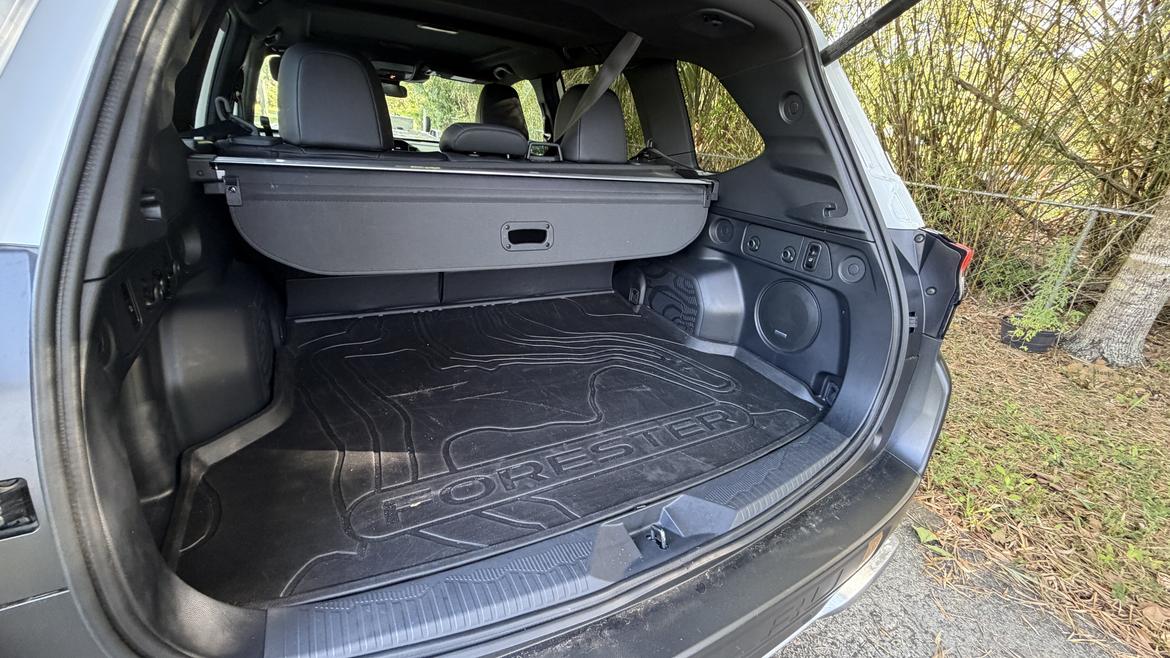
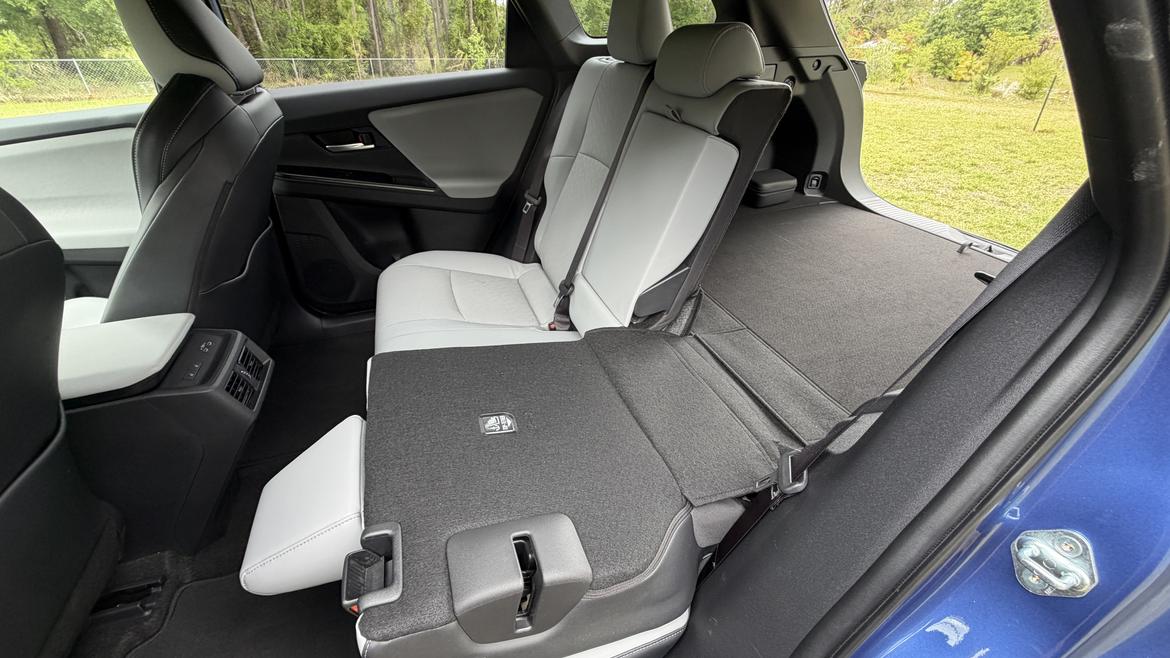
Inside both cars, there’s good room for front- and rear-seat occupants and cargo. The Forester feels taller and squarer, but the Trailseeker feels longer and wider. Either car has plenty of space for two to camp or four to road trip comfortably, along with the requisite accoutrement to do so in a reasonable amount of modern luxury.
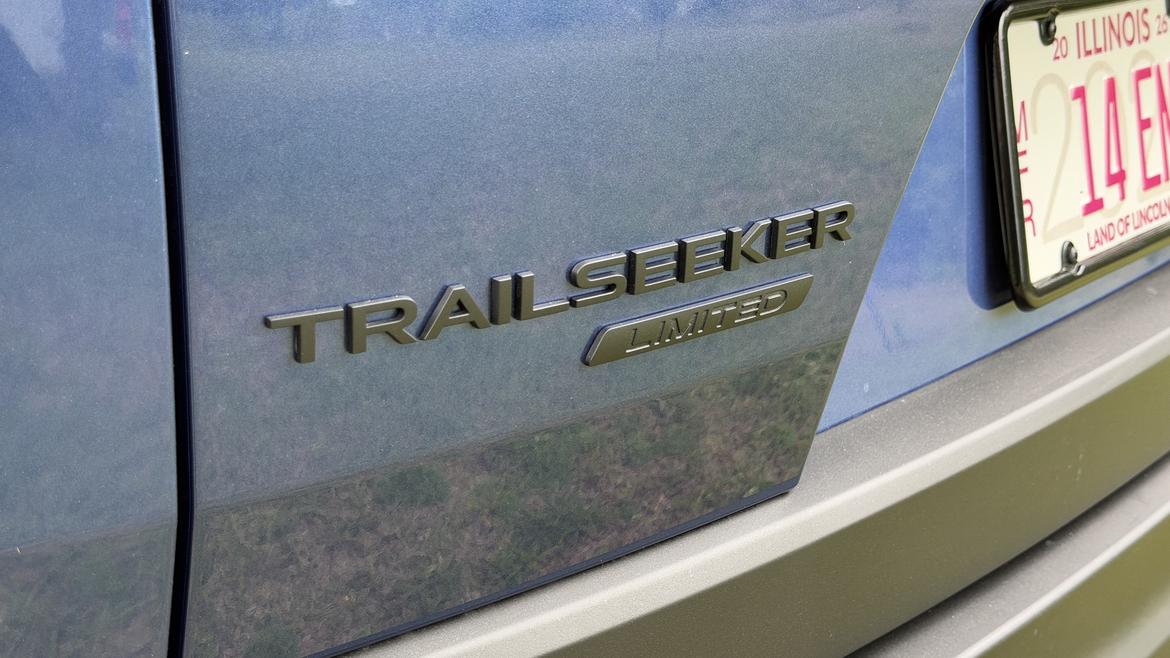
The Trailseeker that we tested was the midrange Limited trim, which has pretty much all the goodies you’d want and specs out at $45,840. The top-of-the-line Touring spec adds goodies like a panoramic roof and radiant leg heaters, but it also tacks $3K onto the bottom line.
On the gas side, our test Forester Wilderness stickered out at $42,621, which includes the only optional package, which for some reason was named “option package 33.” It tacked on $2200 for features like electronic dash display, the 11.6-inch infotainment screen, Harmon Kardon audio and a power rear hatch.
The Forester felt a bit more dated inside and a bit more plasticky. Of particular frustration was the infotainment system, which had a truly aggravating amount of lag to touch screen inputs, and to which I was never able to successfully connect Apple CarPlay.
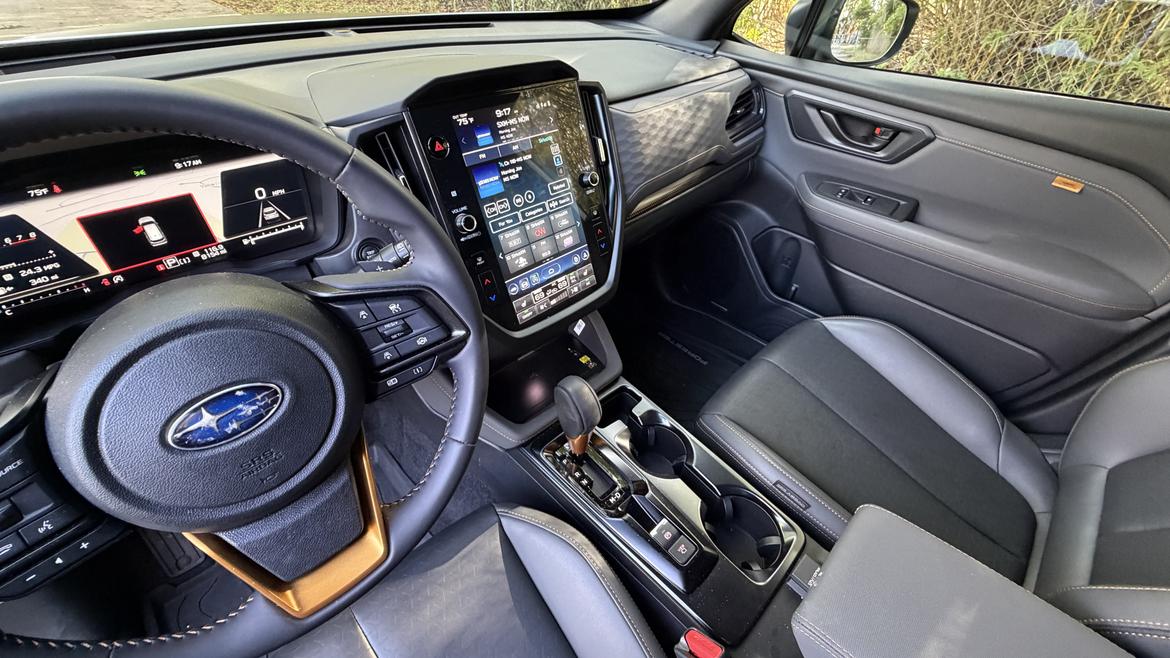
The touch screen lag seemed like a problem that would have been solved by an OTA update or something, but then I read a Car and Driver review where they complained about the same thing. So while it was nice knowing it wasn’t just a me problem, it was frustrating knowing it was a Subaru problem.
Seriously, it was aggravating enough that it would have had me in a dealer insisting something be done, because every time I wanted to do anything involving the touch screen (and that’s most things in the Forester), it felt like I was having a stroke.
So the Forester overall was not much of a surprise. It had the boxy, utilitarian feel of most modern Subarus, which I’m saying in a complimentary way. The power and the touch screen were letdowns, but the Forester was what Foresters have long been: competent and useful, although hardly exciting.
The Trailseeker, on the other hand, was intriguing mostly for how it pressed all the Subaru buttons very well without shouting about its EVness. It shares a platform with the Toyota bZ lineup, but the vibe is still very Subaru in manner and feel. The slightly high-tech dash layout feels modern yet not necessarily overly high-tech, and the touch screen actually works, unlike the dated, laggy UI in the Forester.
While I didn’t take it off-road–and the Trailseeker has a more road-centric set of OE rubber than the Forester–AWD EV torque vectoring is a solid weapon for trail busting, and the form factor of the Trailseeker certainly lends itself to the same kind of adventuring that Forester owners enjoy.
That seemingly conscious departure from modern EV practices resulted in a couple notable thumbs-down, though, particularly the regenerative braking. Even on the most aggressive setting, the regen braking is fairly mild compared to a Hyundai or Tesla or Mach-E, and no true one-pedal operation is available. It’s an electric Subaru that drives and feels very much like a gas Subaru, which may be a plus or a minus for potential buyers.
The only difference will be the fuel you use to get to your campsite. And while the ability to charge an EV at home is a convenience over a gas car, it’s harder to carry spare electrons with you to a campsite than it is to strap a 5-gallon gas jug to the (standard) roof rack.
Still, it seems Subaru has leaned into this Trailseeker being an alternative to other Subarus more than an alternative to other EVs.
Comments
The Trailseeker has been living with me for a few days.
Like JG said, it’s very quick. It’s also easy to get in/out of. Comfortable, supportive seats.
The steering wheel blocks some of the display panel, though.
Tom1200
UltimaDork
4/29/26 12:19 p.m.
For the way I use my Outback (I actually drive long stretches of gravel and dirt roads) the EV would be totally out.
The competent and useful sums up why I own a Subaru, with the emphasis on useful.
Ewww, are both of them using touch screen only climate control? Or does the Trailseeker have physical knobs?
JG Pasterjak
Tech Editor & Production Manager
4/29/26 12:41 p.m.
MadScientistMatt said:
Ewww, are both of them using touch screen only climate control? Or does the Trailseeker have physical knobs?
Both use touch screens, but the Trailseeker uses the Toyota system while the Forester uses Subaru's system. The Toyota one is exponentially better, easier to use, less laggy and more intuitive. Still not as good as buttons, but I'm starting to feel like asking for buttons is like yelling at clouds anymore.
I suppose the infotainment lag wouldn't be so bad if you didn't have to use it so frequently, but it sounds like you have to use it to adjust virtually everything, which really seems like a pretty significant issue.
With as many as I see on the road, are the owners all just dealing with it?
In reply to JG Pasterjak :
What JG said about the Trailseeker’s infotainment. It’s all touchscreen but it’s not the worst–better than Mazda’s new setup, for example.
Tom1200
UltimaDork
4/29/26 2:10 p.m.
When I rule the world (it's inevitable) I will find out who invented the word "infotainment" and have them banished to an island in the North Atlantic.
JG Pasterjak said:
Both use touch screens, but the Trailseeker uses the Toyota system while the Forester uses Subaru's system. The Toyota one is exponentially better, easier to use, less laggy and more intuitive. Still not as good as buttons, but I'm starting to feel like asking for buttons is like yelling at clouds anymore.
If I could afford a development mule, I would be very tempted to try reverse engineering the communication and making a button and dial climate control kit for newer vehicles.
However, right now a vehicle with moronic touch screen climate control is not a problem I can afford.
In reply to MadScientistMatt :
I'm sure there would be a market for that. I do love my buttons.
In reply to Tom1200 :
Send them out with the guy who invented the word "podcast."
Displaying 1-10 of 18 commentsView all comments on the GRM forums
You'll need to log in to post.