The Facts of Life
The Continental (formerly Koni) Challenge, an endurance series that lets two drivers share one car, is one of the most competitive road racing venues in the country. It also serves as a successful marketing platform for car manufacturers.
The Subaru Road Racing Team ran the Subaru Legacy 2.5GT spec.B in the series’ Street Tuner class last year. The Legacy proved to be a tough contender in the 40-car fields, running valiantly against the Chevy Cobalt SS, Acura TSX, Honda Civic Si, BMW 330 and other sporty compacts.
The team finished third in manufacturers points and second in drivers standings thanks to the efforts of co-pilots Andrew Aquilante and Kristian Skavnes. They also tied for first to earn the Team Performance Index award—Andrew won the Driver Performance Index for the class, beating out more than a hundred other drivers.
When Subaru stopped production of the Legacy 2.5GT spec.B, it was time to retire the race car. “Subaru of America desired to have a current model year campaign in 2010,” says Joe Aquilante, team owner and manager. When the Legacy went into retirement, Subaru decided to run its new Impreza WRX STI.
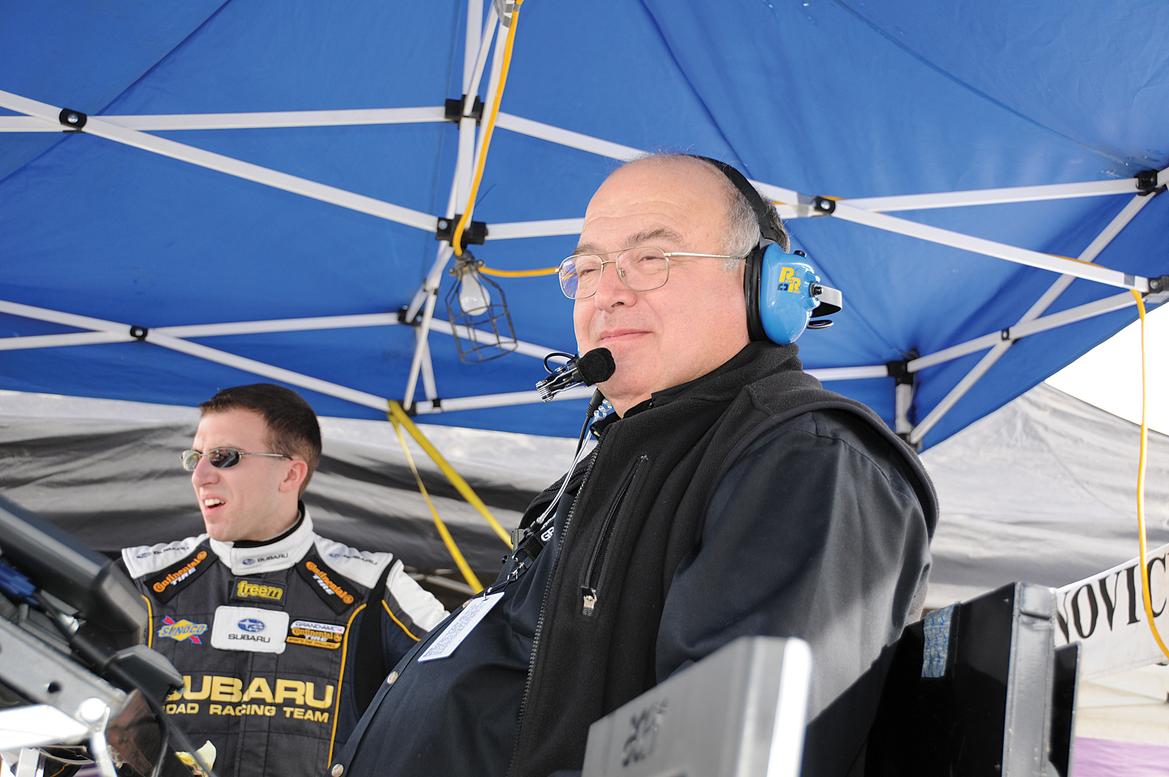
The Subaru Road Racing Team is managed by Joe Aquilante of Phoenix Performance, Inc. Photograph by Sahar Hassani
Todd Lawrence explains the manufacturer’s reasoning: “The WRX STI is the halo product in our performance portfolio, and it compliments our efforts in rally. Both rally and road racing are important parts of our racing strategy and allow us to test our engineering under extreme conditions and against a wide range of competitors.”
The STI would race with the big dogs—Mustangs, Camaros, BMWs, Porsches and Audis—in the Grand Sport class. While the team would face a tougher field, they would also have the opportunity to compete for overall honors. “In multi-class racing, there is a prestige in running in the faster class,” Andrew explains. The top-tier Grand Sport class tends to receive more media coverage—including that all-important TV airtime—than the slower Street Tuner division.
The marketing part of the plan wasn’t limited to on-track finishes. Subaru also wanted some young blood behind the wheel. Andrew and co-driver Bret Spaude are both 22 years old.
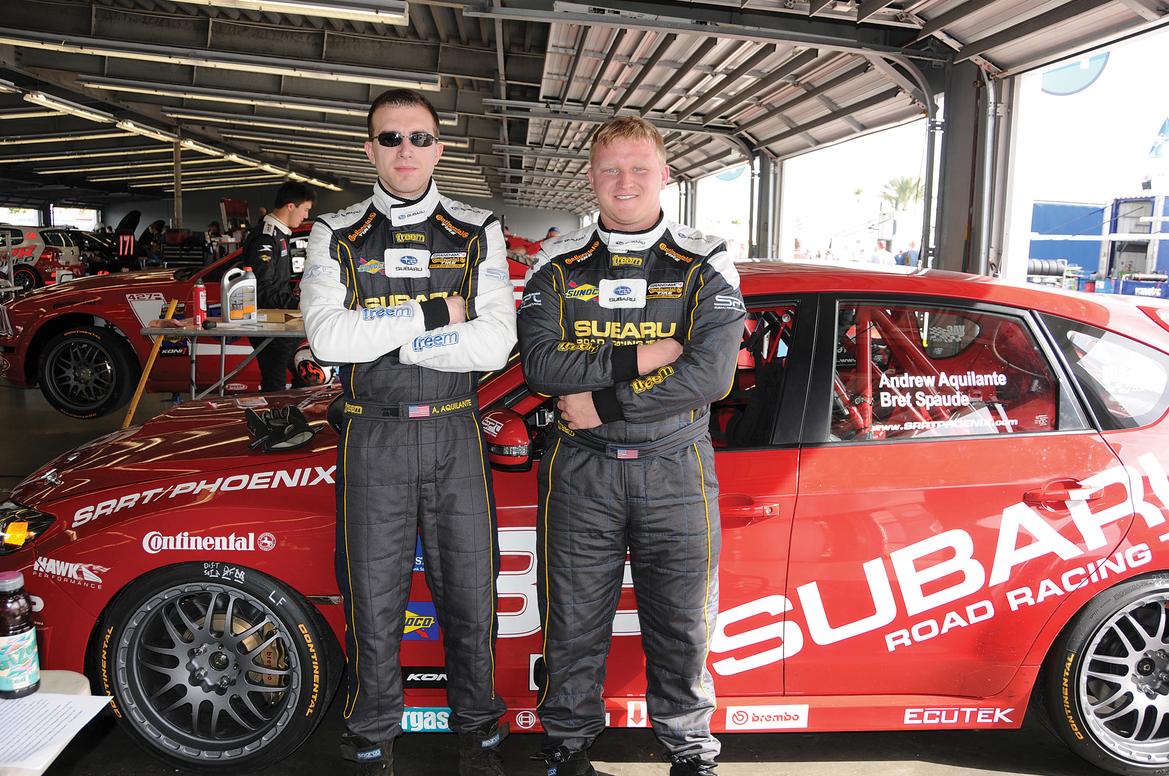
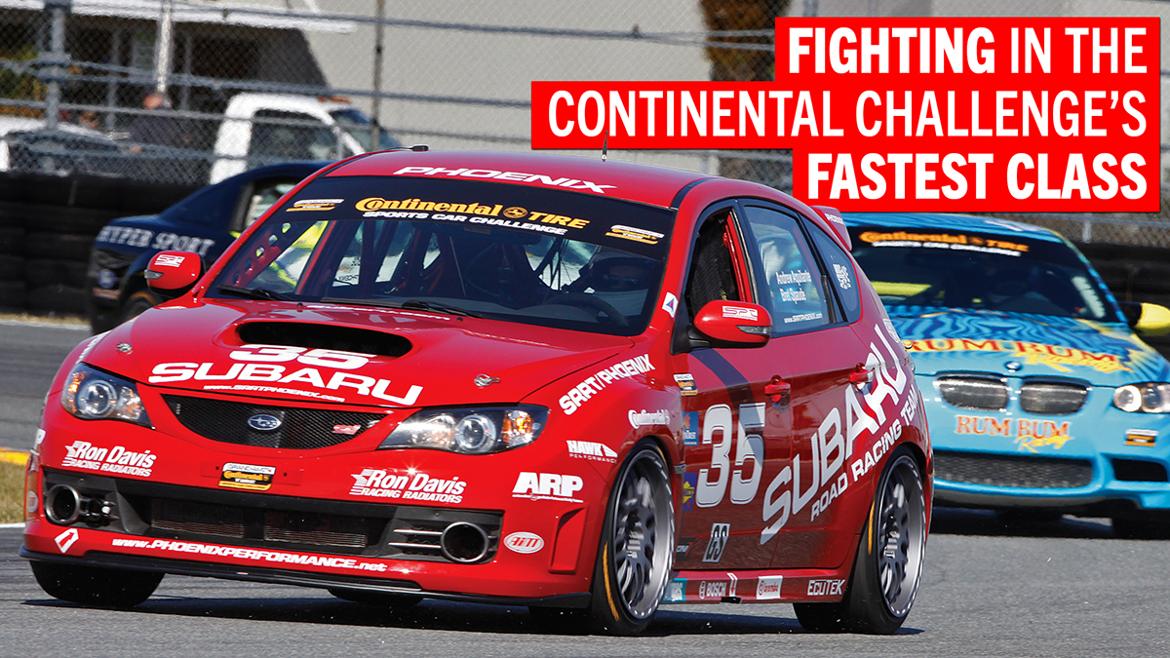
Andrew Aquilante and Bret Spaude are co-driving the Subaru, and they managed a 15th-place finish in the car’s debut at Daytona. Photograph by Sahar Hassani
“The Subaru crowd is generally a younger group,” Andrew explains. “They are typically in their early 20s and 30s and enjoy watching the STIs perform.”
Diff’rent Strokes
Each car model found in the Continental Tire Sports Car Challenge series is built to similar yet slightly different specifications. Grand-Am, the sanctioning body, allows varying degrees of modifications in an effort to equalize the field. While all cars follow the same basic level of preparation, the details can vary from model to model. Information on each car’s allowed modifications can be found in the Grand-Am rule book.
“The Subaru WRX STI is unique to other Grand Sport cars in the series,” Joe explains. After all, it’s the only car sporting a turbocharged, four-cylinder engine and all-wheel drive. “It’s not a V8,” he grins. Even so, at about 350 horsepower, the Subaru is some 50 ponies shy of the V8 cars. Their car must weigh at least 3100 pounds dry, making it a bit lighter than the V8 machines found in the class.
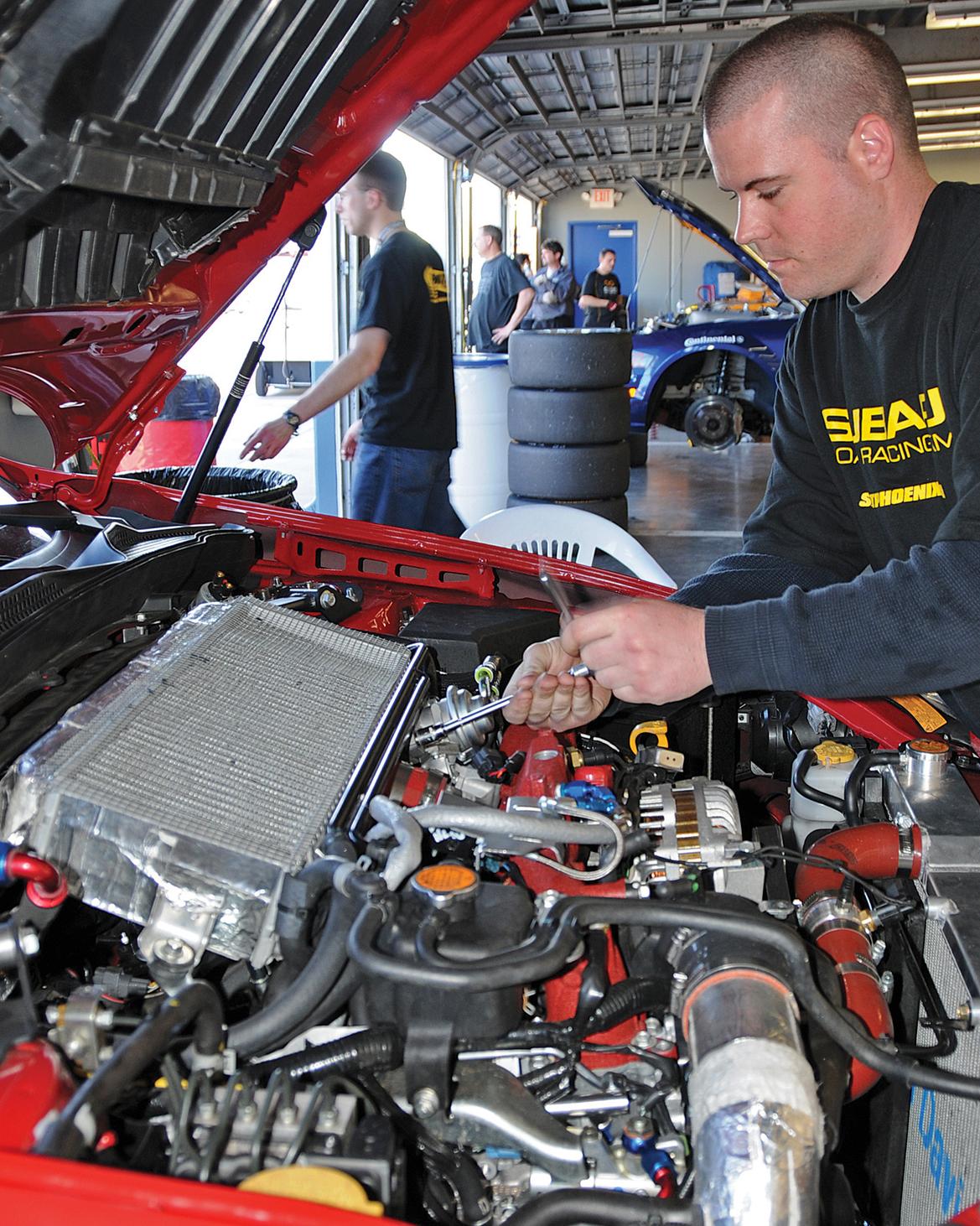
Because the STI’s turbocharged four-cylinder boxer engine is about 50 horsepower shy of its V8 competitors, the car is allowed to run a bit lighter than the rest of the field. Photograph by Sahar Hassani
“The major expenses in building the car are the roll cage fabrication, fuel cell and the other purchased components,” Joe reports. From start to finish, it takes about 90 days to build a WRX STI race car. The team currently has two STIs in the stable, but they’re only campaigning one at the moment.
The best and easiest way to build a STI for the Continental Challenge series is to start with a complete street car, the team explains, even though a lot of unnecessary parts will be tossed. The stock seats, carpeting, stereo system, panels and trim won’t be needed.
“We stripped down the street car, which was the hardest part of building the race car,” Andrew explains. “It took us about a week to strip everything off.” Major safety modifications followed, including the addition of a full roll cage, Sparco steering wheel, fire system, racing seat and window nets.
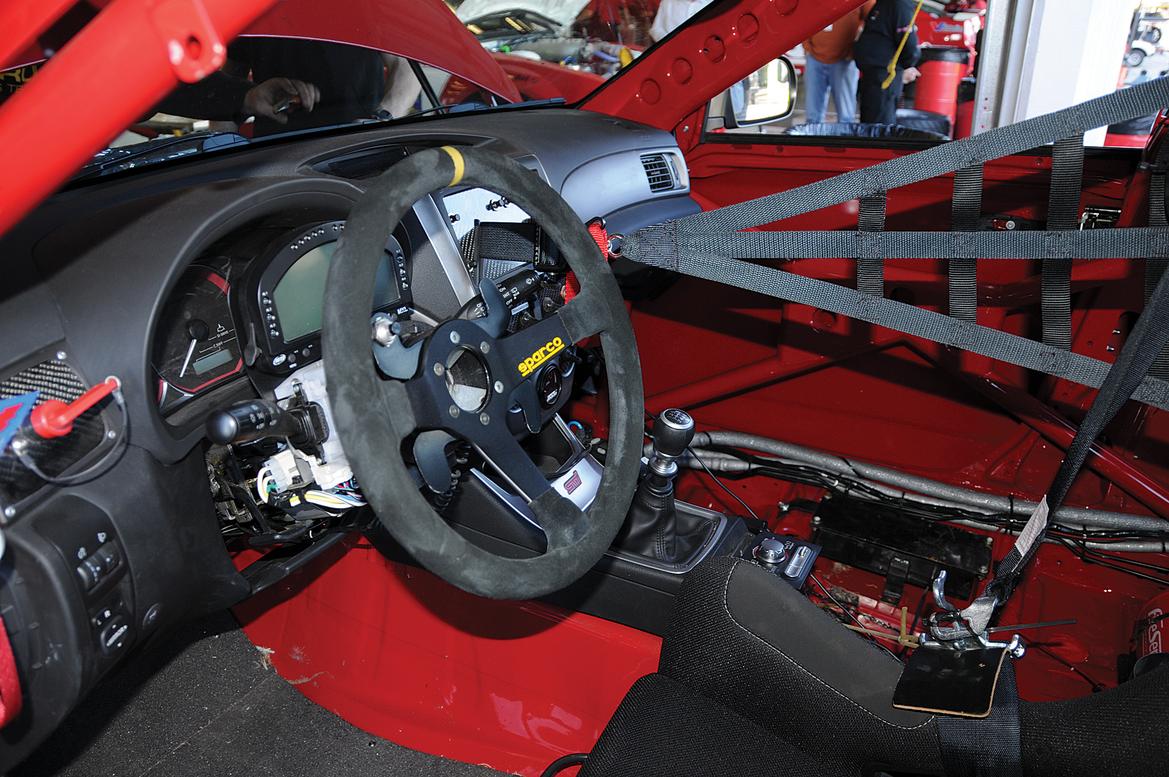
Photograph by Sahar Hassani
The Grand-Am rules dictate which stock components may be changed, although the STI’s engine must remain stock. That adds some difficulty to the equation. “We have more heat to deal with and stress on stock components,” Joe explains. “We budget two races per engine. We time change them to keep them fresh and anticipate using a total of five engines throughout the season.”
The team reports that the cars handle well, but there’s still work to be done. “We now need to work on power within the rules framework, which does not allow us to modify the drivetrain to any appreciable degree,” Joe explains.
To ensure that the STI would be competitive against the other Grand Sport entries, Grand-Am gave the car some concessions. The Subaru racer is allowed to carry more fuel than its stock counterpart—four extra gallons. The team can now go a full hour on a tank, a typical range for most cars in the class. Grand-Am also specifically allows the STI to upgrade to a beefy Brembo brake caliper.
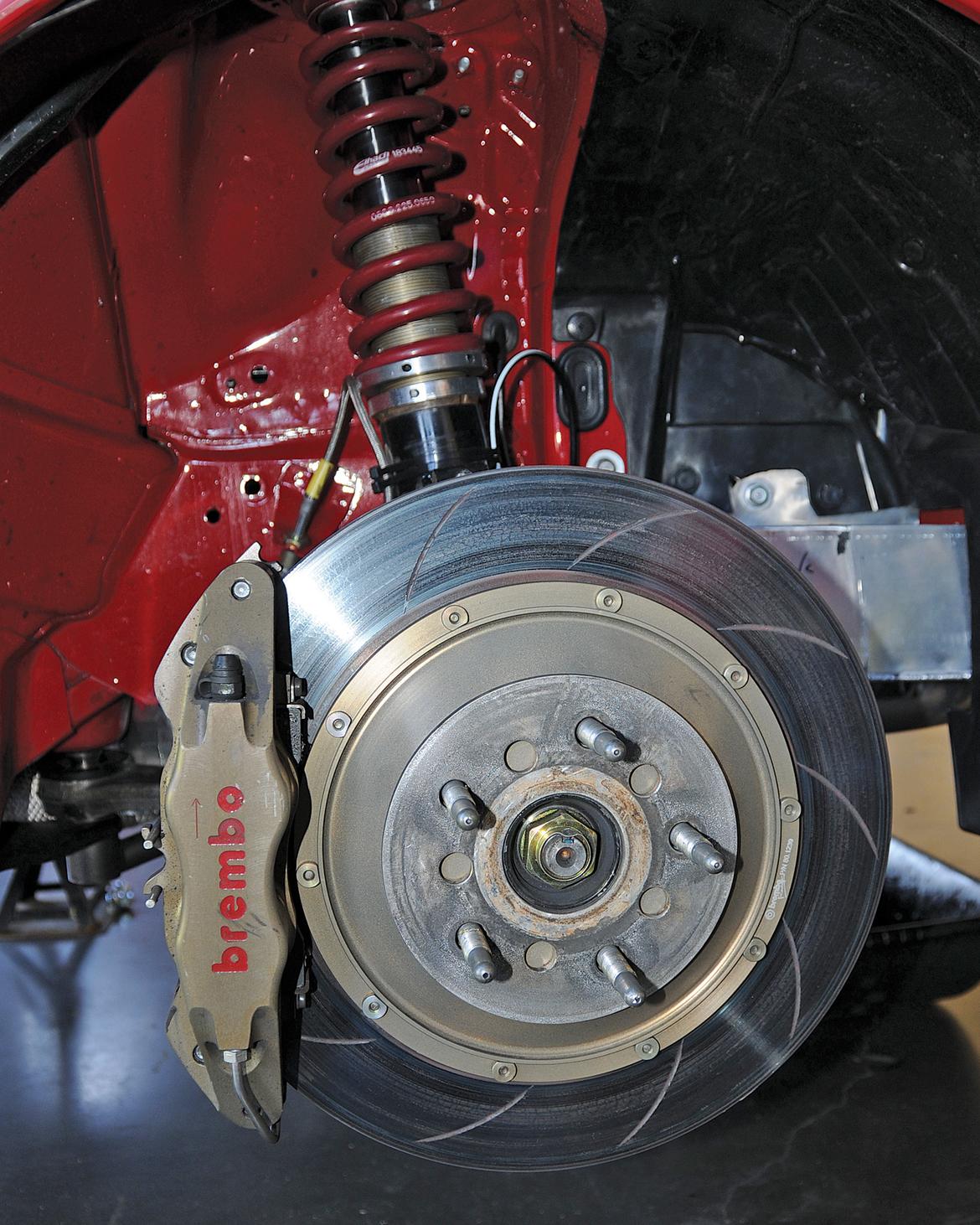
The allowed Brembo brakes aren’t a radical departure from the OEM setup, though they use Hawk pads and ample ducting to keep them within their operating temperatures. Photograph by Sahar Hassani
Like all other cars in its class, the WRX gets to run an open exhaust, stiffer suspension hardware and the mandatory Koni shock absorbers. Deciding exactly which aftermarket components to run was one of the team’s biggest challenges. However, they had an ace up their sleeve: team technical director and chief engineer John Heinricy.
John recently retired from General Motors, where he served as director of their performance division. He also has 11 SCCA national road racing titles to his credit and has lapped Nürburgring in less than 8 minutes. “John has provided input on suspension and drivetrain engineering—geometry and suspension tuning, mostly—plus test driving during the first test days,” Joe explains.
Growing Pains
Their 21/2-hour debut race at Daytona was admittedly a learning experience. The hardest part was getting the new car dialed in.
“The biggest trick we have learned is getting the PCM tuning to live within the boost limits set by Grand-Am and to minimize boost spikes and turbo pressure creep,” Joe explains. “We are still working on that.”
The team also needs more speed. “The car is three seconds off the pace and needs to close the horsepower gap,” Joe continues. “We are 8 mph slower than the V8 cars at the terminal velocity points on the long straights at Daytona.”
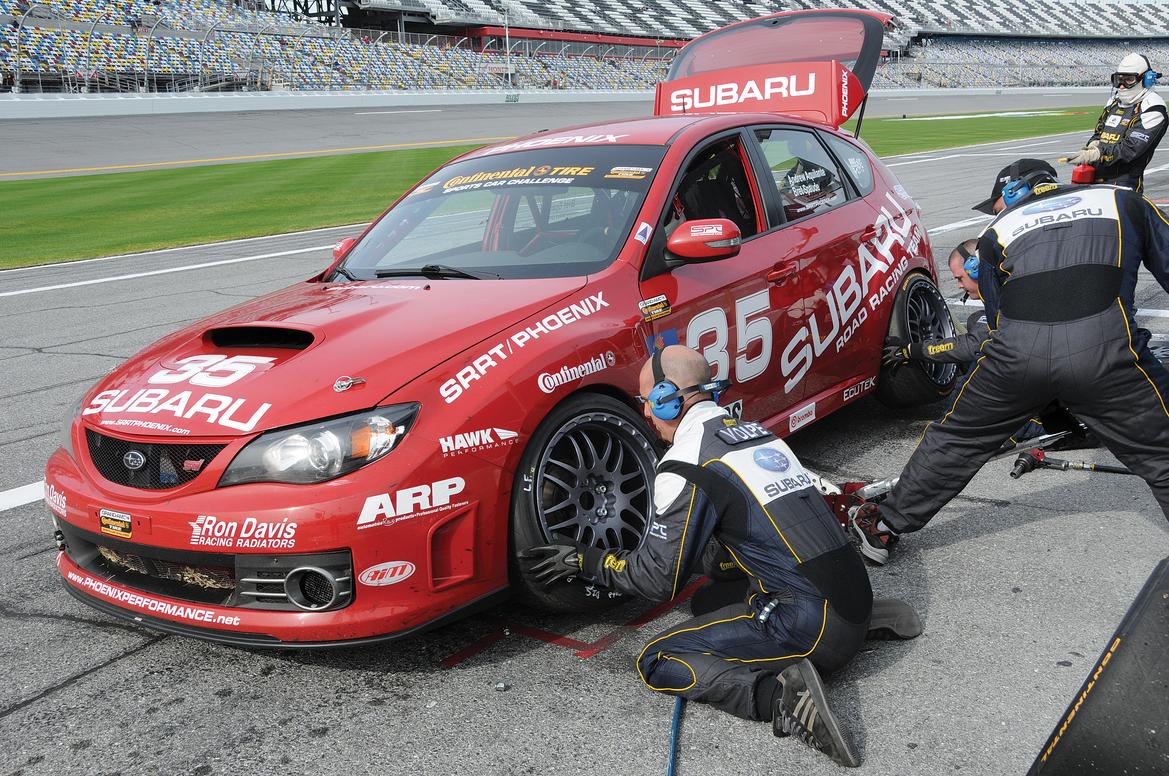
The Subaru WRX STI faces tough competition in Grand Sport from the likes of the BMW M3, Ford Mustang and Porsche 997. Photograph by Sahar Hassani
While the team continues to fine-tune the WRX STI, John is mentoring his young drivers and helping them develop their analytical skills. “John is one of the best development engineers for performance cars,” Joe explains. “He is eminently qualified for the task. He is a great mentor for Bret and Andrew.”
The 2010 Grand-Am season started at the fastest track on the calendar, Daytona. As the season unfolds, the Subarus should excel on tight tracks that feature short straights such as New Jersey Motorsports Park, Barber Motorsports Park, Watkins Glen and Lime Rock. And if it rains, look out.
“Subaru makes a great product that is fun to race,” Andrew says, smiling. “The all-wheel drive allows you to do things that other cars can’t.”