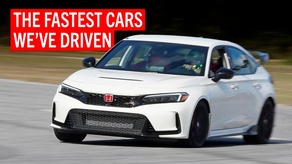

While I'm not the biggest fan of the FK8's styling (the FL5 is a big improvement, IMO), current prices for the FK8 make it pretty tempting.
After all, I almost always get excited seeing a Type R in traffic, regardless of generation.


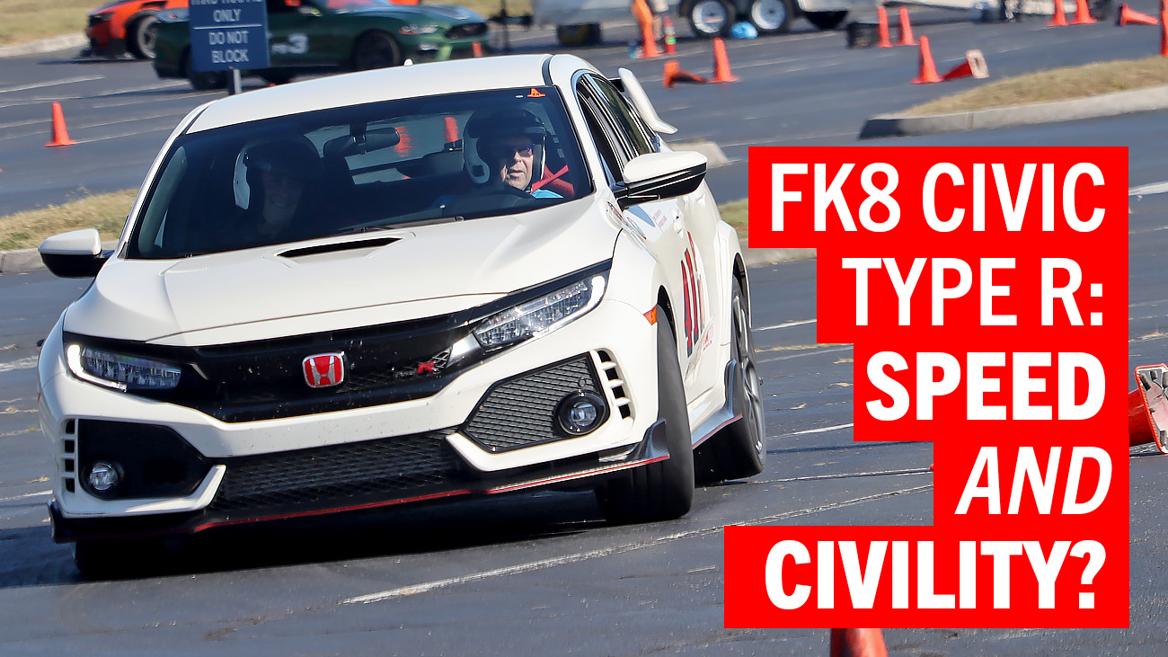
Photo by J.A. Ackley
We want it all: speed and civility. The Civic Type R delivers both.
Today’s value buy? Look at the previous model, the 2017-’22 FK8-chassis Type R, as they now start in the mid-$20s.
“It has a ton of space,” notes Eddy Segal, who campaigns one of the fastest FK8s in Gridlife. “When I started with an FK8 Civic Type R, I’d throw a full set of tires, tools and everything I needed in back, and I’d drive it to the track with no problem. You don’t need a trailer. That’s what makes them so cool.”
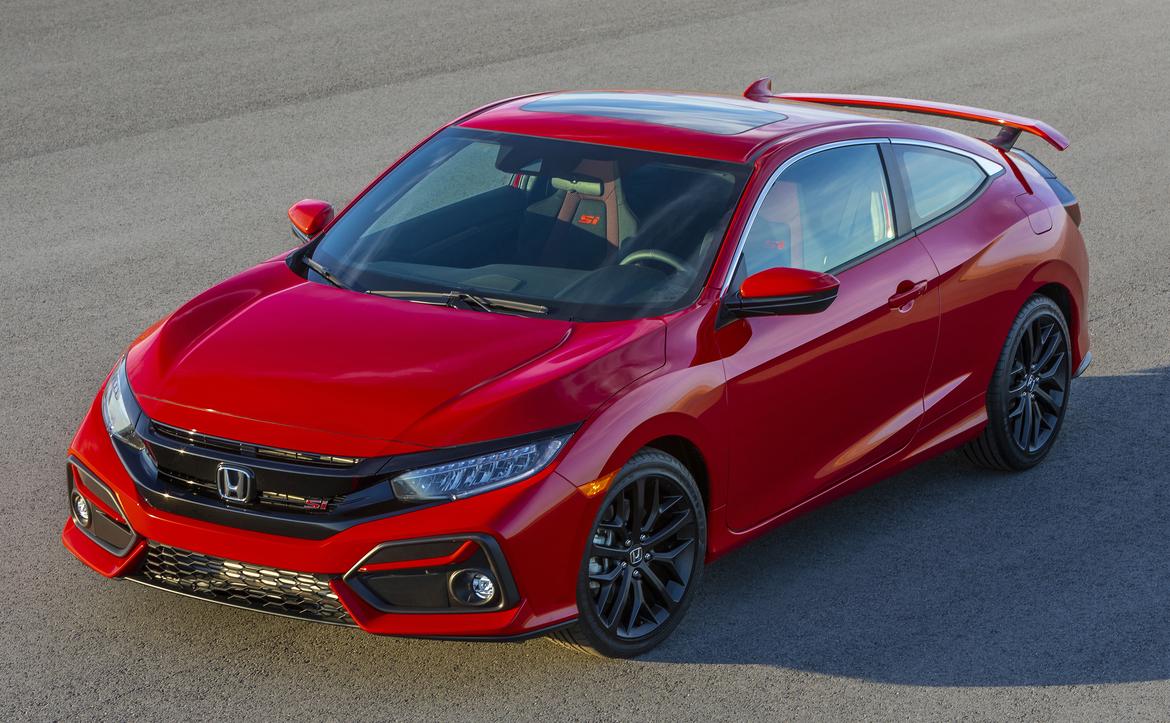
FK8 Honda Civic Si. Photo courtesy Honda.
Honda offered several versions of the FK8, aka the 10th-generation Civic. Why not go with a cheaper trim than the Type R?
“You’re getting a lot more car for the money,” Eddy says of the Type R. “The suspension bushings are stiffer. The Type R platform is a little wider, so you can fit more tire. The engine is better. With the base Civic, you get either the naturally aspirated 2.0, which is fine, or the turbocharged 1.5-liter engine, which you have to do a lot to make them stay together on track. The Type R uses a turbocharged K20C1 2.0.”
Honda rates the turbocharged 2.0 for 315 horses out of the box. The turbocharged 1.5 puts out just 174 horsepower, 55% less than the Civic Type R makes.
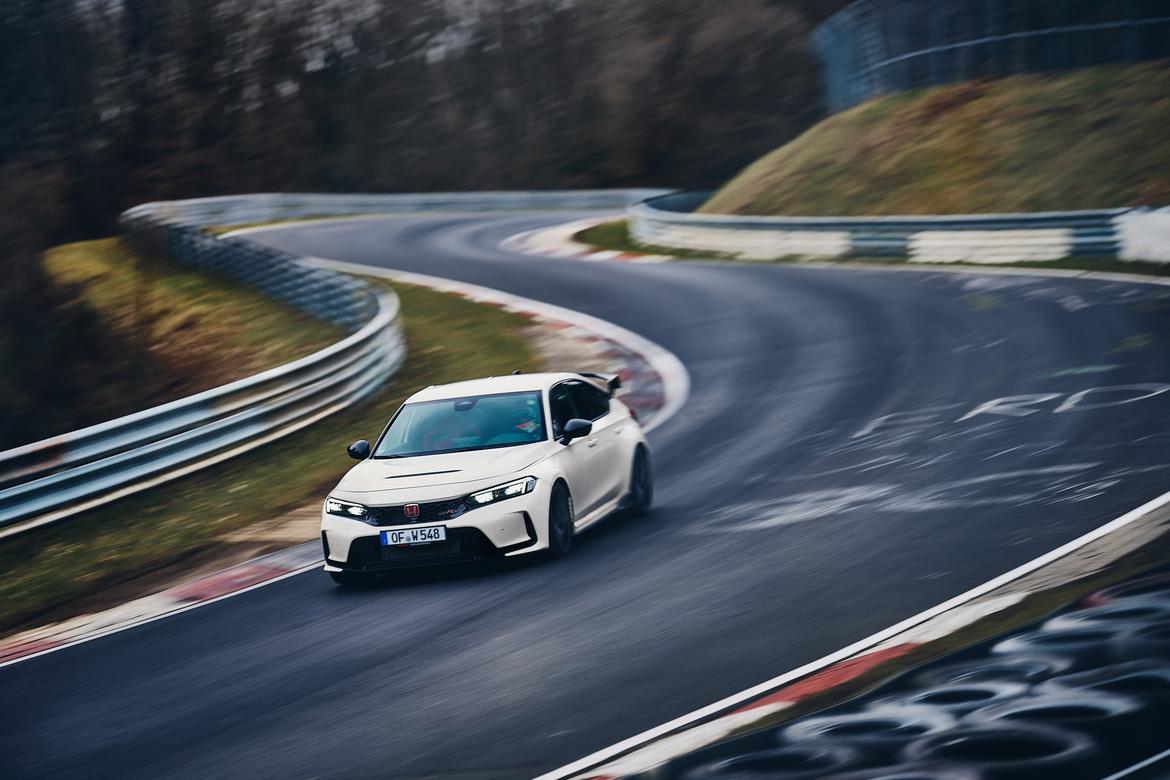
FL5 Honda Civic Type R. Photo courtesy Honda.
Yes, the newer FL5-chassis Type R is better than the FK8, but Eddy says it’s more like “an evolution than a revolution.” Honda engineers gave the new Type R 9 more horsepower and 10 more lb.-ft. of torque–with the same engine but a different turbo.
Honda also improved cooling with a different water pump and radiator. Engineers stiffened the chassis and bushings and retuned the suspension. The FL5 has a longer wheelbase by nearly 1.4 inches and a wider track (1 inch up front and 0.8 inch in the rear). The FL5 weighs 71 pounds more, too. Eddy says the biggest improvement is the more luxe interior.
Those changes come at a cost, though. A new FL5 Civic Type R starts at an MSRP of $45,898. KBB says an FK8 in very good condition sells anywhere between $24,000 and $28,000.
“All of these changes make the FL5 a better package from the get-go, but it is quite more expensive,” Eddy explains. “It does raise the question, ‘If you are buying this purely for the track, why spend the extra money for the heavier, more valuable car that drives a little better than the FK8?’”
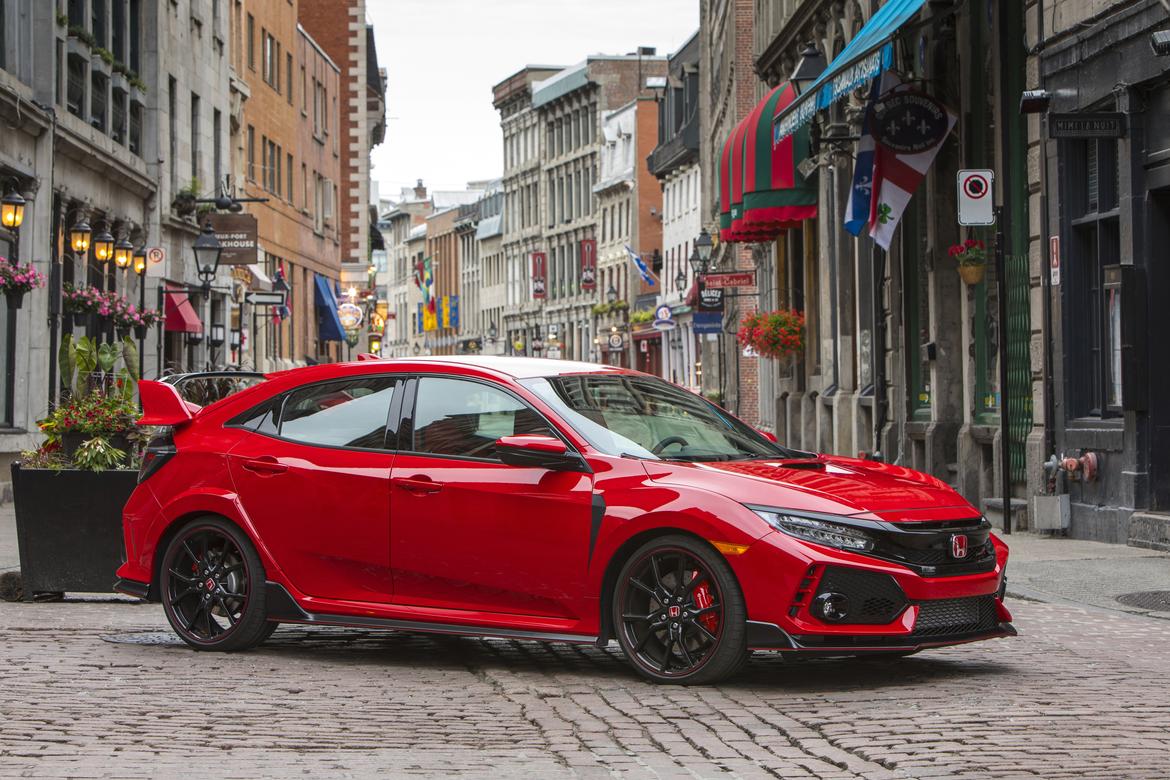
Photo courtesy Honda.
As with any used car, buy one in the best condition you can afford–although Eddy says Civic Type Rs often get treated more roughly than some models.
“A lot of people modify them, crash them, beat on them,” he says. “They can handle the abuse pretty well. If you’re tracking it, you’re not going to do any worse than the previous owner did.”
Take particular note, however, on how that owner kept the Civic Type R. “It’s more about maintaining them,” he says. “Do they do regular oil changes? Brakes are expensive and a lot of people don’t like to change them. If the car did get in an accident, how was it repaired?”
Eddy bought one of the first FK8 Type Rs, and he experienced transmission and body panel fitment issues. He adds, though, that Honda corrected those problems with the later-year models.
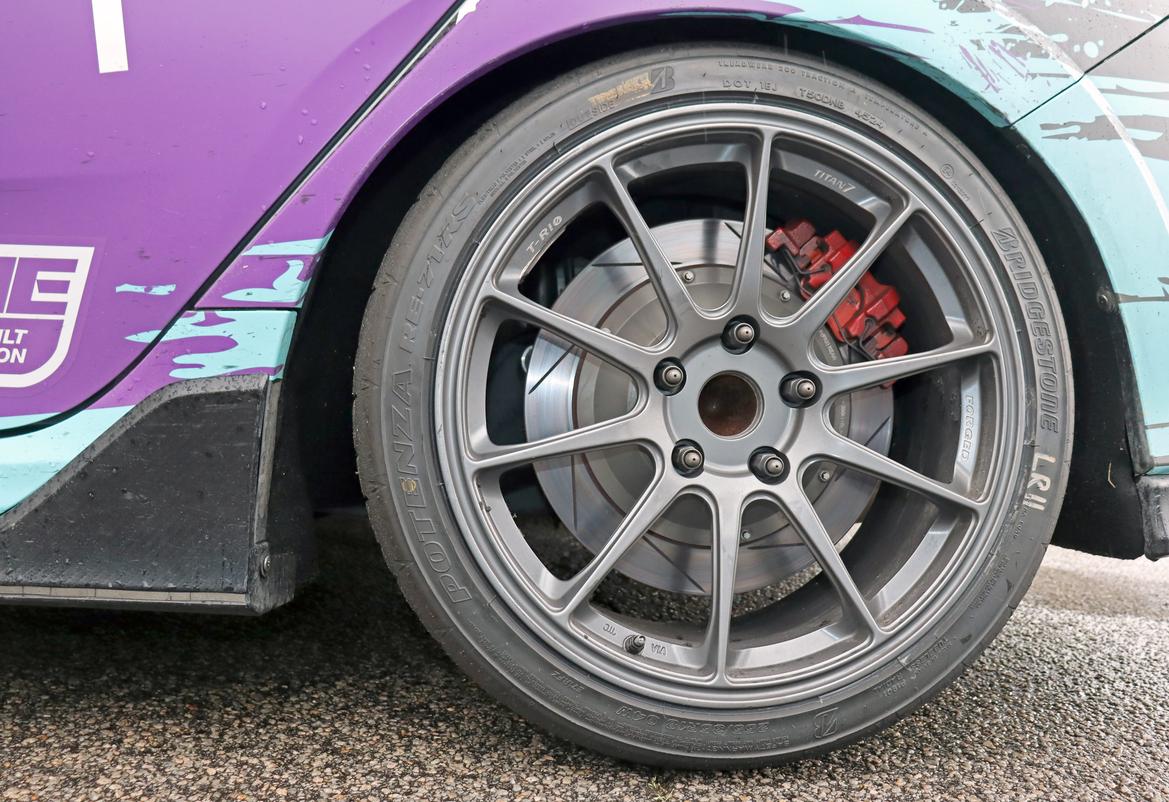
Photo by J.A. Ackley.
Before you hit the track, Eddy advises swapping in performance brake fluid and brake pads.
“The stock Brembo pads, they’re fine for a beginner,” Eddy says. “If you’re really trying to push the boundaries of what a stock Civic can do, you’ll want to put a better pad in it. There’s a bazillion companies that make pads for the Civic–it’s a standard-sized Brembo caliper.”
Next up, ditch the stock wheels and tires, Eddy advises. “The stock FK8 Type Rs came with a 20-inch wheel,” he notes. “If you’re taking a corner fast, it’ll wear the outer edge of the tire because it rolls over so much–there’s so little sidewall.
“Drop down to an 18-inch wheel with a 255- to 265-wide tire–it’s cheaper and you’ll get more performance. With an 18, it opens up the envelope a bit because with a 20 it’s very hard to find a tire that size. You can do a square setup and save some cost, too.”
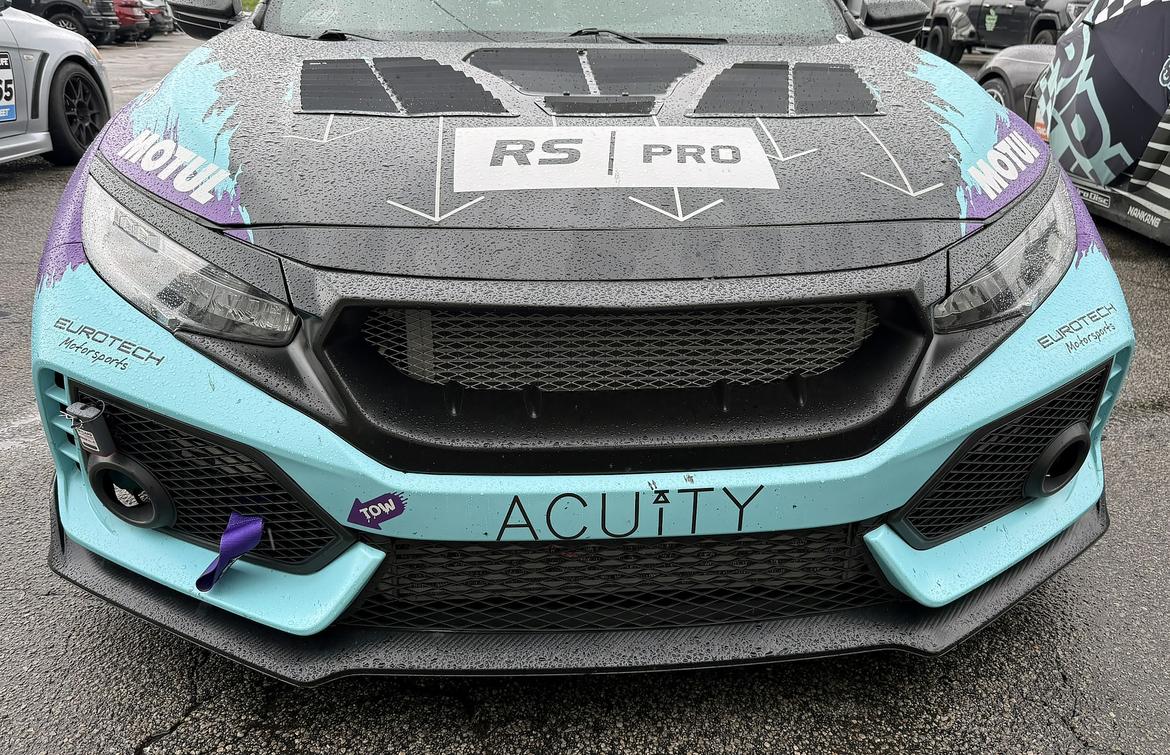
Photo by J.A. Ackley.
Eddy says that as you go faster, the Civic’s engine picks up more heat, pulling power and raising temps to critical levels. His go-to mods include an intercooler, radiator, oil cooler, and a vented hood and grille with more openings.
Eddy also has one more trick up his sleeve–or should we say under his car? “They make engine trays, which evacuate heat,” he says. “It just pushes the hot air out.”
Then comes your first suspension mod, a bigger, stiffer rear anti-roll bar aka sway bar. “I put a lot of rear sway bar in it because I like it to rotate,” Eddy says. “You don’t want to put a front bar on a front-wheel-drive car. It’ll make understeer worse.”
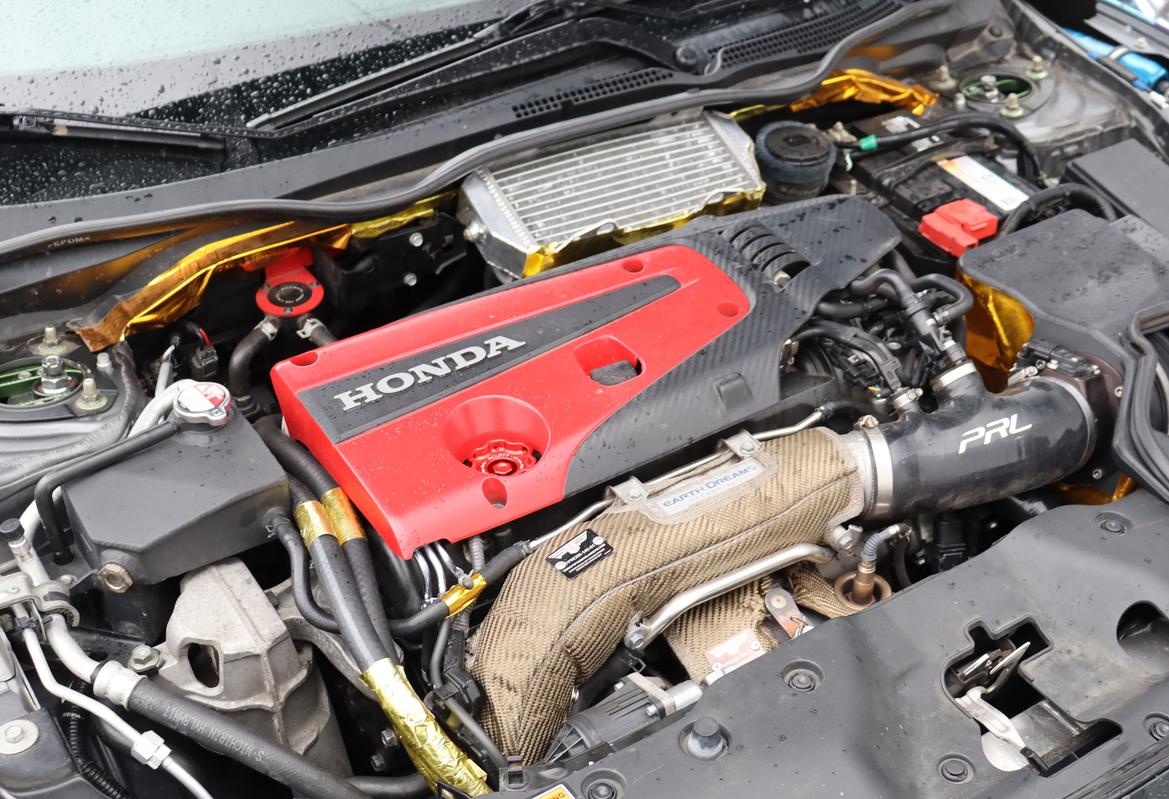
Photo by J.A. Ackley.
With the car handling upgraded and cooler underhood temps, let’s consider adding some power, which Eddy says is fairly easy to do. He installed an aftermarket intake, downpipe, cat-back exhaust and an ECU tune. This should nudge that horsepower number closer to 400.
Eddy adds that many tuners exist for the platform, which makes finding an off-the-shelf option easier than with other cars. Some also install an upgraded high-pressure fuel pump and run E85, but Eddy has not played with those items–yet.
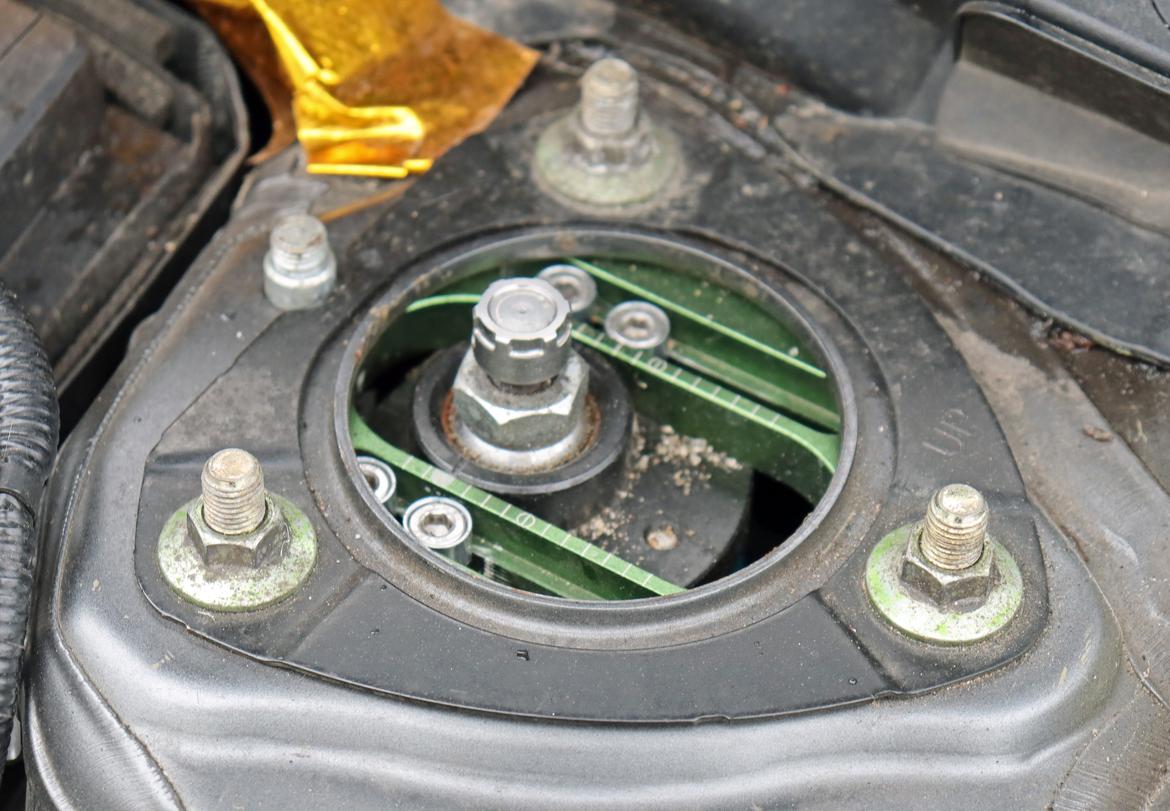
Photo by J.A. Ackley.
Then comes the suspension. “The factory adjustable suspension is fine,” Eddy says. “When you start pushing it, you can notice its pitfalls and where it needs to have more spring rate.”
Eddy uses a Fortune Auto setup that gives you coil-overs and camber plates, the latter of which make a significant difference. With the stock setup, he says, you might be able to get 1.5 degrees, which requires pulling the strut pins. “The cars really love more camber,” Eddy stresses. “Ideally, you want anything more than 3 to 3.5 degrees.”
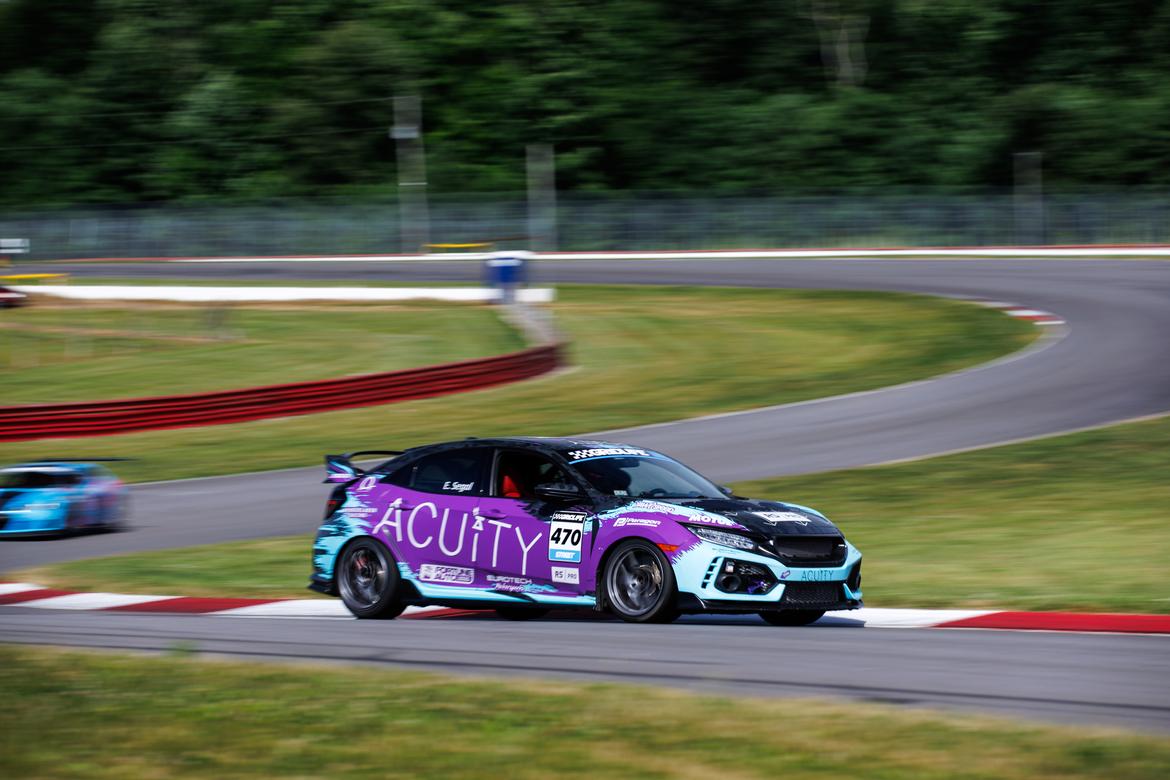
Eddy Segal at speed in his FK8 Civic Type R. Photo by Rob Wilkinson.
Now that you’re pulling some serious speeds at the track, Eddy strongly recommends upgrading your safety: seats, harnesses and a roll bar. The seats will net you some weight, too–as did the motorsport-grade wheels–as the Type R could lose some pounds, pushing the scales at 3117 stock.
“They’re heavy. They’re a big car,” Eddy says. “A lot of people think of Civics as small hatchbacks. I think of a Civic as a mini Honda Odyssey, because it looks like one if you walk away far enough from it.”
The easy button to going on a diet is to remove seats and luxury items, such as speakers, carpets and the a/c system, although Eddy hasn’t gone to that point yet. “I have only removed items that were needed when installing a roll bar and seat,” he says. He also replaced the factory steering wheel with a racing model.
The transmission can be a shortcoming. “It gets hot when you push it,” Eddy says. “If you race them hard, the transmissions can last a couple of years before needing service–the synchros, the gears go.”
Eddy says that some racers run a transmission cooler, but he does not. He accepts the fact that transmissions need rebuilding every so often–in his case every two seasons.
When rebuilding the transmission, he strongly recommends upgrading the fourth gear, which he says tends to break, and the differential. Eddy adds that the factory Honda race cars run the RV6-P fourth gear, which is publicly available. Perhaps surprisingly, he still runs a stock clutch, which seems fairly robust for track use.
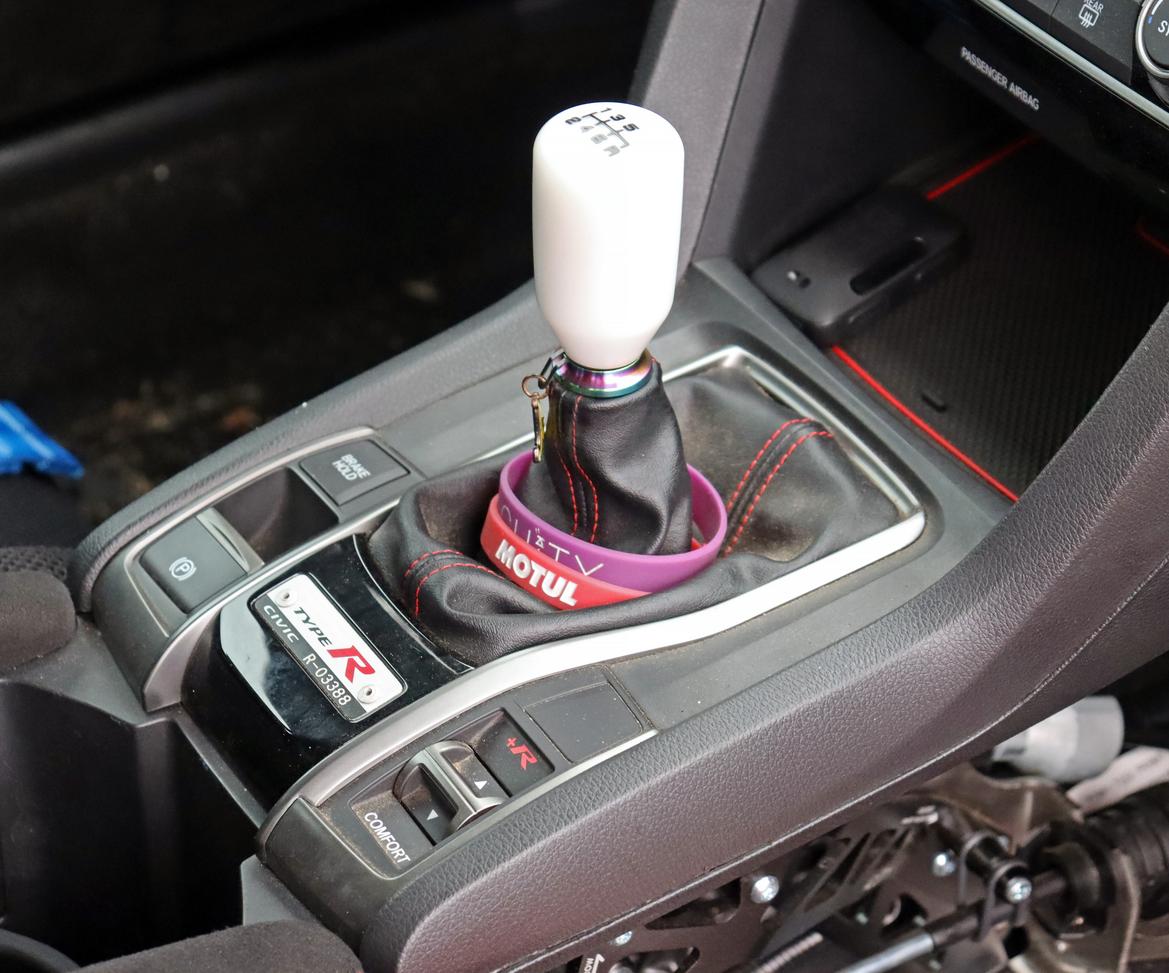
Photo by J.A. Ackley.
Eddy also made one other upgrade: his shifter. “It’s an awesome transmission,” he says of the stock piece. “The Acuity shifter makes the already amazing stock shifter even better by making the throws not only shorter but also feeling better and more planted, if that makes sense.”
By adding all those mods, Eddy says he’s made an already good platform even better. “It’s a good time,” he says. “It’s a very balanced car. You can fit so much tire on it, it’s really planted through the corners. You can take the corners fast–and it won’t get light like other cars.”

While I'm not the biggest fan of the FK8's styling (the FL5 is a big improvement, IMO), current prices for the FK8 make it pretty tempting.
After all, I almost always get excited seeing a Type R in traffic, regardless of generation.

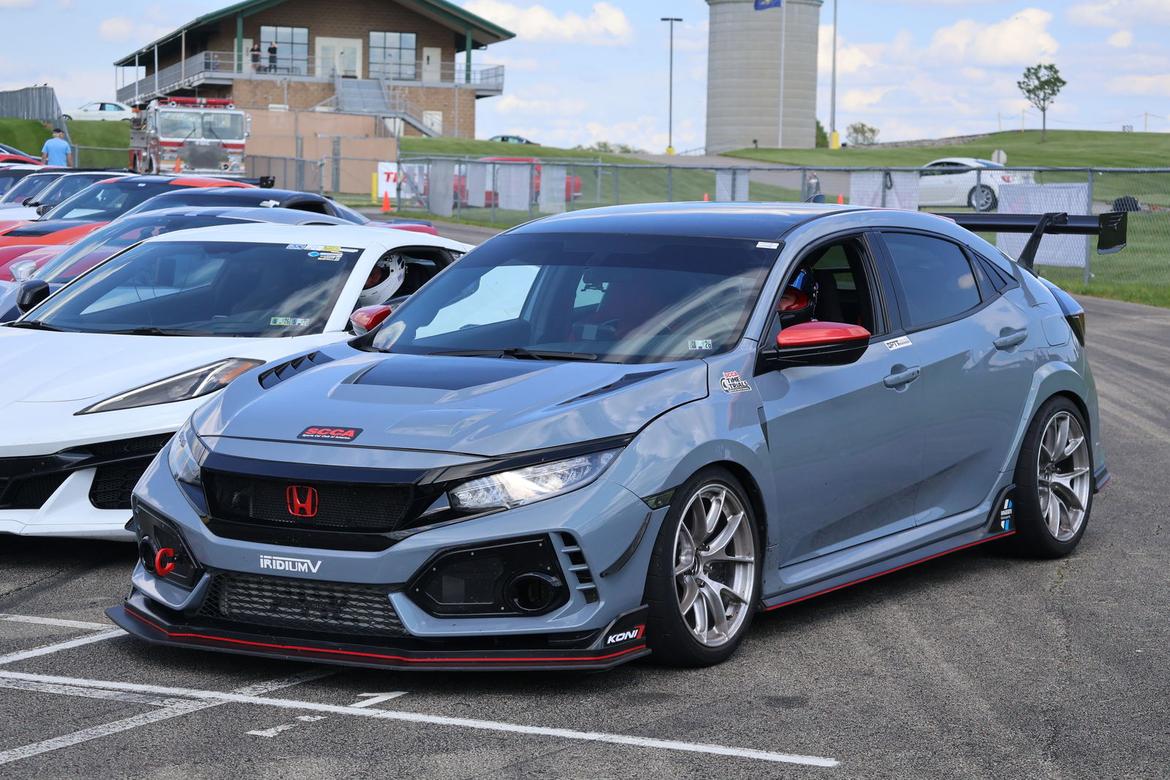
All I know is that one of our local racers has a modified FK8 and it is SERIOUS FAST. Note the TrackNight grid position, in front of a hard-driven C8 Corvette.

In reply to pinchvalve (Forum Supporter) :
Looks mean.

Too bad it doesn't have an auto clutch option for those of use with gimpy legs...
The FK8 is an awesome daily driver, and kid hauler too. I can fit my wife, both kiddos, double stroller, pack and plays, weekend bags, and all of the other 2 under 2 kiddo things needed to go on a weekend trip with mine. It's just as at home on the highway as a family car as it is at an Autocross. 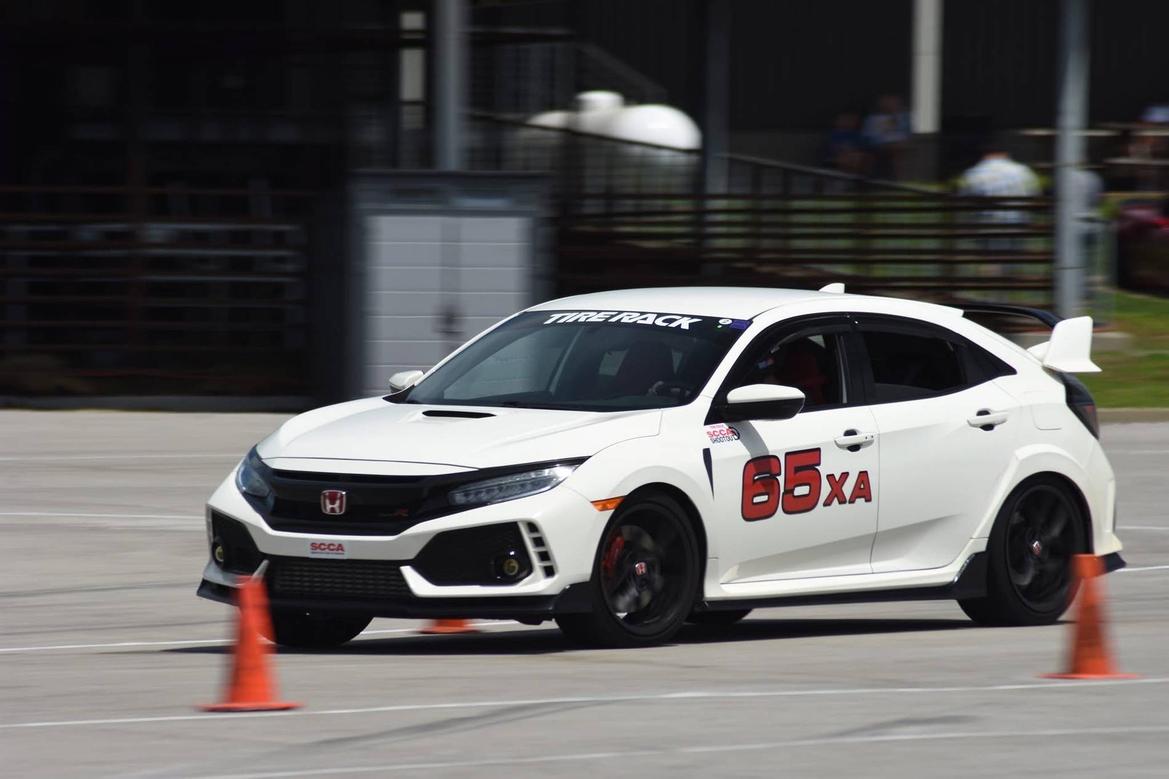
I don't know where you find a type R used for the $24-28K , here in Ohio, lower price
95,000+ miles 30K to better examples 38k.
ShiftLess said:Too bad it doesn't have an auto clutch option for those of use with gimpy legs...
I've always wondered if Honda was missing out on a few sales by not offering an auto in the Civic Type R and Integra Type S. (Especially when many of its competitors like the GR Corolla and Elantra N offer automatics.)
That being said, it certainly makes the Type R and Type S that much more special.
andrewjackson5565 said:The FK8 is an awesome daily driver, and kid hauler too. I can fit my wife, both kiddos, double stroller, pack and plays, weekend bags, and all of the other 2 under 2 kiddo things needed to go on a weekend trip with mine. It's just as at home on the highway as a family car as it is at an Autocross.
You’re not helping some of us not consider a Type R.
pinchvalve (Forum Supporter) said:
All I know is that one of our local racers has a modified FK8 and it is SERIOUS FAST. Note the TrackNight grid position, in front of a hard-driven C8 Corvette.
Ahhh, PittRace!
rickstrat55 said:I don't know where you find a type R used for the $24-28K , here in Ohio, lower price
95,000+ miles 30K to better examples 38k.
Fly and drive? I've "flown and drove" 2x. Twice I've driven the car I was trading in out of state for a different car. One time I had a car shipped in from Florida.
Displaying 1-10 of 28 commentsView all comments on the GRM forums
You'll need to log in to post.