Test #2:
But a cheap hood, hack a vent into it with some cheap but effective ducting and see how much closer your IAT gets to ambient, and if it helps with front end lift?



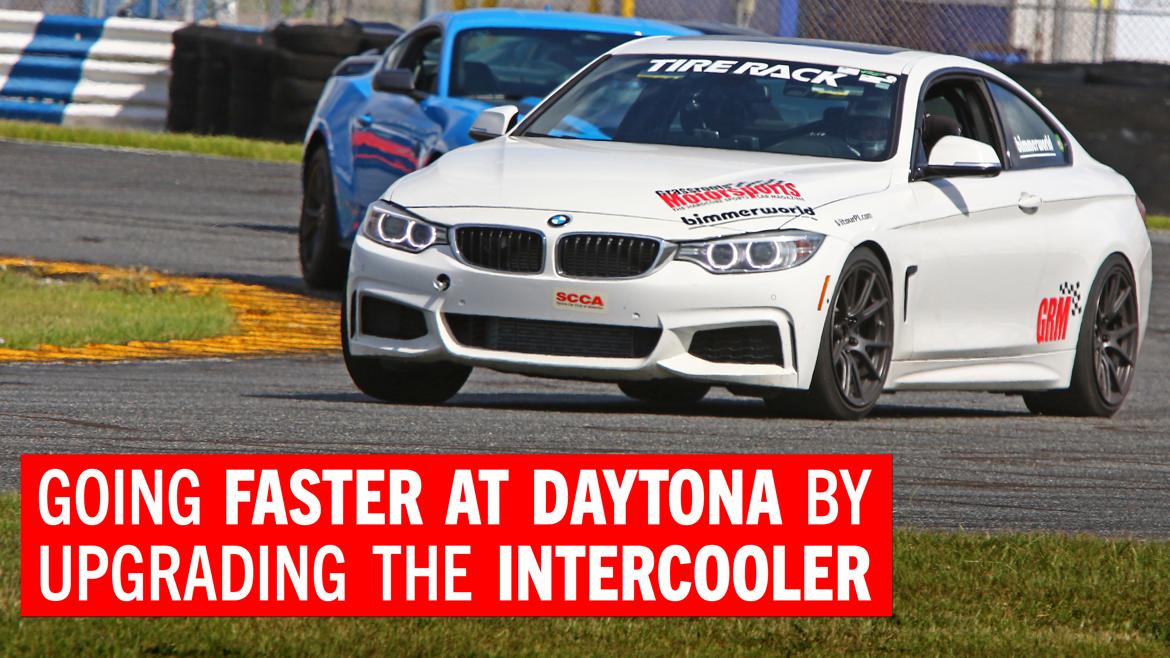
Photograph by David S. Wallens
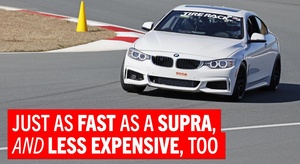
We fitted a larger intercooler to our BMW 435i, but was the install worth all the busted knuckles?
The event that originally triggered the upgrade: an SCCA Track Night in America event at Daytona International Speedway in September of 2024. In addition to sitting only a few miles from my house and across the street from GRM’s favorite Chinese buffet, Daytona offers a unique testing opportunity, particularly for powertrains, as it’s essentially a giant, real-world dyno.
[What being on track can tell you that a dyno won’t]
On Daytona’s high banks, two sections per lap have the car at full throttle for close to 30 seconds each. And unlike a static dyno–even one with a very good fan–the real world of Daytona shows how the air is moving through and around the car.
In our 2024 test, our MHD software showed some shockingly high intake air temperatures. With our spiciest MHD tune loaded up, which produced 14-15 psi of boost, we saw intake temps exceeding 180° for extended periods.
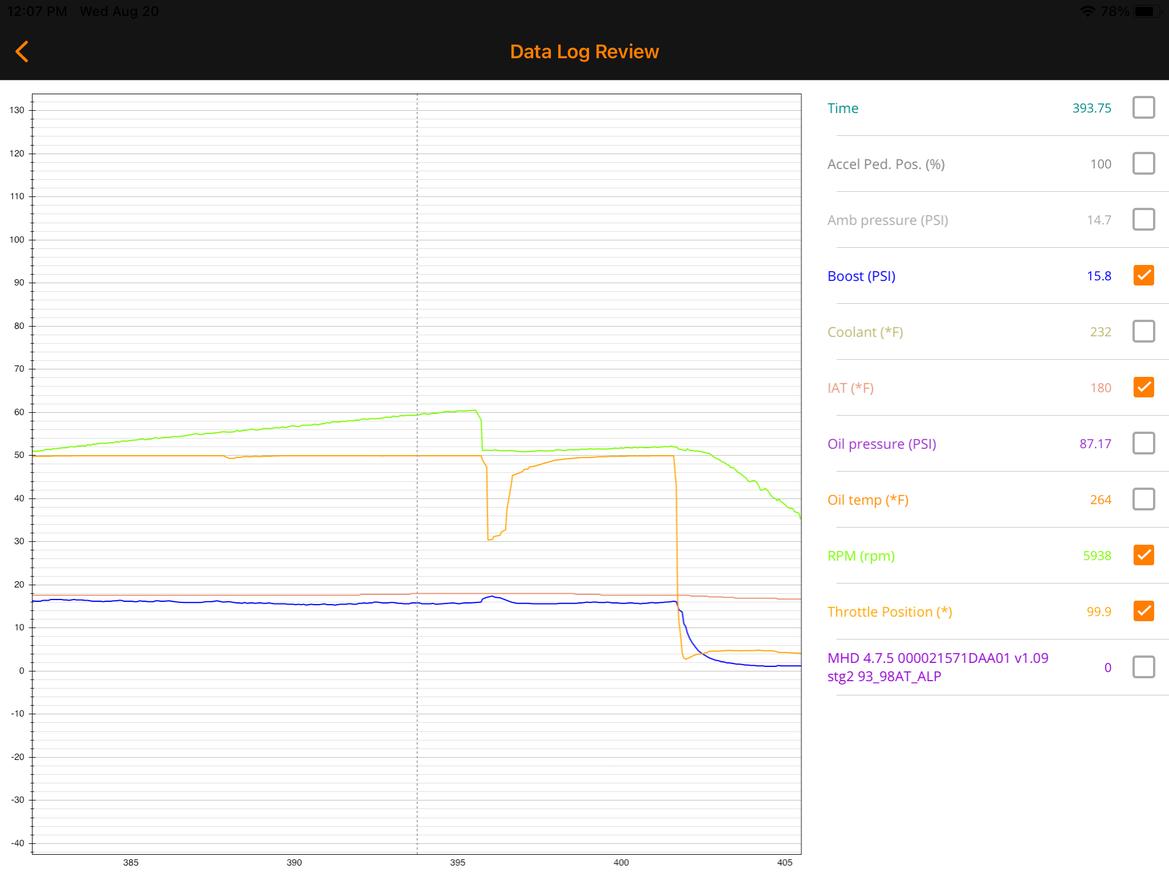
This caused the computer to pull timing, richen the fuel mixture, and do a bunch of other stuff that basically just killed power to preserve the engine’s health. Never mind the fact that 180° air isn’t great for combustion efficiency to begin with. Even at stock boost levels in the 8-9 psi range, we saw IATs nearing 150°.
The prevailing conditions certainly weren’t helping, either, as temps hovered in the mid 90s, and humidity was at subtropical jungle levels because Florida gonna Florida.
This combination of awfulness conspired to produce lap times that didn’t change no matter what tune we ran. In fact, terminal trap speeds were actually lower with the more aggressive tunes in place.
Basically, no matter what we asked the engine to do, atmospheric conditions and our intake system put a hard cap on performance. So, we installed an oversized CSF intercooler sourced from BimmerWorld.
We’d done plenty of testing at the FIRM as well as other tracks, but nothing can replicate the flat-out, long-distance straights of Daytona, especially on a Florida summer day. Track Night in America returned to those fabled high banks on the final day of this past July. The National Weather Service actually said it was 4° warmer for this return test.
Even with our spiciest tune, MHD’s Stage 2 setup, our intake air temperatures never exceeded 127°. Before the intercooler upgrade, they topped 180°.
Let’s take a look at this snapshot of our MHD data log. That’s the final lap of our final session after running five previous back-to-back hot laps.
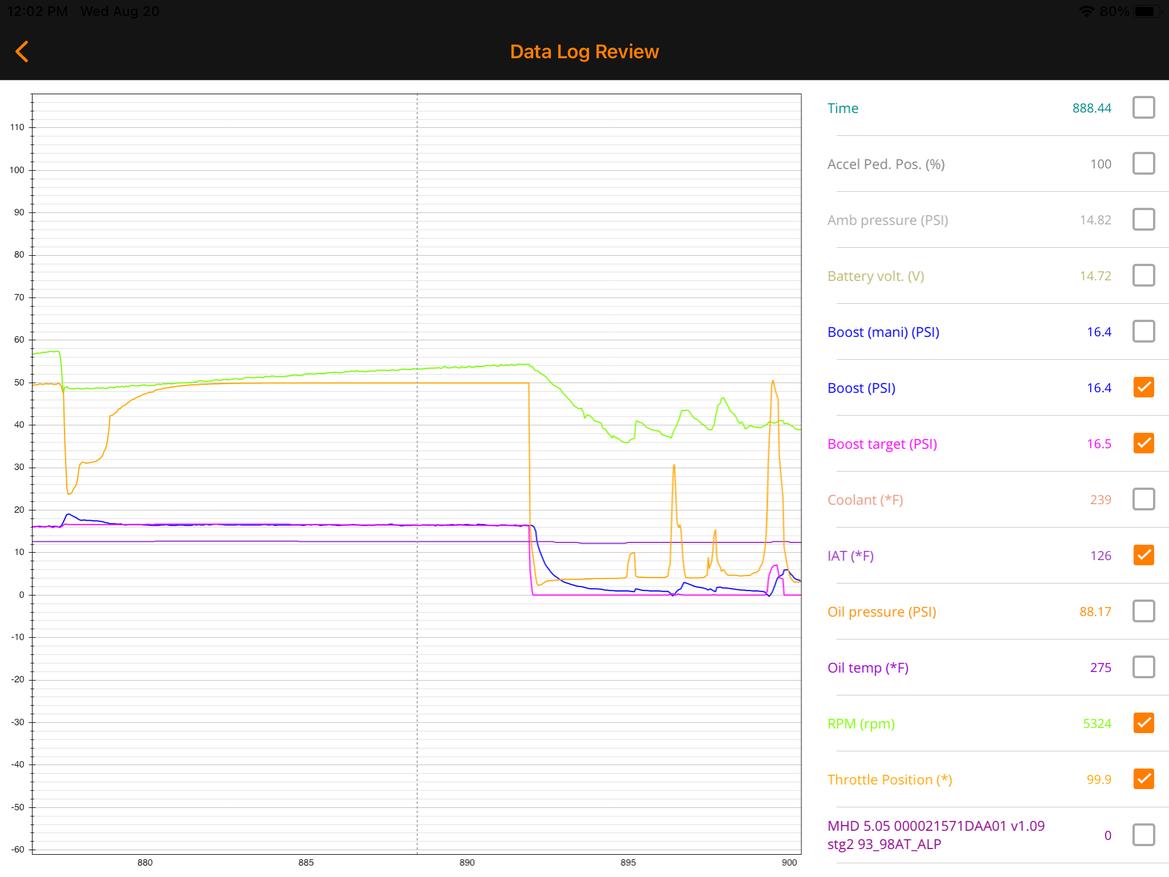
This snapshot shows the car heading toward the start/finish line, after the long, full-throttle pull from the former Bus Stop, now Le Mans Chicane.
We can see a couple nice numbers in the data. First, the 126° intake air temperature. That’s down 54° from a snapshot taken at the same place on track–and after fewer laps–from last September’s pre-intercooler upgrade.
There’s another cool number here, too, and that’s boost. Since our previous test, we’ve also started logging the boost target, which gives us an idea of what the computer is asking for. That level of boost is based on what the ECU thinks the engine can handle. Boost is up over the previous test because the lower temps tell the ECU that it can efficiently combust an even more highly compressed charge.
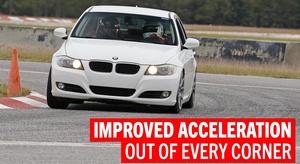
Actual performance, unsurprisingly, was improved as well. The VBox data shows our best lap from 2025 was 2.2 seconds faster than our best lap in 2024, and the big difference maker was power. Yeah, there are a couple spots where handling made a difference–check out our Vitour versus Bridgestone data dive for more details there–but the tires only saved us a few tenths that we gave back in Daytona’s infield.
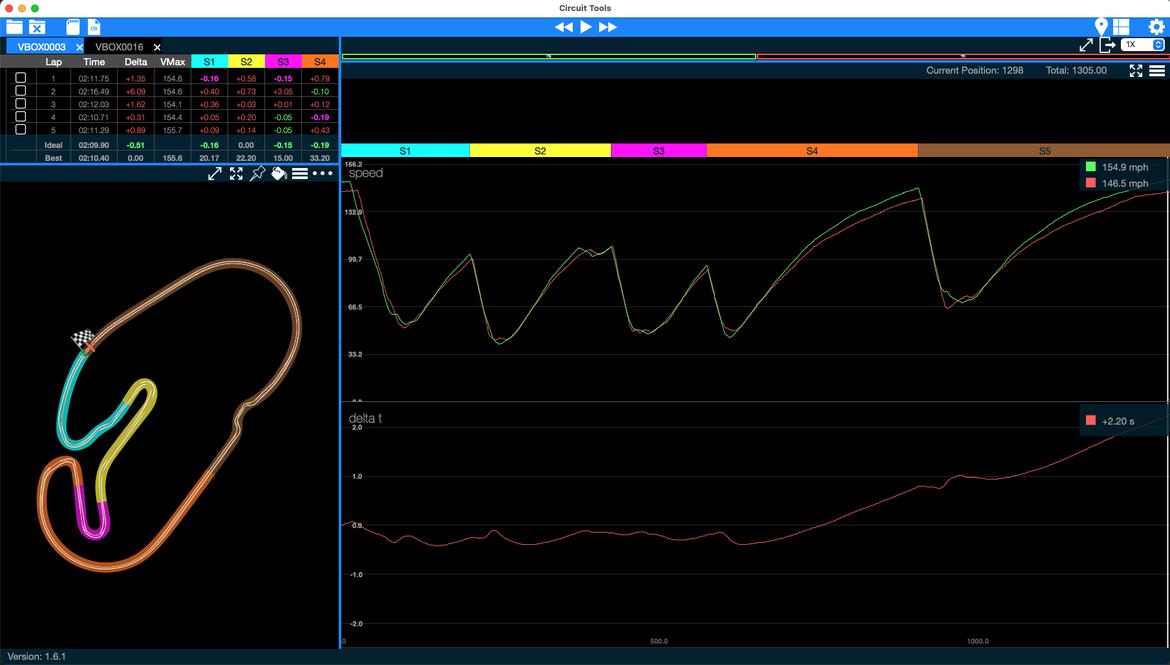
But take a look at that delta-T graph, which charts the time difference between the laps. Up represents an advantage to the faster (green 2025) lap, while below the 0 line shows an advantage to the slower (red 2024) lap.
The 2024 lap started out faster after better braking performance into Turn 1, but the upgraded intercooler allowed the BMW to claw back time in that first acceleration zone. And when unleashed on the banking, the upgraded BMW simply disappeared in the distance.
Heading into the chicane, the CSF intercooler allowed our BMW to hold an 8 mph advantage. Across start/finish, the difference is nearly 9 mph. And that delta graph just climbs like a flight departing from SNA as soon as the hammer drops.
So, the conclusion here may not be particularly groundbreaking: Better parts mean better performance.
But in the real world, hype doesn’t always equal horsepower, and fancy baubles sometimes don’t hold up to rigorous testing, especially on a dollar-per-performance scale. BimmerWorld lists our CSF intercooler for $499, and it singlehandedly dropped 2+ seconds off our Daytona lap time while putting a lot less thermal stress onto a lot of expensive parts. We like that math.

Test #2:
But a cheap hood, hack a vent into it with some cheap but effective ducting and see how much closer your IAT gets to ambient, and if it helps with front end lift?

We vented our C5 Corvette Z06’s hood to help with lift, but that was part of a larger aero package. (JG can add more, but he’s on the road today.)
In reply to David S. Wallens :
Yeah that's one of those "common knowledge" type things, but it's always interesting to see it quantified. Since it's turbo'd, the IAT, coolant, and oil temps, should all also come down nicely as well with the increase in pressure differential.

In reply to z31maniac :
I've always wondered what that would do on my Z32 to help with underhood temps......
That's a substantial improvement. Didn't see any mention of ambient temps or DA, I don't imagine it was a cool day for either test but it does seem like an important data point when comparing IATs.
300zxfreak said:In reply to z31maniac :
I've always wondered what that would do on my Z32 to help with underhood temps......
Does the Z32 have the radiator at a near 45° angle like it is in the Z31? That would make the ducting even easier.

mhaskins said:That's a substantial improvement. Didn't see any mention of ambient temps or DA, I don't imagine it was a cool day for either test but it does seem like an important data point when comparing IATs.
Yeah, that's what I was looking for as well. Just what were the ambient temps?
I'm not surprised at the result. We saw a similar performance loss on the Mazdaspeed Miata, where it would lose power if you did multiple dyno runs. Installing a better intercooler saw every dyno run match the first one.




These statements give an idea of the ambient temperature(s).
At Daytona prior to the install:
"The prevailing conditions certainly weren’t helping, either, as temps hovered in the mid 90s, and humidity was at subtropical jungle levels because Florida gonna Florida."
At Daytona after the install:
"Track Night in America returned to those fabled high banks on the final day of this past July. The National Weather Service actually said it was 4° warmer for this return test."
So maybe ambient air temp was about 94 to 96 degrees Fahrenheit with the stock intercooler on that first day, and then on a different day with the aftermarket intercooler ambient air temp may have been ~98 to 100 degrees? Not a precise set of numbers but they give an idea of the conditions.
edit: nevermind, JG was quicker to post.
I swear I looked hard for that, really I did.
Displaying 1-10 of 11 commentsView all comments on the GRM forums
You'll need to log in to post.