Scope creep is a hell of a drug.
When the 200tw tire “revolution” first hit more than two decades ago, the idea was for sanctioning bodies, which were seeing an increasing number of street-driven cars compete in autocross and track time trial competition, to move to a tire model where true street tires–ones that could be driven on track, to and from the track and on daily duty–could be employed.
That was the initial intention, anyway. And while the move did spur a widespread transition away from gummy radial slicks on otherwise largely stock cars toward legal, treaded street tires, things quickly escalated.
The 200tw rubber we were first introduced to soon evolved into stickier compounds with stiffer sidewalls and less void area, even while the tires retained their DOT certification and street legality. The track- and autocross-focused 200tw tires of today–commonly referred to as “semi-slicks” outside the U.S.–are closer in performance to the slick-treaded pure competition rubber that they were designed to move us away from.
Yes, wear rates have improved somewhat, but you’re still probably not going to get five figures’ worth of mileage out of a set of 200s that you’re street driving and tracking unless you have a very light car and a very light track schedule. And construction of those tires has become more extreme as well. Stiff sidewalls and firm shoulders keep the contact patches planted under softly suspended stock cars with a lot of dynamic camber change and compliance, and more tread surface can mean less all-weather capability.
So we’ve transitioned a bit from “You can track the same tires you street drive” to our email inboxes filling up once again with “Yeah, but what if I actually want to street drive the same tires I drive on track?” questions. And those are fair questions.
To the Track
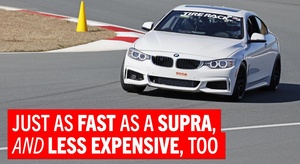
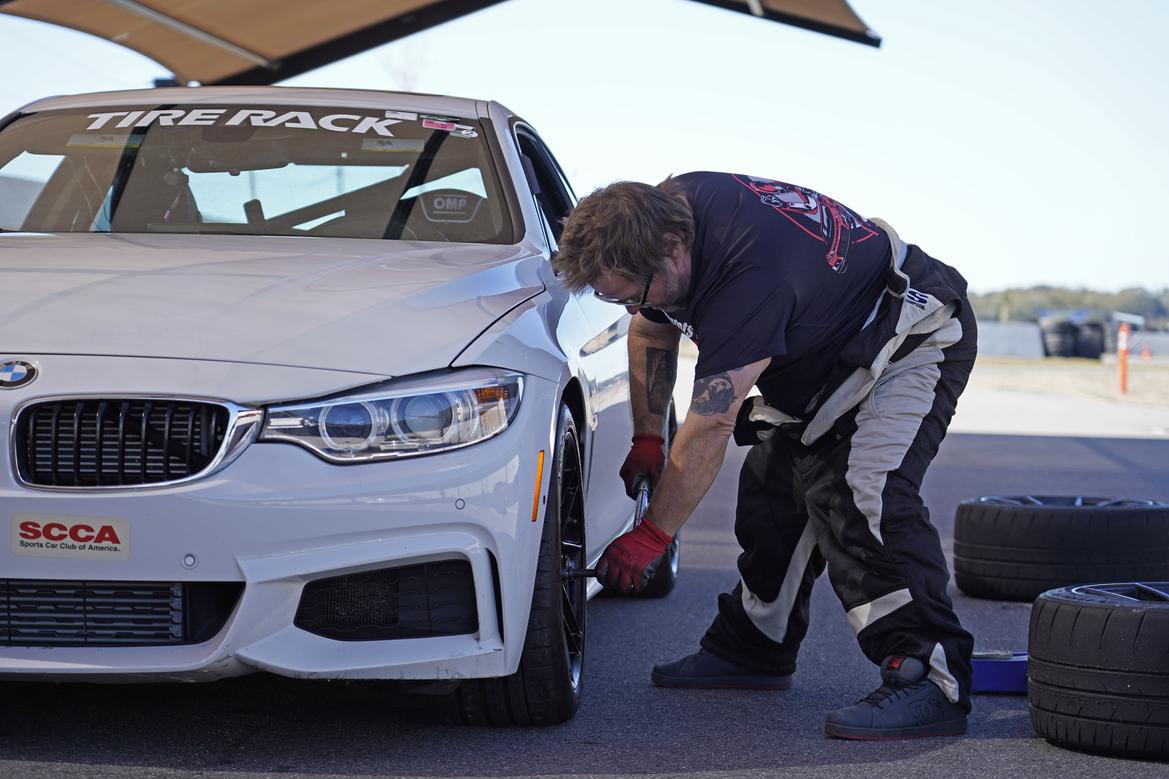
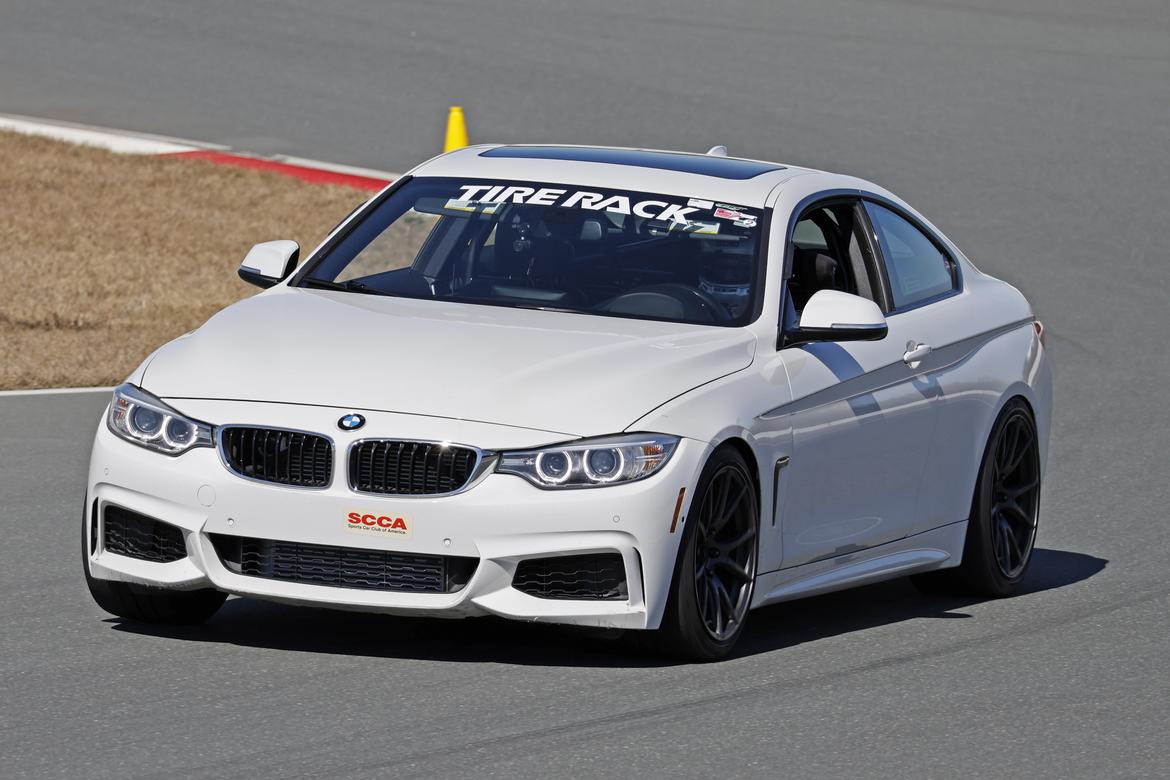
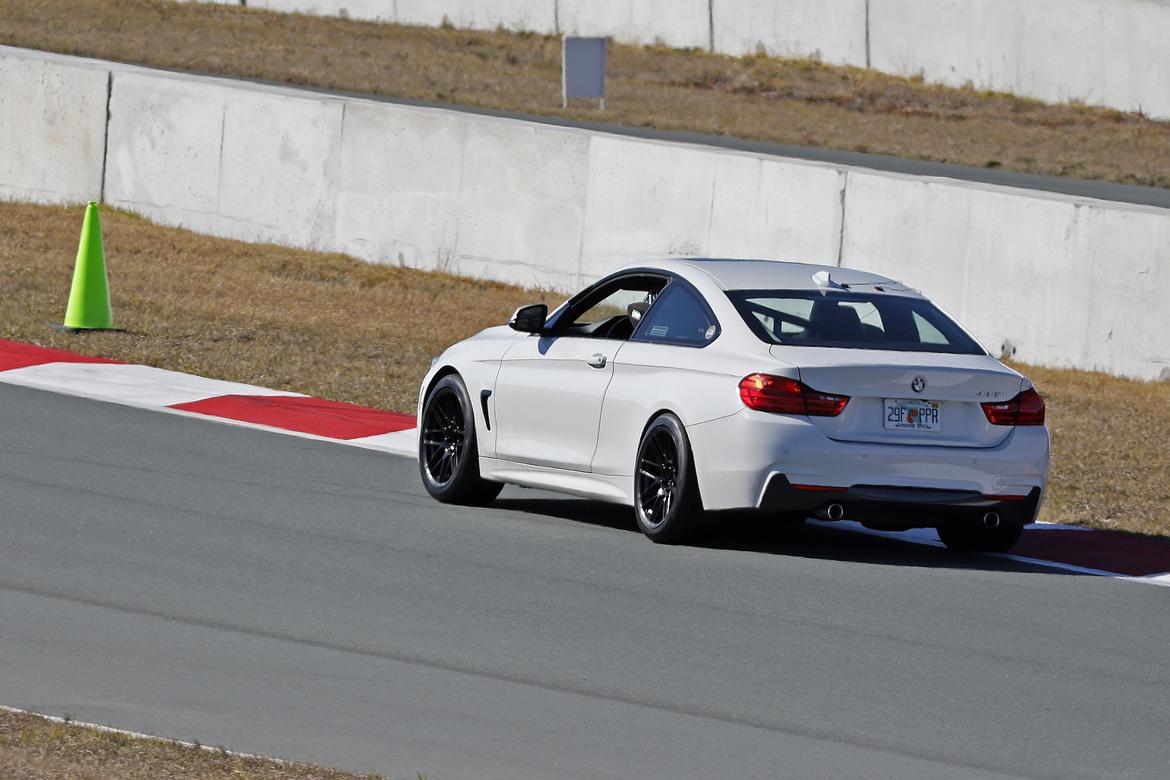
We decided to put our own dual-duty setup to the test on track by pitting the two setups run on our BMW 435i project car: the actual daily driven setup versus our track setup.
This is a car that actually sees daily duty, doing totally normal things with the a/c on and radio playing, as well as track duty competing in time attack and recreational track days.
For these two venues, we run a 275/35R18 tire on an 18x10.5 wheels from BimmerWorld–either the TA8S or TA5R. That’s basically the widest rubber we can get under the F32’s fenders, but that much width means that we need to watch the diameter: 35-series aspect ratio is a requirement for our application.
This limits our choices somewhat–275/40R18 tires are far more common–but we still get to choose from some of the best tire options currently available.
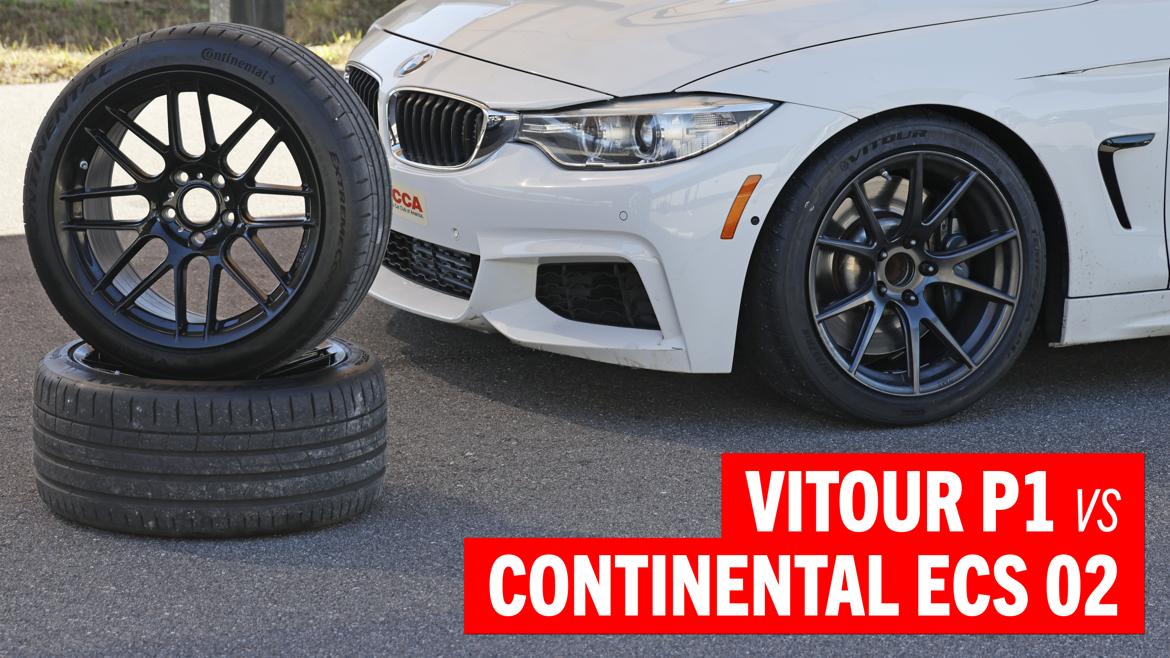
For track use, we opt for the Vitour Tempesta P1 P-01R, while on the road we go with the Continental ExtremeContact Sport 02.
The Vitour P1 tires are among the quickest 200tw track tires we’ve tested, and while the original P compound has a reputation for needing a bit more warmup time than the newer, more autocross-focused X compound, both compounds appear to be able to produce the same performance once they hit their operational temperature window. And with 3600 pounds of BMW on top of them, getting some heat into the rubber isn’t much of a challenge.
On the road, the Continental ExtremeContact Sport 02 is designated by the manufacturer as an Extreme Performance Summer tire, although it’s a perennial favorite among One Lap of America teams looking for an all-weather performer that will deliver lots of miles and not punk out on track regardless of conditions. It sports a treadwear rating of 340, which is considerably higher than the 200tw Vitours and even higher than many of the other tires in its category, which hover closer to 300.
Of course, treadwear ratings are more of a soft science or even a social contract among tire manufacturers than truly objective. Yes, there are standards for treadwear that are used to define these numbers, but they aren’t so much enforced as they are just broadly agreed upon by the manufacturers.
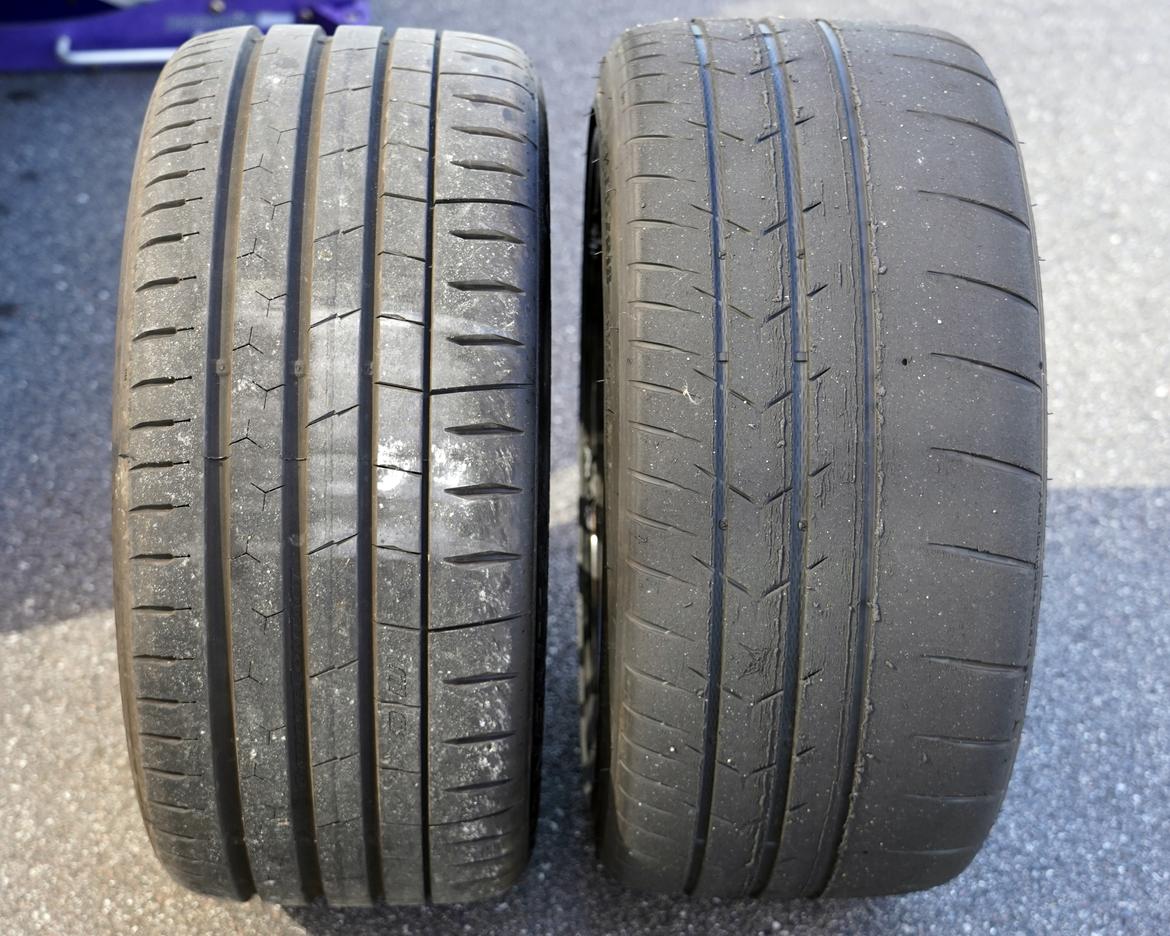
Continental ExtremeContact Sport 02 (left), Vitour Tempesta P1 P-01R (right).
So while two different tires with the same rating might not produce exactly the same grip and wear, in general, a 200tw tire will grip more and wear faster than a 240, which in turn will grip better and wear faster than a 300, and so on.
We’ll spare you the temptation to read ahead and spoil the twist, which isn’t actually a twist at all: The Vitours were faster.
Because of course they were. A modern 200tw competition tire is designed to go fast on track as its primary function while also being physically capable of performing street tire duty as an afterthought. So there’s no real surprise there. But what we really wanted to know was how each tire made its speed on the track, and what we were giving up in each venue by trying to have one tire do everything.
Let’s Look at the Numbers
We took our BMW and both sets of tires to Circuit Florida on a fairly cool February day. The asphalt at Circuit Florida is new, smooth and super predictable, so it makes for excellent tire test conditions and great subjective feedback.
Ambient temps and surface temps actually dropped slightly during the day as some cloud cover and a breeze settled over Central Florida. This seemed to make the subjective feel of the tires quite consistent, as we didn’t experience the typical “afternoon falloff” we get when testing tires in typical Florida conditions, where the surface heat-soaks as the day wears on.
And temperature is most of the story here.
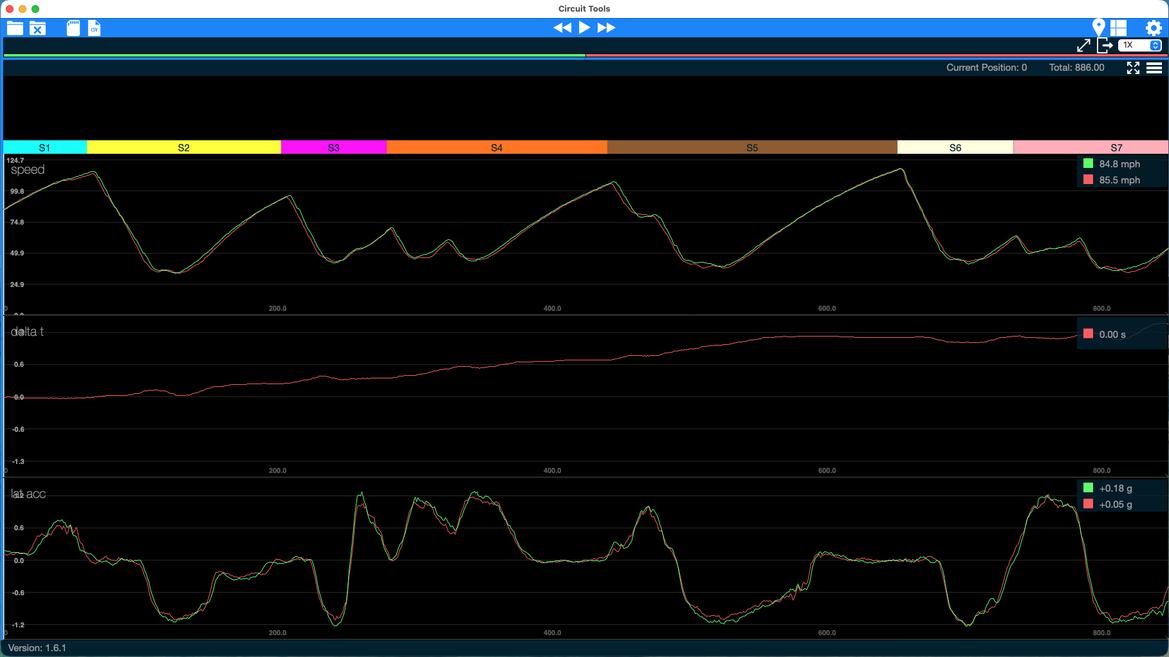
First, let’s look at lap times. With the Vitours, we were able to produce a 1:28.33 lap, which was as quick as we’ve ever run with this car at this track. The Vitours were fairly fresh, with only a single heat cycle to scrub them in and get them ready for track use.
The Continentals were behind that time, but honestly closer than we thought they’d be, laying down a best lap of 1:29.70. That’s less than a second and a half behind the Vitours. Those ExtremeContact Sport 02s were also fairly fresh, having seen only a few hundred miles of street use and still having lots of their casting flash in place.
The VBox data from our fast laps was even more similar than the lap times. In fact, it was difficult to look at the delta graph in Circuit Tools and definitively spot a situation where the stickier P1s were producing their speed advantage. If we had to dig deep, we’d say that the Vitours consistently produced better speed in the mid and exit phases of cornering, and those gains allowed faster exit speeds and a subsequent continuation of the gains down the next straight.
But the somewhat surprising corollary hidden in there was just how crisply the Continentals turned in. Looking at the lateral g graph in Circuit Tools, there are several corners–most of them, actually–where both the Vitours and the Continentals built lateral g at the same rate.
After that, the Vitour may have peaked slightly higher and maintained that peak slightly longer, producing their ultimate advantage, but the graphs show what the seat of our pants felt: The driving experience for both tires was way more similar than it was different.
Although the Vitours clearly felt grippier–particularly, as we mentioned, mid-corner, where they felt simply unflappable–the Continentals did not need to be babied to produce their best lap time.
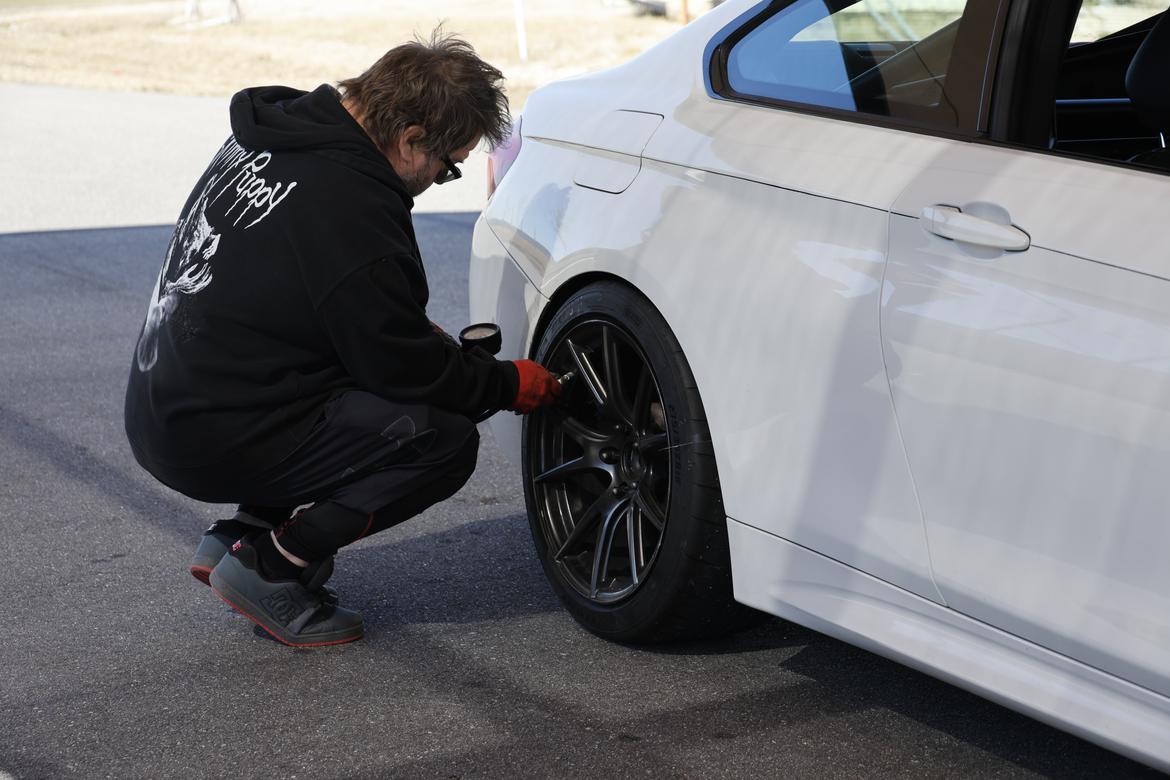
Both tires’ response to heat, however, definitely had some contrasts. We saw post-session tread surface temps that were very consistent across both tires at around 125°, plus or minus a degree or 2. This squares with the same car being driven nearly equally as hard for a similar amount of time, but the difference was in the feel of both tires as they hit their peak track temps.
The Vitour P1s, as their reputation indicates, needed a bit of heat to start working, but not much. You don’t need multiple laps to get them to work–at least not on a 3600-pound BMW–but your first out lap of the day is going to need some caution.
On subsequent-session out laps, though, even though the tires had cooled for nearly an hour, they seemed to switch on much quicker, even though the tread temp had cooled to about 75°F, which was only 15° or so above ambient. They felt fully switched on within a few corners, even though we were testing during a chilly–for Florida–day.
Why’s that? The surface temps cool off long before the core, Andy Hollis, our tire tech editor, explains. “So the wheel and carcass–and likely also the brakes–all retain temp,” he continues. “Where in the first session, they are cool and act as heat sinks to pull heat away from the tread surface, meaning it takes longer to heat up.”
The Continental ExtremeContact Sport 02s felt like the Vitours did on every session past the first one. They needed a couple corners of heat to get to their best, most consistent feel, then they were good to push.
The difference here is after about two hard push laps, the Continentals started to feel a bit overheated. Slip angles went up, and while the tire was still drivable and recoverable, it felt easier to make a mistake that would hurt momentum.
Blame tread depth and void causing squirm, Andy adds. “One look at the side-by-side picture tells that story,” he notes.
Times did not fall off that much, though: We just needed to push the tires a bit harder to get the same performance out of them.
A natural question at this point would be, “Well, what if you pushed harder when the tires were cooler?” That’s a good question.
And the answer: You get more heat, but not more performance. At lower temps, the Continentals produced a certain level of grip at lower slip angles, while at higher temperatures, they could produce a similar level of grip but had to do it at higher slip angles.
Those higher slip angles mean more wear, too, so pushing the tires to their peak during a long session could negate the additional lifespan afforded by a more street-focused tire.
Conversely, the Vitours thrived as much at higher temps as they did when they first came into their ideal operating range. In fact, we lost lap time in one session on the Vitours due to rising intake air temps on our BMW–a condition it’s VERY sensitive to–while the tires seemed to be producing just as much grip and performance as in any previous lap. The Vitour P1s certainly must have an upper limit on temperature tolerance, but on a 60° test day, we were able to find the engine’s heat tolerance limit far before we could find the tires’ limit.
So What Does All This Mean?
Our first conclusion here is that modern 200tw track tires are really, really good on track and can certainly be driven on the road in a pinch. However, it’s clear that most of the development work that’s gone into them has been in the service of track and autocross performance. On the road, the stiff sidewalls and thrumming, low-void-area tread remind you constantly that they’d rather be at the track.
Modern top-tier street tires are impressive in their own right. Yes, you give up a tiny bit of track performance–important if you’re chasing trophies or PBs–but the manners of the tires on track are far more impressive than we went into this comparison thinking they’d be. You do give up some heat tolerance with the true street tires, but the trade-off is in dramatically more day-to-day livability on real roads.
Another valid concern here is cost. Those 275/35R18 Continentals currently list on Tire Rack’s website for $270.99 per tire, while the Vitour P1s go for $393 each, which is a not insignificant difference.
Ultimately, most of you reading this story already know the real answer here: If you’re looking for lap times, you’re going to go with the most competitive tire you can slap on the car for its given class. And these Vitour P1s fit that bill magnificently, making speed lap after lap, with a locked-down, predictable, drivable demeanor that makes you feel like a hero corner after corner.
I think what we’ve shown here, though, is that for casuals–or folks who are doing non-competitive track days, or who just don’t want to keep an extra set of wheels and tires around to switch–you’re giving up very little by tracking a set of modern UHP summer rubber. You have to be a bit more conscious of heat management, sure, but the trade-off is a far more livable tire for everyday use, and likely thousands of miles more life, at a lower price.
So 200tw tires have come a long way since their introduction to a wider market as a streetable alternative to R-compound rubber. But so have the true street tires we occasionally overlook as truly trackable alternatives that sacrifice zero capability or comfort on the road.