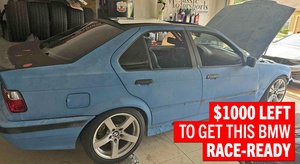

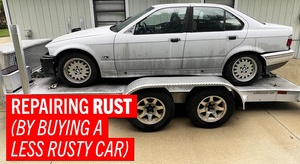
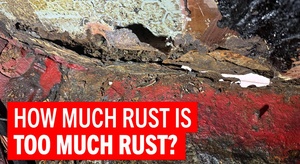
It's basically almost done now...right?


Photograph by David S. Wallens
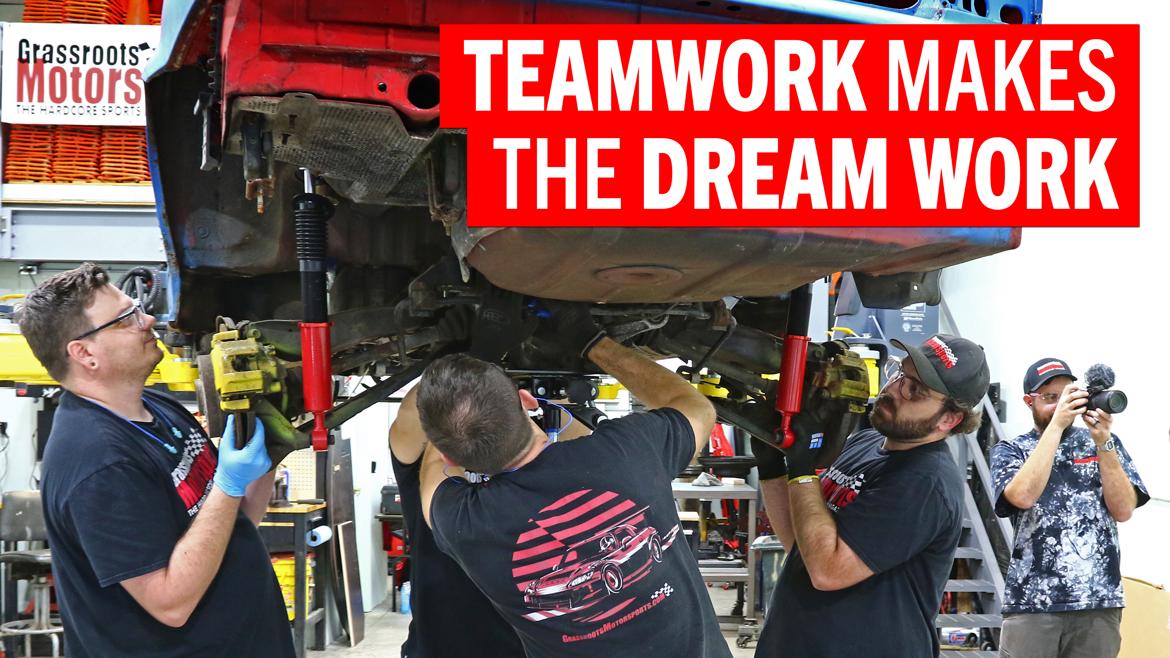
Team-building exercises are generally meant to bring people together, but would this one backfire?
Let’s back up and set the stage.
Last spring I impulsively purchased a rusty E36-chassis BMW 325i and got it running for just a few hundred bucks. My plan was to race that car in our Grassroots Motorsports $2000 Challenge Presented by Tire Rack. As I dug into the 325i, I realized something: It was way rustier than I originally thought.
While looking for a replacement fender, I scored another complete E36. This one had a relatively clean chassis, but its four-cylinder engine was blown.
We came up with the most GRM solution: Combine the two cars into one.
And to make it even better, how about if the entire GRM production team did the swap as a group project? Call it more GRM than a trust quilt.
Our local auto shop said that removal and reinstallation of the E36’s powerplant would take one person 16.4 hours, so seven of us would easily have a running car by dinnertime, right?
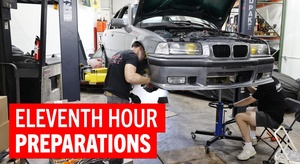
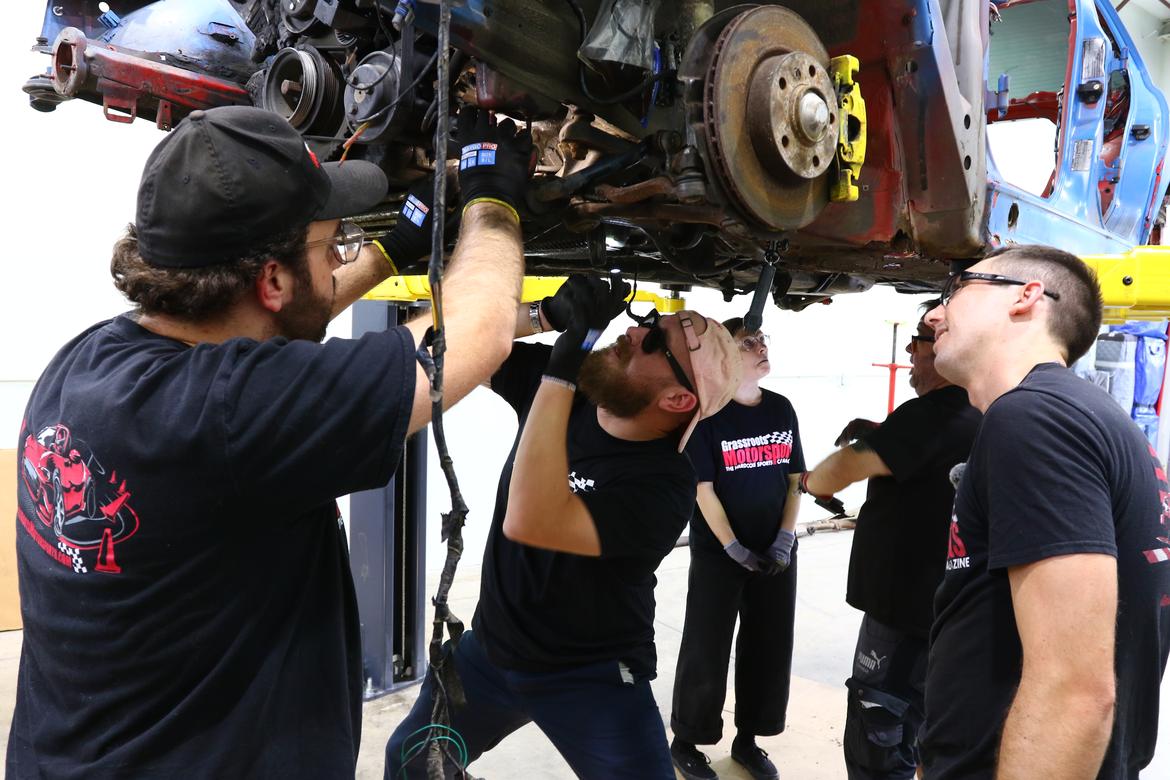
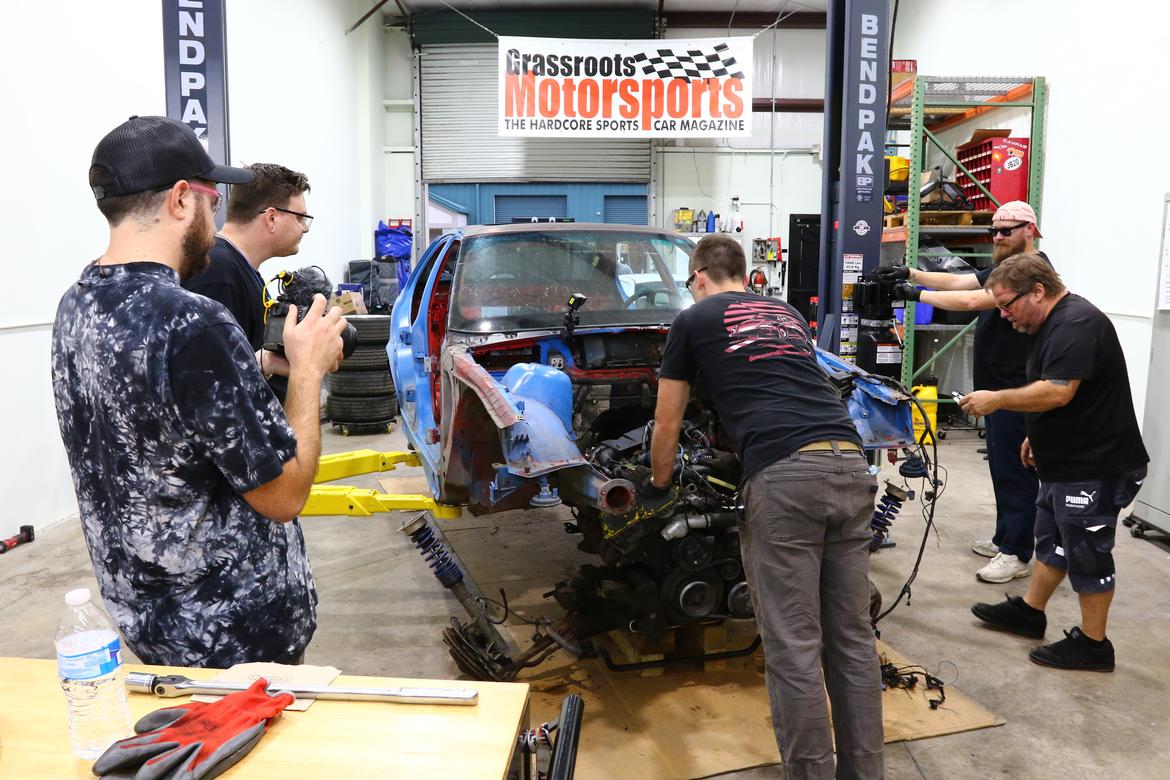
While some had assumed the 14 hands would make the work light, I started to realize that we were having some real issues in this team-building exercise. Our tallest employee is more than a foot taller than our shortest employee, so finding a lift setting that made everyone happy became impossible.
We had some people reaching above their heads, while others were ducking under the car to work on the same things. Not ideal for anyone, but we managed.
Photograph by David S. Wallens
Our next major hurdle: the differences in work experience. A couple of people in the group had recently done a trackside engine swap, while someone accidentally overtightened and stripped a brake fitting they were trying to remove. (Since we weren’t planning to reuse that brake line, it wasn’t a big deal. We just chalked it up to a teachable moment.)
About 2 hours after putting the rusty BMW on the lift, we were able to drop the subframes and drivetrain. This seemed like the quicker option than yanking out the engine from above. We also wanted to save the subframes as spares.
Photograph by David S. Wallens
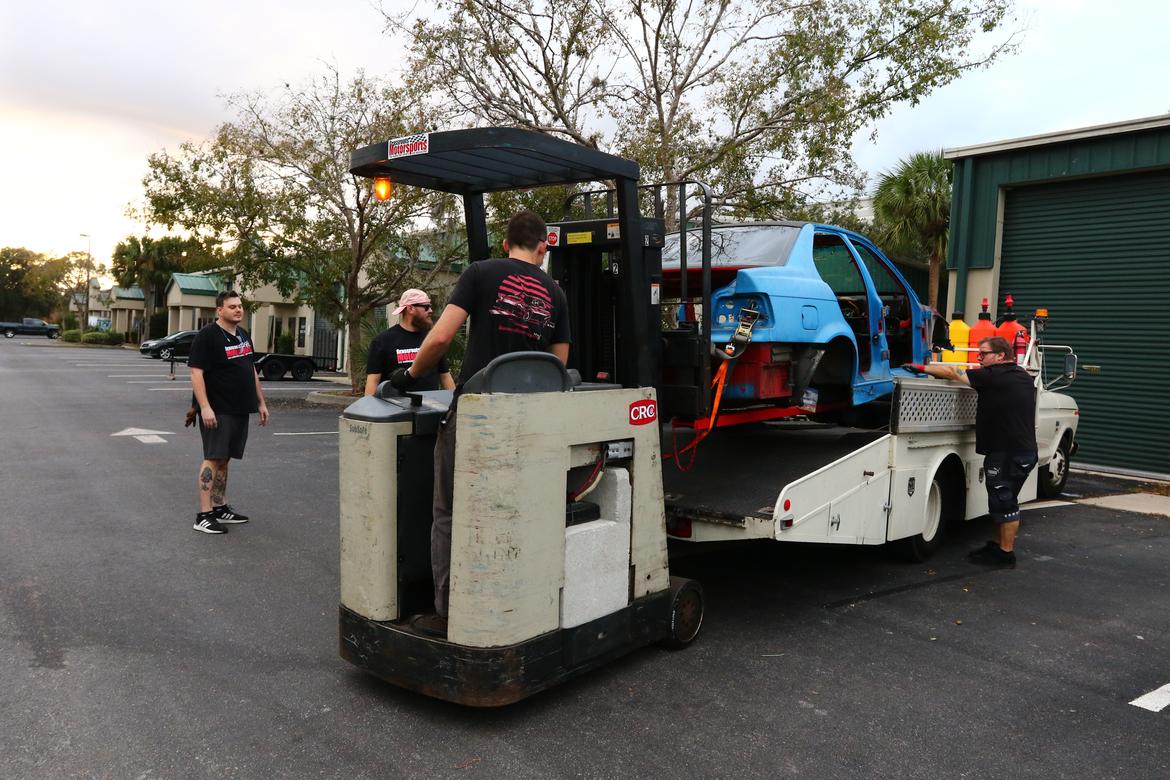
Once the rusty chassis was ready to leave the shop, we grabbed our forklift (free via Marketplace!) and carried the husk out of the shop. The car’s temporary home: Rampy.
Rampy is our 1973 Ford ramp truck that once carried an AMG GT3 race car through the gates of Daytona International Speedway. It would now get to haul the rusted remains of my E36 BMW to meet its fate: the claw at the local metal recycling center.
Photograph by David S. Wallens
While the team got started on the good chassis, I climbed onto the back of Rampy and scavenged the last few usable parts. I removed battery cables, the steering wheel and every relay in the fuse box before calling it quits and heading back into the shop.
By the time I got there, the good chassis was already in the air with parts on the ground. Since this was the chassis we would be using, everyone was reminded to use extra care to ensure we weren’t damaging parts we still needed.
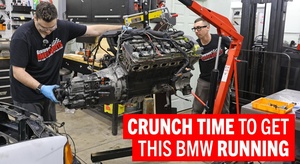
The less experienced team members were already showing improvement, and the engine and transmission were removed in a reasonable time.
After some quick internet searches, we decided that the transmission from the good chassis had some resale value. The blown four-cylinder engine, though, wasn’t worth more than its weight in scrap.
We removed a few bolts and had to break out the hammer, but a few minutes later, we had the junk engine out.
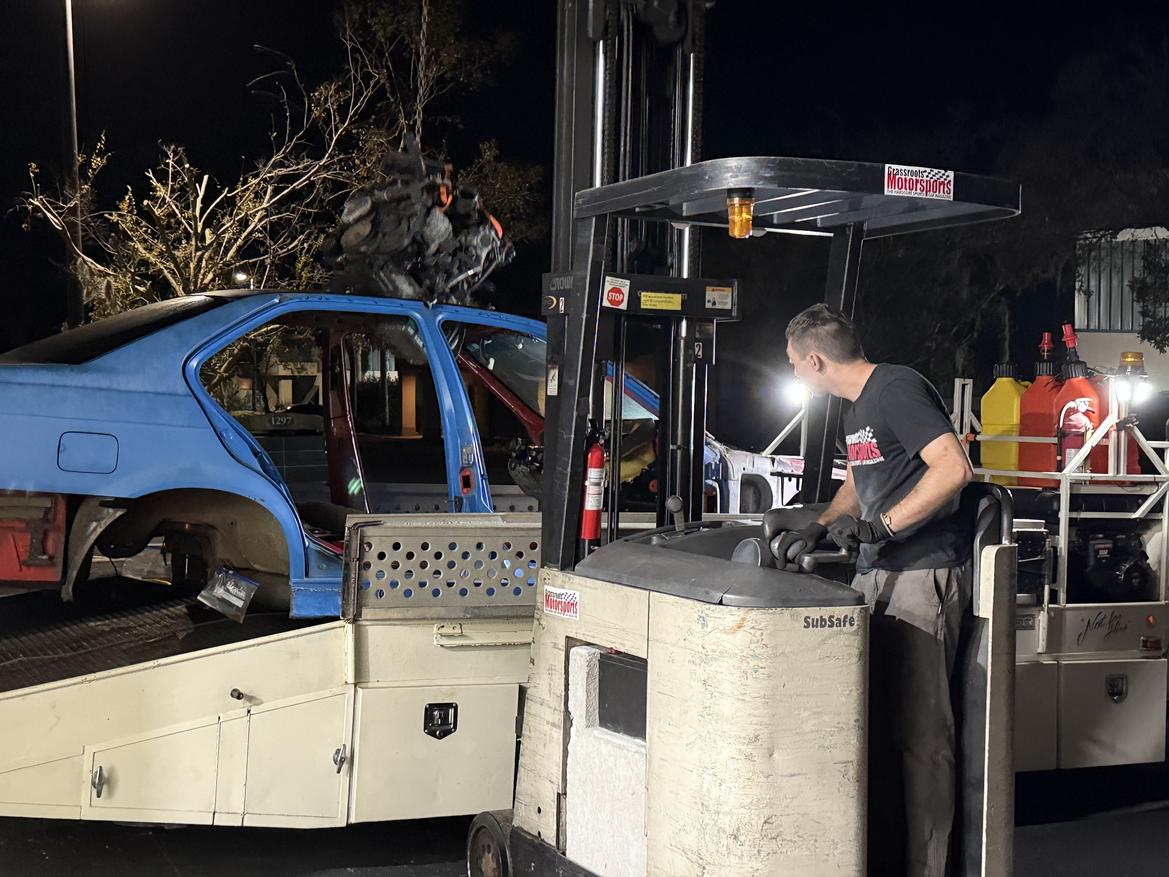
It, like the rusty chassis, would go to the scrapyard. For the trip, we dropped the blown engine through the sunroof. (We ended up having to enlarge the sunroof hole just a bit, but that was nothing a little Sawzall time couldn’t fix.)
Photograph by J.A. Ackley
As the clock neared 9 p.m., we decided to clean up and call it a night. While our lofty goal of pulling an engine and placing it a decent chassis wasn’t achieved, we still got a lot done: The rusty chassis was ready for its trip to the scrapyard, while the good chassis was ready to receive its new six-cylinder engine.
So, how close are we to having a running, driving car? The good engine is ready to go in.
Of course, we’ll then need to wire up everything, put in a radiator and make sure the car has fluids before we try to fire it up. It might not have been a one-day engine swap, but it’s got to be two days max–right?

It's basically almost done now...right?

How about now?
In reply to DavyZ :
How is the car now? Definitely not ready to take to the track lol.

I'm totally down for another one of these "team building exercises," by the way.
I mean this in the nicest way possible, but it was enjoyable learning to wrench on a car that I'm not responsible for.
In reply to Colin Wood :
You'll have the chance on the night before the Challenge trying to make it run 😂
In reply to Austin Cannon :
You talk about this BMW like it was a questionable decision or something... 
In reply to Colin Wood :
If I had any common sense, I wouldn't be building a car for the Challenge 😅

Colin Wood said:I'm totally down for another one of these "team building exercises," by the way.
I mean this in the nicest way possible, but it was enjoyable learning to wrench on a car that I'm not responsible for.
Oh yeah. I'll admit it - I had no worries ripping stuff off the cars. 
In reply to J.A. Ackley :
I feel like I am a lot better at removing things than putting them back.
Displaying 1-9 of 9 commentsView all comments on the GRM forums
You'll need to log in to post.