
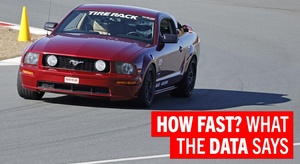
Hey, I know Chris!



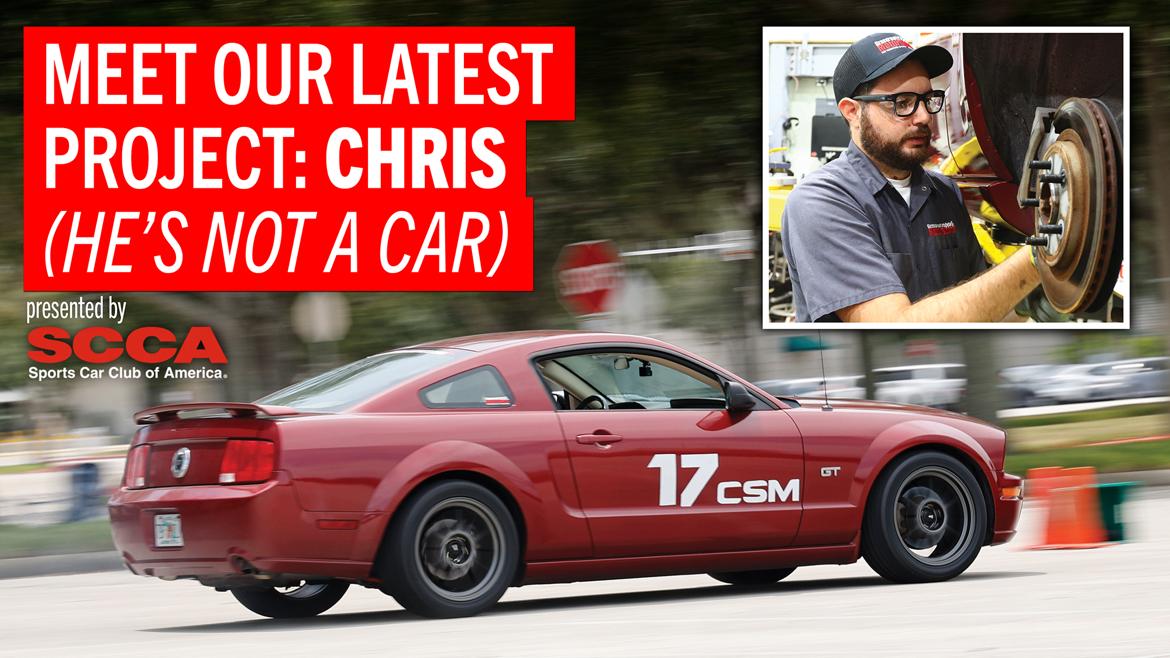
Photograph by Chris Tropea
[This article is presented free of charge thanks to the SCCA, and you can create your own path to the podium by joining the SCCA for less than $100/year.]
We’re calling our newest project “Chris.”
That’s because it’s not a car but, rather, a dude.
And he didn’t get that name from us; he got it from his parents. Take up any complaints with the Tropea family.
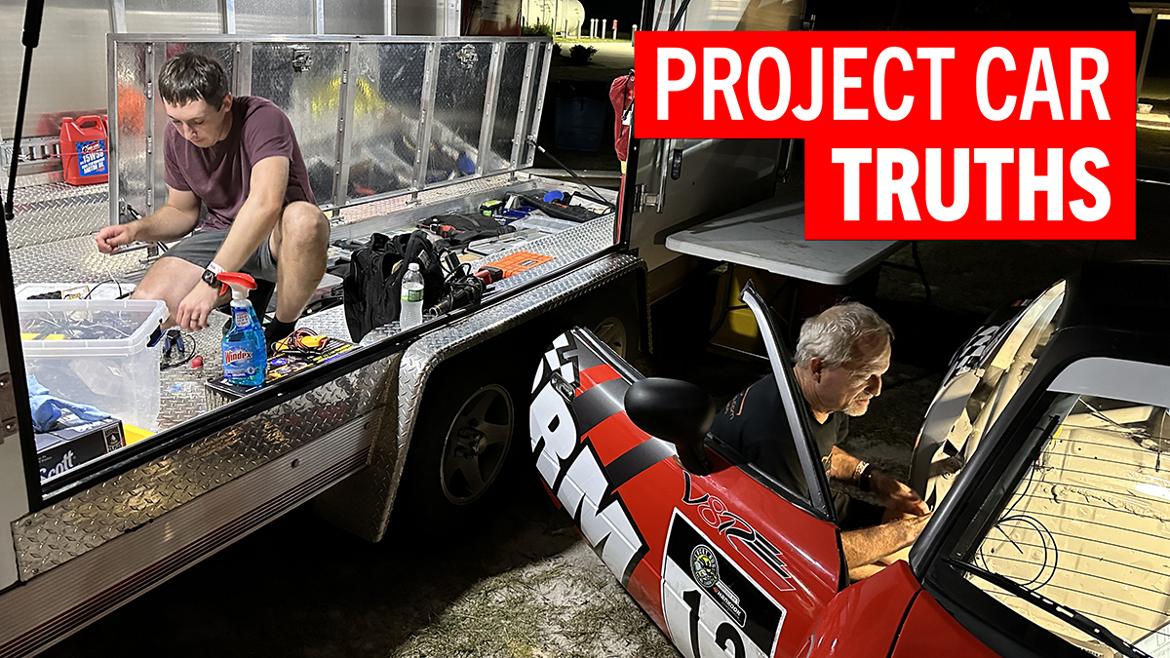
Chris doesn’t need a lot of introduction because you kind of already know him. If you’ve ever watched me review a car on YouTube, there’s a 99% chance that Chris was on your side of the camera. He’s our one-person video production crew: director, editor, camera operator and equipment manager.
When you see those chase-cam shots, Chris is the one driving the camera car. He’ll have various cameras mounted in strategic locations to capture the action and make everything look engaging.
When you’re a member of the GRM team, though, it’s important to fully speak the language of the natives–and it’s time to send Chris through boot camp. Someone else will hold the camera this time.
No, we’re not going to hoist him up in the air, remove his insides, and replace them with some “competition-certified” viscera we got on the dark web from a former Eastern Bloc nation that you didn’t think existed anymore. That’s what happened to our old intern, Danny, and it didn’t go so well.
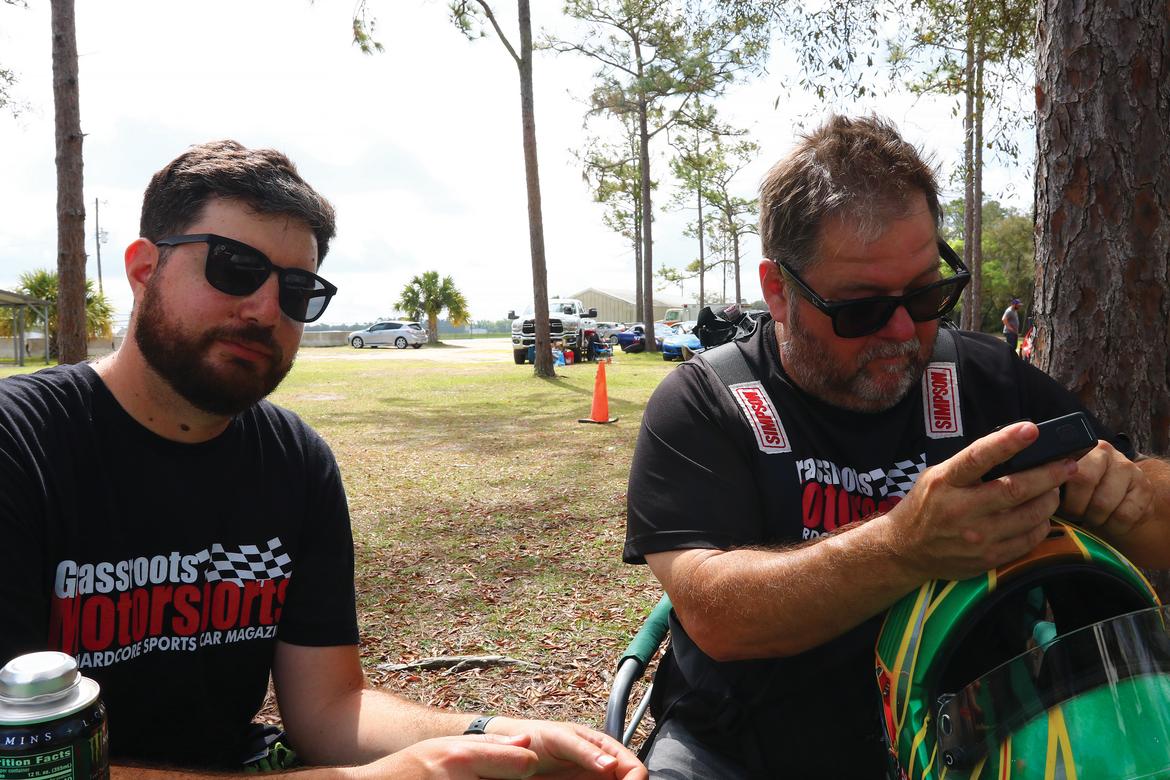
Remember how Luke and Yoda took on all comers? Well, we have Chris and JG. Similar relationship. Photograph by David S. Wallens.
What’s it going to take to get Chris from an inexperienced rookie to a national podium? Sadly, it’s not as easy as pumping him full of fish tranquilizer and making him watch “Le Mans” over and over. If that worked, I’d have won a couple GT3 championships already.
First, we need to set our goals: Which podium and where can we find a reasonable, attainable mountaintop that has nice, even steps along the way?
The SCCA had our answers with a perfect ladder system that meshes well with a developing skill set and growing risk tolerance. And it doesn’t require multiple cars or prep levels to be competitive.
Within the SCCA’s Club Spec division, both autocross and Time Trials competition follow the same rules regarding car prep. The result: You can truly have a “one car does it all” solution for multiple competition venues.
And a tightly controlled spec build sheet means that you don’t have to sweat development as much as you might with a project that allows more adjustability and variability.
This means Chris can initially develop his car control skills in the low-speed, low-risk world of autocross. When it’s time to take things out on track, the SCCA’s Track Night in America Driven by Tire Rack program provides low-cost, low-stress track access for full-speed lapping in a fairly relaxed, ego-free environment. Finally, when he’s ready to start the clock, Chris can get his SCCA Time Trials license and compete there.
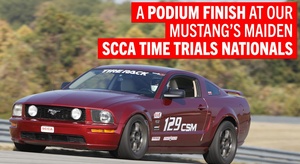
This ladder only requires a single membership, and ideally this story ends with the two of us sharing a car at the SCCA Time Attack National Championship in Texas in October–where the plan is for Chris to hoist a podium trophy.
What’ll Chris drive? Our Club Spec Mustang.
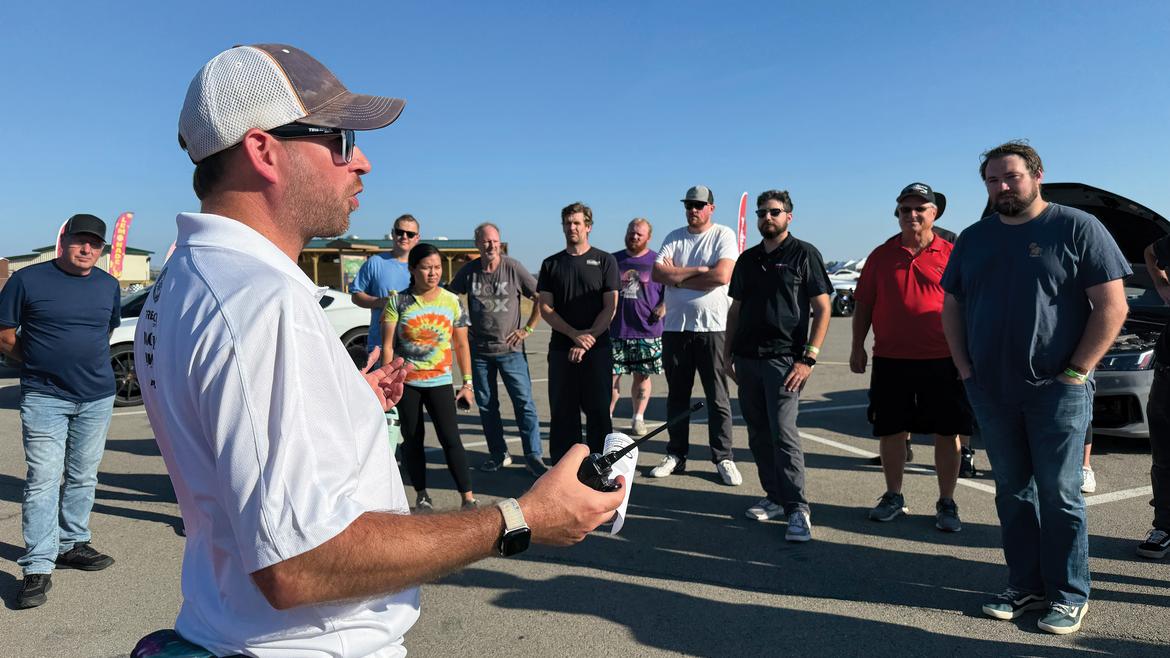
Chris has already tasted the SCCA menu–local autocrosses plus a run at a Track Night in America. Photograph by J.G. Pasterjak
So how do you build speed in a rookie? My original plan to train him in Russia using only vintage farm tools was shot down by the rest of the editorial team, even though I thought it was an excellent idea. To be fair, I may have watched “Rocky IV” the night before that meeting.
Driver coaching is a complex process, and there’s no one right way to build confidence in someone. The first nut you have to crack is figuring out just how someone learns and how they can translate knowledge into action, and finally, action into habit.
That process is different for everyone. My approach tends to be data-driven, since it’s kind of the way I internalize information the best. It’s also the easiest way for me to communicate.
Using onboard data and video–even just a simple speed trace–is an excellent way to provide conclusive visual evidence of both progress and potential. If Chris can correlate his actions with the squiggles and use that info to draw new squiggles, then that’s going to be his quickest path to speed.
That description greatly oversimplifies the process, though, because there are a lot of psychological barriers to overcome in building that confidence to trust both the car and your own developing skills to draw those new squiggles. But that’s why this is a multipart series and not a one-and-done quickie.
Relying heavily on data also gives me the ability to go out and draw some squiggles that he can use as targets, or at least to round out his frame of reference as to what the car is capable of doing. He may not be able to duplicate my squiggles straight off, but it will give him an excellent idea of where he’s leaving speed on the table while showing how a lap should flow to produce the best possible performance.
Also, we should probably race each other on the beach in crop tops and tiny little athletic shorts. “Rocky III” may have also been showing the night before the meeting.
We’ll be leaning heavily on our VBox data-acquisition gear, and Chris already has a leg up here as he’s watched me explain those squiggles in literally hundreds of videos. Pretty sure he was paying attention.
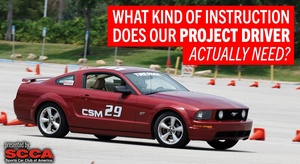
He’s also already run a few events in our Mustang–a couple of autocrosses plus an SCCA Track Night in America. He just hasn’t gotten a ton of dedicated instruction. He knows the basics, meaning we can get right to the business of building confidence and speed.
He won’t just be climbing the ladder of speed, though. We’ll keep autocrossing as a big part of his skill building throughout the process. The brutal physics of the transition-heavy sport teaches excellent car control and smooth input work, and the fast-paced nature of the competition is excellent for getting your brain in “perform NOW” mode.
Track Night in America will be all about learning to slow his hands down from an autocross pace and act more deliberately on track. He’ll need to develop the feel for how a tire is loading–when it’s slipping but still producing grip and when it’s sliding and just producing heat. The intense physics lessons of autocrossing will come into play here, but the real challenge will be getting him to work with the car on track rather than simply imposing his will on it.
Finally, SCCA Time Attack is the perfect blend between the aggressive autocross mindset with the controlled, Zen-like focus of track driving. You need to perform instantly, but too much aggression is usually rewarded with slower times at best–and disaster at worst. It’s how you blend those needs that ultimately determines your Time Attack success.
And during this process, we think you’ll also learn a lot of skills and techniques to progress through your own journey. If nothing else, you’ll get to cheer for a scrappy underdog who’s making the same trip so many of us have already made.
Photograph by Chris Tropea
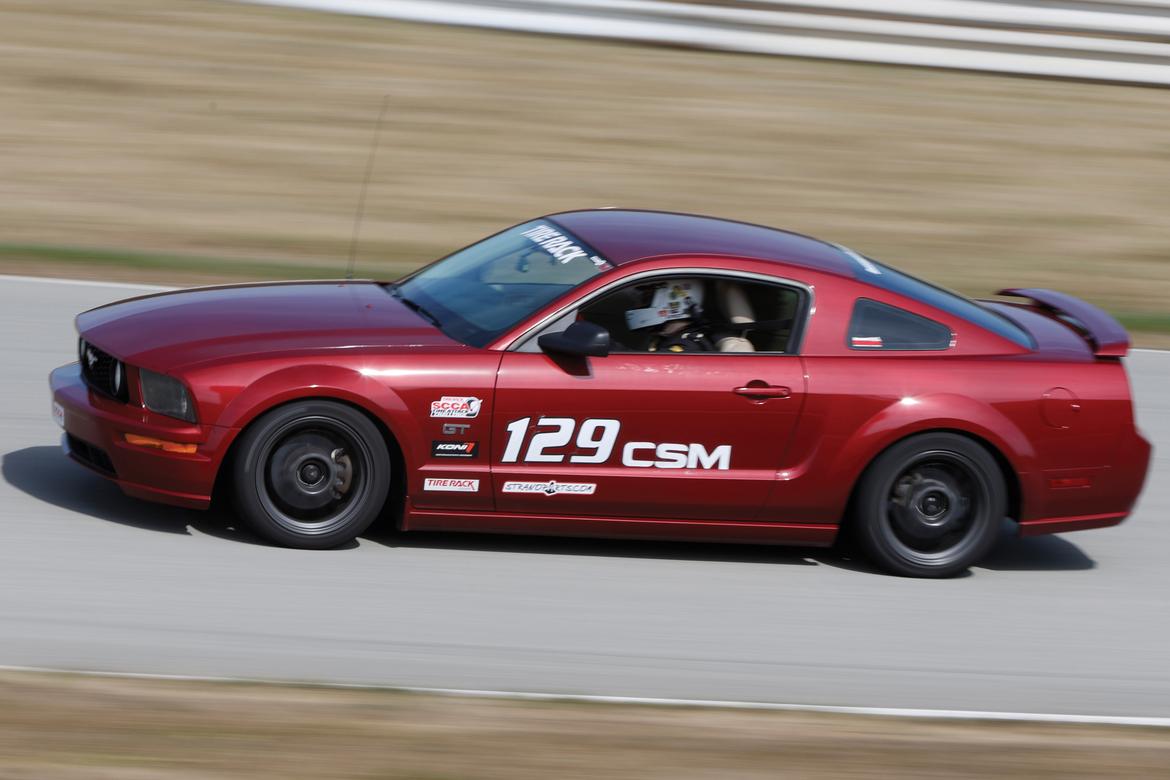
Our Club Spec Mustang project has served as a composed, reliable training ground for some of our younger staffers. Together we’ve autocrossed and tracked it. To send Chris on his path to the podium, though, now we need to fully prep the car as allowed under rules.
Luckily, there’s zero mystery as to what we still need to do because the SCCA regs state what we can and cannot do. A Club Spec Mustang starts out with a 2005-’09 Ford Mustang GT coupe or convertible with the 4.6-liter V8. Automatic-equipped cars must use a 3.31:1 rear-end ratio, and manual cars like ours shall run a 3.55:1 rear.
Koni Sport single-adjustable dampers are specified front and rear along with a set of Eibach Pro-Kit springs. Anti-roll bars come from Eibach, while Strano Performance Parts offers some optional hardware designed to increase durability–we installed those pieces. Camber plates can be sourced from Maximum Motorsports or BBK. (Our car wears the ones from Maximum Motorsports.)
Wheels must be 18x9.5 inches with a +35mm offset and weigh at least 17 pounds. A set of König Hypergrams fit the bill for us. All Club Spec Mustangs must use a 275/40R18 Goodyear Eagle F1 SuperCar tires. Both Tire Rack and Strano Performance Parts can hook you up with the necessary gear.
That’s the list of mandatory stuff you need to compete in the class, but the rules provide a few options. It’s time to add that optional gear.
The rules allow an aftermarket, adjustable Panhard bar to help better locate the rear end. The manufacturer is open, and we ordered one from Eibach.
We can also run a Steeda adjustable upper third link to precisely set pinion angle–something important to maintain corner-exit stability on a solid-axle car. (The rules also allow a short-throw shifter–no one brand specified–so we also got one from Steeda as well.)
The S197-chassis Mustang is a substantial car. Put a novice behind the wheel, and we’d want all of the brake capacity possible. The rules allow a big-brake package from Ford Racing featuring 14-inch rotors along with Brembo calipers, so that will go on the car, too.
This setup might weigh more than the smaller, stock rotors, but the weight penalty is worth it for the performance and confidence boost. Hawk DTC-60 pads will handle track duties, and we’ll run HPS 5.0 pads for street and autocross.
The other big option we’ll be exercising is the differential. The class allows rebuilding the stock limited-slip differential with the Ford Traction-Lok carbon-fiber clutch pack or the installation of a Detroit Truetrac differential from Eaton. We like the progressive, transparent action of torque-biasing differentials like the Truetrac, especially for a driver with limited experience. We also like the fact that it should long outlast the stock, clutch-type diff.
The rules also allow track day safety gear: fixed-back racing seat, five- or six-point harness and a roll bar. The catch is this gear needs to be installed as a complete system–you can’t install a race seat without rollover protection, and you can’t use fixed belts with stock seats. Still, we feel that this level of prep will improve both safety and performance. Remember, a comfortable, well-planted driver is a fast driver. And we want Chris to be both fast and comfortable.
Autocross and track days, rally and club racing: The SCCA menu includes it all–and, thanks to 115 regional clubs, makes it easy for newcomers to find an event and join in. A full membership costs about $100.

Hey, I know Chris!

I was going to add Chris to the project cars page, but I wasn't too sure how many liters his heart has.
Displaying 1-2 of 2 commentsView all comments on the GRM forums
You'll need to log in to post.