Photograph by Chris Tropea
[This article is presented free of charge thanks to the SCCA, and you can create your own path to the podium by joining the SCCA for less than $100/year.]
In this episode, we’re going to do some bench racing. Well, bench learning, anyway.
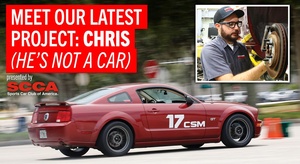
See, our subject, Chris, whom you met in Part 1, is fairly raw. And at the end of this season, we want to put him on the podium at the Tire Rack SCCA Time Attack National Championship.
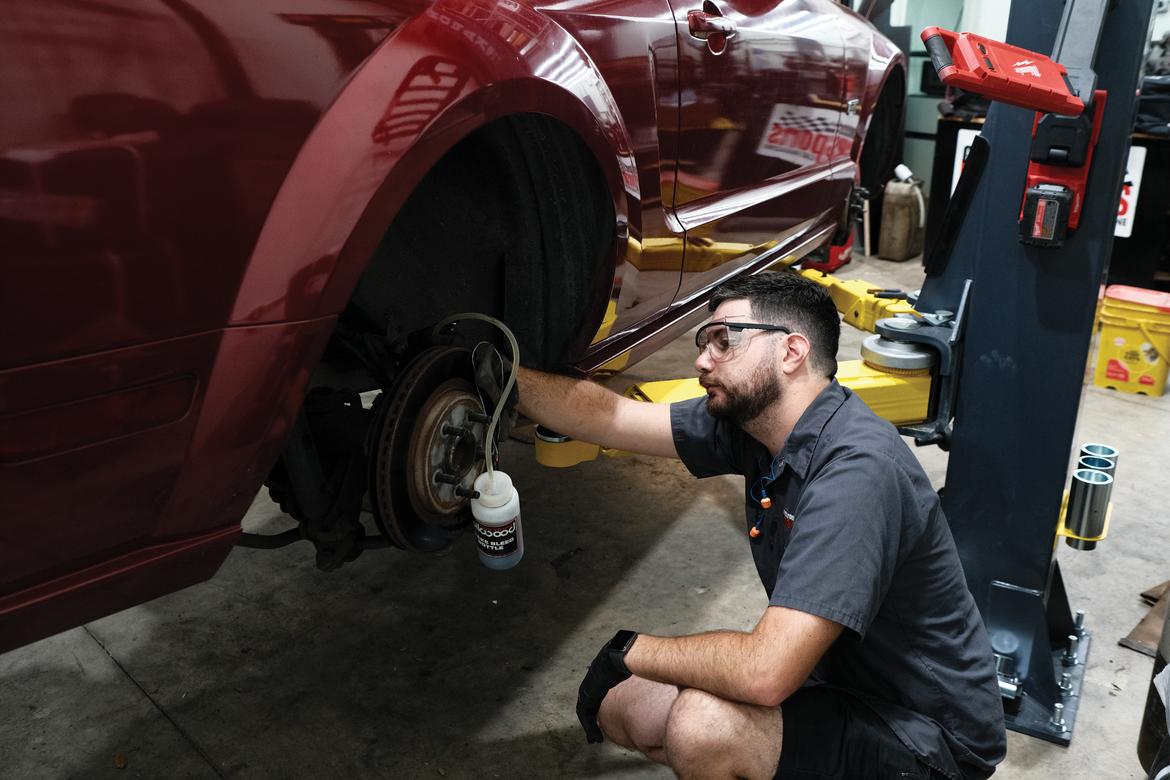
Chris has been part of our Mustang crew since our very first encounter with the car. This year, we’d like to see him put it on the podium. Photograph by David S. Wallens.
So, how raw is raw? His most extensive track work has been driving the camera car for all of our test videos. That puts him in the middle of the track, driving fast enough that the action looks exciting but slow enough that our expensive gear doesn’t fly off the side of his truck.
He also just bought a new Civic Si. A red one.
How do we channel his enthusiasm into enough actual ability to turn him into a podium driver? Welcome to our series.
Why do we practice? To reduce the need to consciously act during high-stress moments. We train to build the muscle and operational memory so we can remove as much burden from our real-time thought processes as possible. That frees up our brain to deal with sensory input in a cleaner environment, letting us concentrate on the important stuff that demands a lot of capacity while the less important stuff runs in the background.
And this idea spans not just the driving portion of the activity, but the logistical and operational portion as well. For those of us who’ve been doing this for a while, there’s a lot of factors that we take for granted that can be serious points of stress for a rookie.
Imagine a scenario where you’re a novice driver trying to control a car as close to the limit as possible. First, do you even know where all the flag stands are located–at a track you’ve never been to? Or will it be a complete surprise when you see a waving yellow flag at some point?
Do you know where pit-in is? Do you know how to take the preceding corner so you can enter the pits smoothly? And once on pit lane, do you know the path back to your paddock spot? Imagine your stress level if you don’t know any of these things.
Screwing up any one of them could turn you into a minor pariah pretty quickly, or worse, the Guy Who Ruined the Whole Event®. That’s a lot to deal with while you’re trying to remember to hit an apex–or what an apex even is.
So training is not just about feeling slip angles and anticipating yaw. That will come eventually, but first and foremost, it’s about reducing the amount of mental and emotional stress to free up the capacity to properly be able to deal with those higher-level functions.
The easy answer to learning the basics is to just go and do events. But jumping into the deep end before you can swim is not always the best plan. Sure, you may survive, but you may have to do things to survive that teach you bad habits, and the whole point at this phase is developing good habits.
So pick your events wisely and understand that you’re not simply there to get faster on track. Instead, you’re there to desensitize and acclimate yourself to a complex and sometimes stressful world, which will free up your brain to worry about the important stuff. The side benefit is that you WILL get faster on track because you’ll be able to focus more clearly when it matters.
How do we actually do this, though? Well, first recommendation is to pick events that streamline and simplify the non-track processes.
The SCCA’s Track Night in America program is a great example as it’s kind of designed around these core tenets. TNiA novice “coaches” are less driving instructors than they are track concierges. They guide their groups through the logistical side of the event as much as they watch out for on-track mischief.
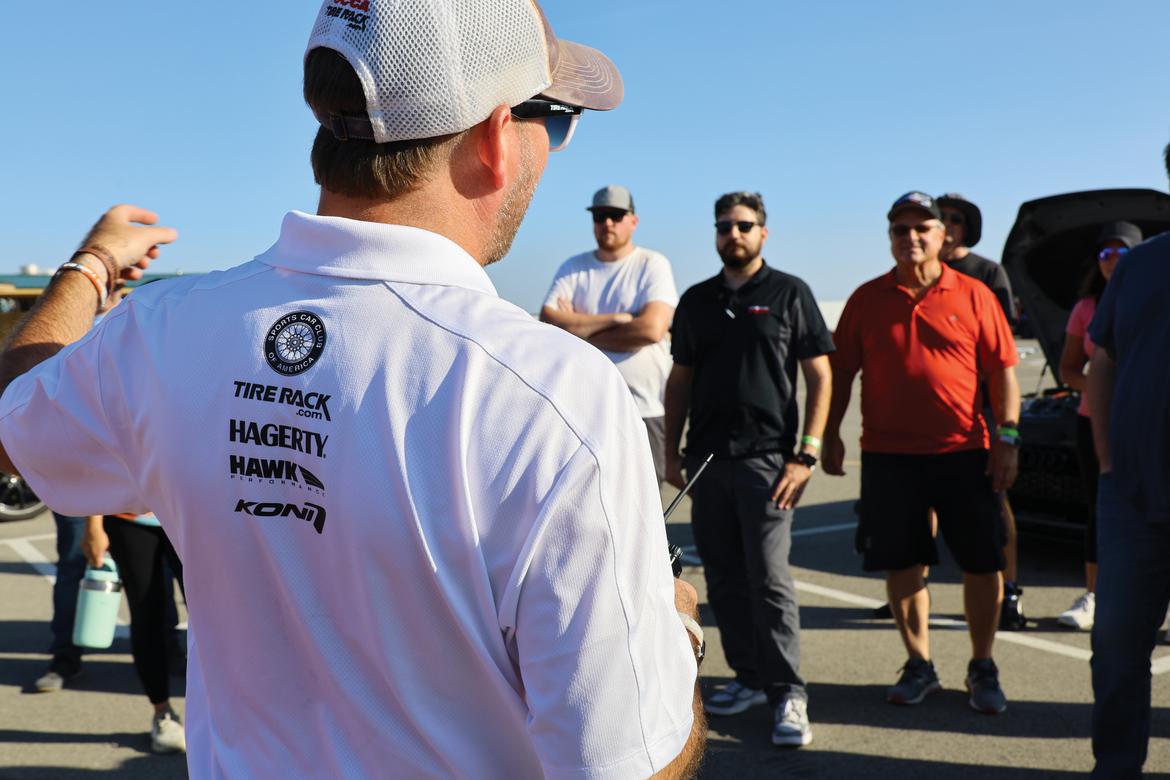
SCCA Track Night in America will help Chris get up to speed in a safe, controlled environment while watched by trusted coaches. Photograph by Tom Suddard.
The SCCA even leans into this philosophy and has since the program’s inception. Heyward Wagner, now SCCA’s VP of Rally/Solo and Experiential Programs, was one of the early forces behind the creation of TNiA more than a decade ago.
“Track Night was built on the philosophy that the ultimate barrier to motorsports is knowledge, and knowledge can be anything from what flags mean to what gate should I drive through to get to the paddock,” he explains. “We built the entire program with that in mind.”
This approach takes a ton of pressure off while you’re at the event. It also gives you a good baseline for how to navigate the processes when you hit other events that aren’t quite so curated.
While it sounds like a long way from “know your way around the paddock” to “nail braking points like a pro,” the key here is it’s all about establishing a mindset that can focus on performance and execution, not minutiae.
When your comfort level with the event itself is satisfactory–and you’ll know when you don’t wake up constantly the night before an event worrying about missing a grid call–it’s time to start building speed on track.
We’re going to talk about lots of techniques that Chris will be using to go faster as this series progresses, but at this point we’re still focusing on the true rudiments of his on-track education. And the first notable step is finding a mentor.
While you may have many people who can help you with technique and skill building, it’s important to have a single person to whom you feel accountable for your progression. (And honestly, if that person is insisting that you learn everything from them and isn’t asking you what you’ve learned by watching or being instructed by other people, they probably aren’t the best person for the job.)
For Chris, I’ll be that guy, but I want him to get lots of input from diverse sources and even collaborate with drivers who are on the journey alongside him. Sure, some of the advice may conflict with what he’s already working on, or not be a good fit for his particular skill set, but I think the potential for learning something you might otherwise not have picked up is greater than the potential downside.
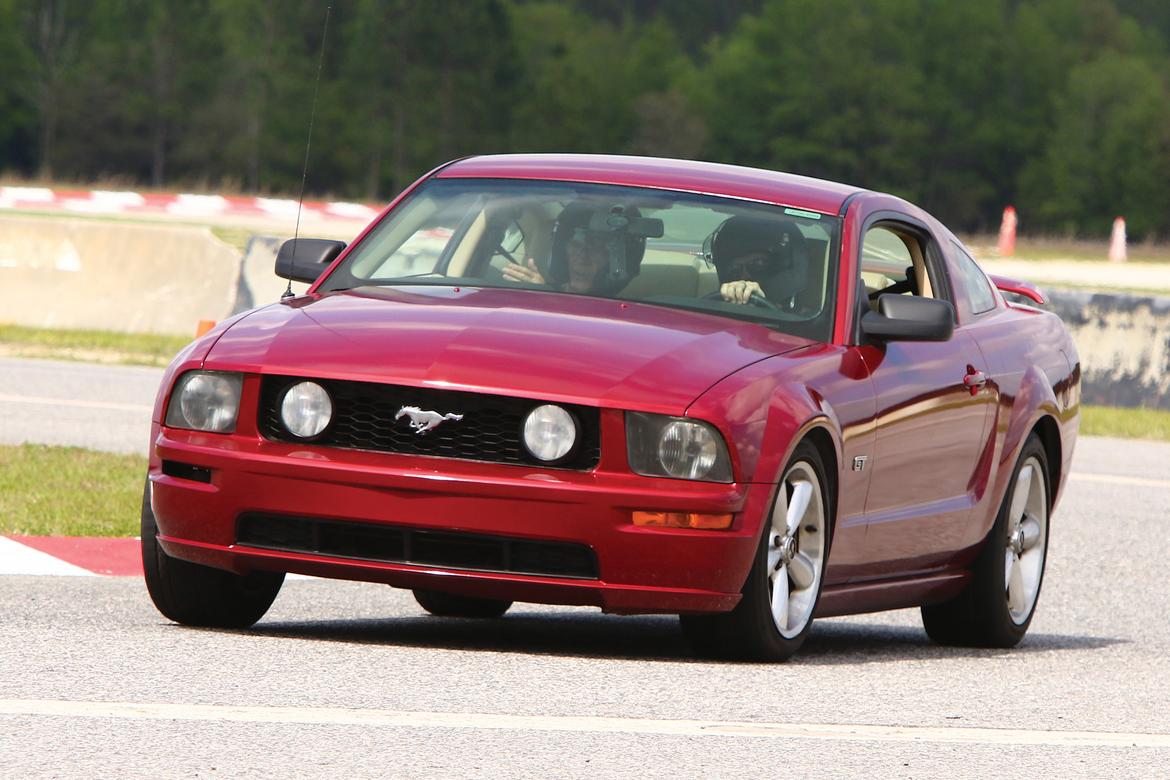
You might not run into Randy Pobst at every event–that’s Randy coaching Chris around the FIRM–but you’ll likely encounter other experienced drivers willing and even eager to help. Photograph by David S. Wallens.
To that end, a good rule is to never–or at least rarely–turn down instruction from a more experienced driver. I might say that recommendation comes with the asterisk to only right-seat with drivers you trust to a very high degree, but whenever you’re watching from a corner, taking a track walk or reviewing data, it’s always helpful to have a second opinion. And sure, that opinion may be full of crap, but learning to separate what’s real from what’s full of crap is an important skill at this point in the process.
The good news here is that there’s no lack of experienced drivers in this scene who are willing to help. In many cases, “instructors” have been given free or discounted entries to track events on the express promise that they’re there to assist novice drivers. Take advantage of that fact whenever possible.
And even if you can’t take a ride-along with an instructor during hot laps–or if you’d rather not–maybe your data system can. (Even if that experienced driver is in a different car, the very shape of their speed trace can reveal a lot about techniques they’re using to go fast and be smooth.)
Oh, you aren’t capturing data during every track session? Fix that, like, now. Even if you just end up using a free phone app–and several good ones exist–log your data. There will be no clearer definition of your progress than those squiggles, and you’ll only wish you’d been logging them sooner.
Even though your goals, like Chris’, may lie on track, there’s benefit to be had from exploring some alternative avenues. Autocrossing is a perfect example.
Chris will be running our SCCA Club Spec Mustang on track. The prep rules have created a car designed to run competitively in both autocross and Time Trials competition. This gives Chris a good chance to drive the same car at the limit in a low-risk, high-intensity environment.
Autocross is a low-cost, low-stakes way to get seat time while becoming comfortable enough with the car to put the relationship on autopilot. The laws of physics are the same on an autocross course as they are on track, and the autocross environment gives you the opportunity to experience the effect of many of those laws in a compressed time frame.
Likewise, any sport or activity that puts a premium on smoothness, hand-eye coordination, keeping cool in complex, stressful situations, and having good physical and spatial awareness is good cross-training for track work.
If it sounds like we just described most sports, well, we kind of did. And while you may have to adapt many of these skills for the particular venue, to some extent it doesn’t matter how you build and exercise them as much as it matters that you DO build and exercise them.
Our next milestone with Chris will come after just a bit more Mustang prep, which we’ll also cover in a future issue. He’s done a good job at attending a few events and getting used to the flow of things–he successfully completed an SCCA Track Night in America at Pitt Race, in fact–so we’re comfortable that we can actually start working on assessment and training.
That starts, just as with our project cars, with a baseline. We’ll take him to the track, run some data on some of his laps, and use that to form a baseline assessment and come up with a plan to tighten up his squiggles.
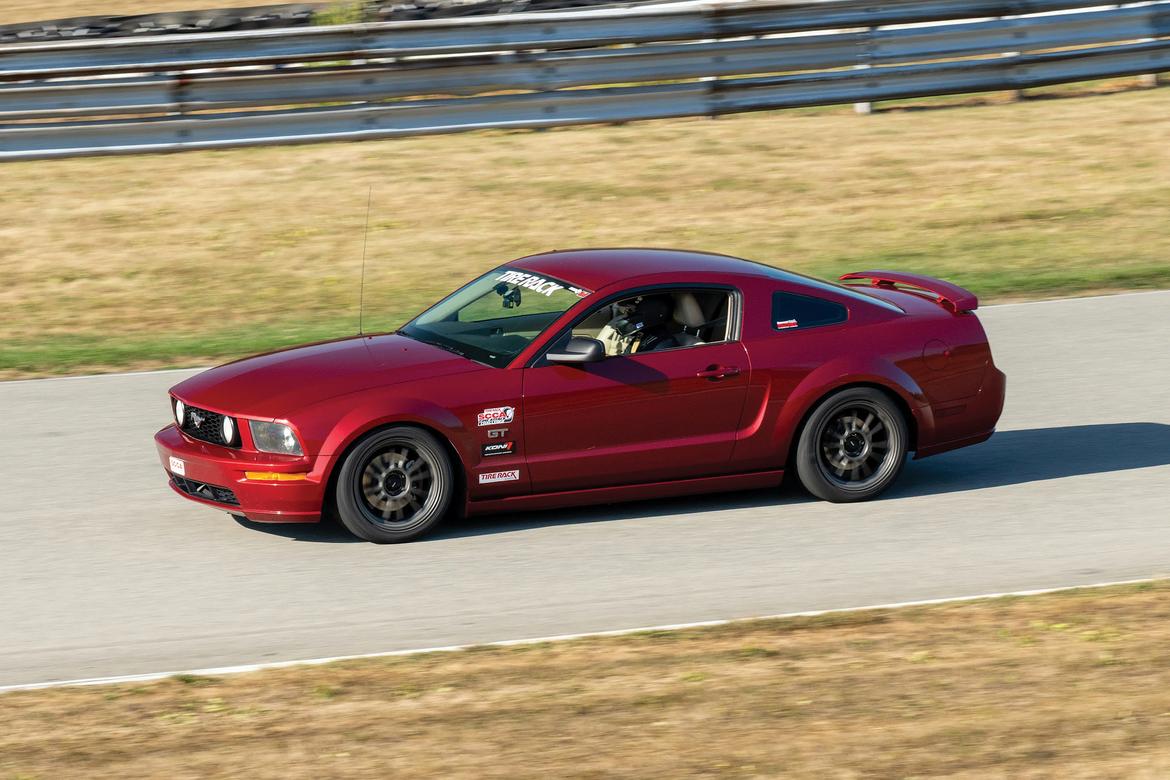
Photograph by Brian Jones
From there, it’s just getting him to learn how to draw those lines. Easy, right?
Autocross and track days, rally and club racing: The SCCA menu includes it all–and, thanks to 115 regional clubs, makes it easy for newcomers to find an event and join in. A full membership costs about $100.
View all comments on the GRM forums
You'll need to log in to post.