Mazda’s famous rotary engine is well-known in the enthusiast world as a compact source for major power. Displacing less than a liter and a half, and at about half …
History of the Rotary
In the mid-1950s, noted German inventor and engineer Felix Wankel (pronounced Vahnkle) patented the first new internal combustion engine of the 20th century. Wankel’s invention, which became known as the rotary engine, first sputtered to life in 1957. Four years later, an engine designer from the Japanese firm Toyo Kogyo (now kown as Mazda) saw the current running model, which was produced at the time by Germany’s NSU.
"I felt a genuine surprise when I first saw a running prototype of the rotary engine in 1961,” said that engineer, Kenichi Yamamoto. “It was so compact and turned so smoothly. Like any engineer, | was impressed by the novelty, because there was so little variation in internal combustion engines at the time. I felt a passionate desire to challenge and perfect the rotary engine.”
Yamamoto was put in charge of rotary engine development and advanced rapidly through the company. He eventually became chairman and CEO of Mazda.
After five years of strenuous development to prepare the rotary for production, Mazda introduced the 110S, also known as the Cosmo Sports, for the 1967 model year. This sports model, equipped with a 110-horsepower, two-rotor engine, drew raves from the home market critics. However, it was never imported to the U.S.
The Wankel Engine
The rotary engine operates in a similar fashion to a two-cycle piston engine in that the combustion goes on continuously. In addition, all three sides of the triangular rotor carry on the cycle simultaneously. These factors are what give the rotary engine its excellent power-to-weight ratio. Other advantages are a complete lack of any valve gear and a small reciprocating motion of the rotor, which gives it inherent smoothness and high-rpm capability.
However, the rotary engine’s fuel efficiency is poor due to the high surface-area-to-volume ratio of the combustion chamber at the moment of ignition, which causes quenching of the flame front and incomplete ignition. This appetite for fuel would be the engine’s crux.
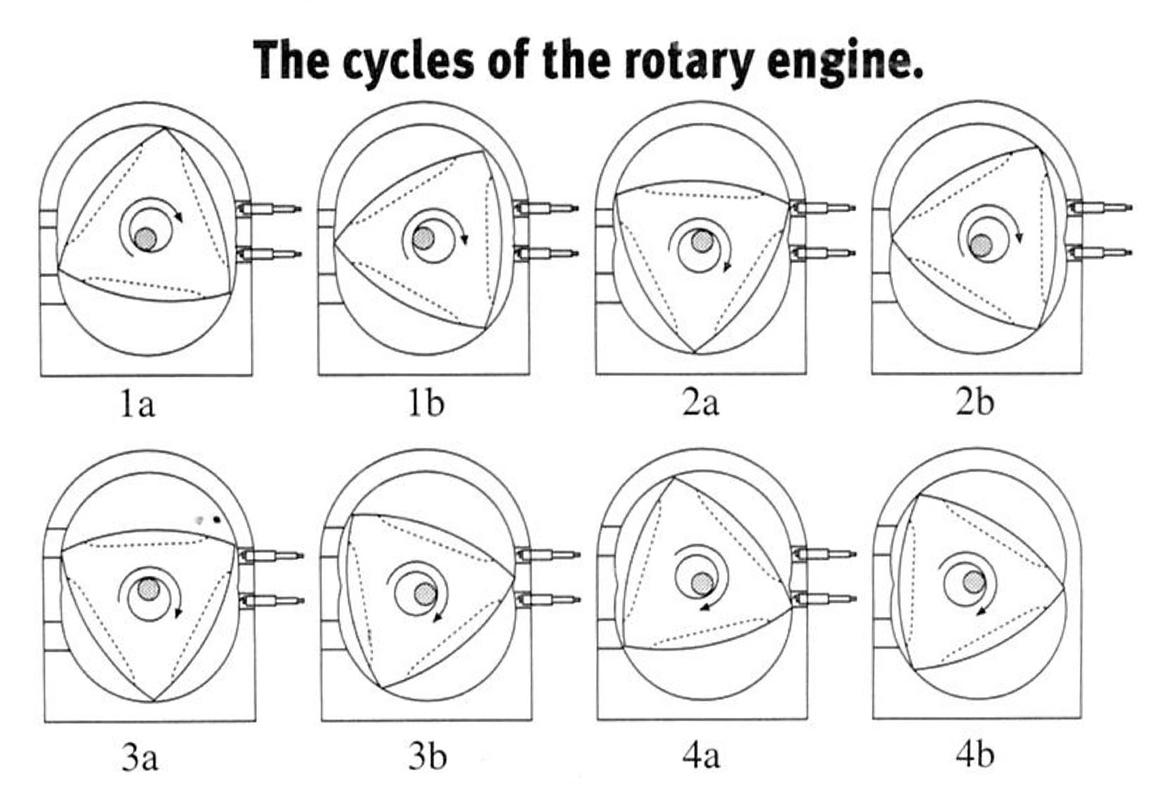
We can use our illustration on page 77 to follow the combustion cycle of one side of the triangular rotor. In figure 1a, the rotor apex seal has swept past the intake port and has begun to draw in the air-fuel mixture from the intake manifold. In figure 2a, the second apex seal has passed the intake port and compression has begun. Figure 2b shows the point of maximum compression, which is designated at TDC (top dead center); the spark plugs fire at or near this point. Two spark plugs are required for each rotor because of the long, thin shape of the combustion chamber.
In figure 3b, the fired charge expands (this is the power stroke), while figure 4a shows the uncovering of the exhaust port and subsequent release of spent gases.
Finally, figure 4b shows the end of the exhaust phase and the simultaneous beginning of the next intake phase. Inevitably, there is some mixing of the exhaust gases at this point, but this only serves as a natural form of exhaust gas recirculation. This also reduces the level of hydrocarbons and nitrous oxide emissions.
R100, 1970-72
The first Mazda to be exported to America was the R100. Introduced on the West Coast in 1970, this was a very ordinary-looking small Japanese sedan equipped with a 60-cubic-inch (982cc) two-rotor engine designated the 10A. In making the R100, Mazda simply took a piston-powered car already in its stable—the Familia coupe—and put a rotary engine under its hood.
The R100 sold in very small numbers, primarily in the western part of the U.S., due to a lack of national advertising and sales outlets. It was nonetheless a very spunky car—100 horsepower at 7000 rpm—with remarkable smoothness and quietness. The R100 was never sold in great enough numbers to be homologated for road racing; as a result, this car is not approved for SCCA Improved Touring or GT class competition. Every now and then an R100 will pop up in public, but for the most part these cars are extremely rare.
RX-2, 1971-74
In 1971, Mazda began to assemble a nationwide dealer network in the U.S., starting from the West Coast and moving eastward. The sedan chosen to represent the marque in American was the RX-2. This car sported a rotary engine (12A designation) that had been enlarged to 70 cubic inches by widening the rotors of the 10A to 70mm. This created only a small increase in length, but raised the power output to 120 horsepower with full U.S.-spec emissions controls.
The result was a small, unassuming-looking sedan that was capable of 10-second 0-60 times. This made the RX-2 much faster than any other small car of the day; it was even able to outrun many 350- cubic-inch V8-powered cars. Unfortunately, the Wankel’s appetite for fuel was commensurate with its power, so when the fuel crisis of 1974 hit, sales figured dropped through the basement.
Mazda tried to work with the times, detuning the 12A to deliver 102 horsepower in 1972 and only 97 horsepower in 1973. Along with the drop in power came massive chrome bumpers added to meet federal requirements for crash protection.
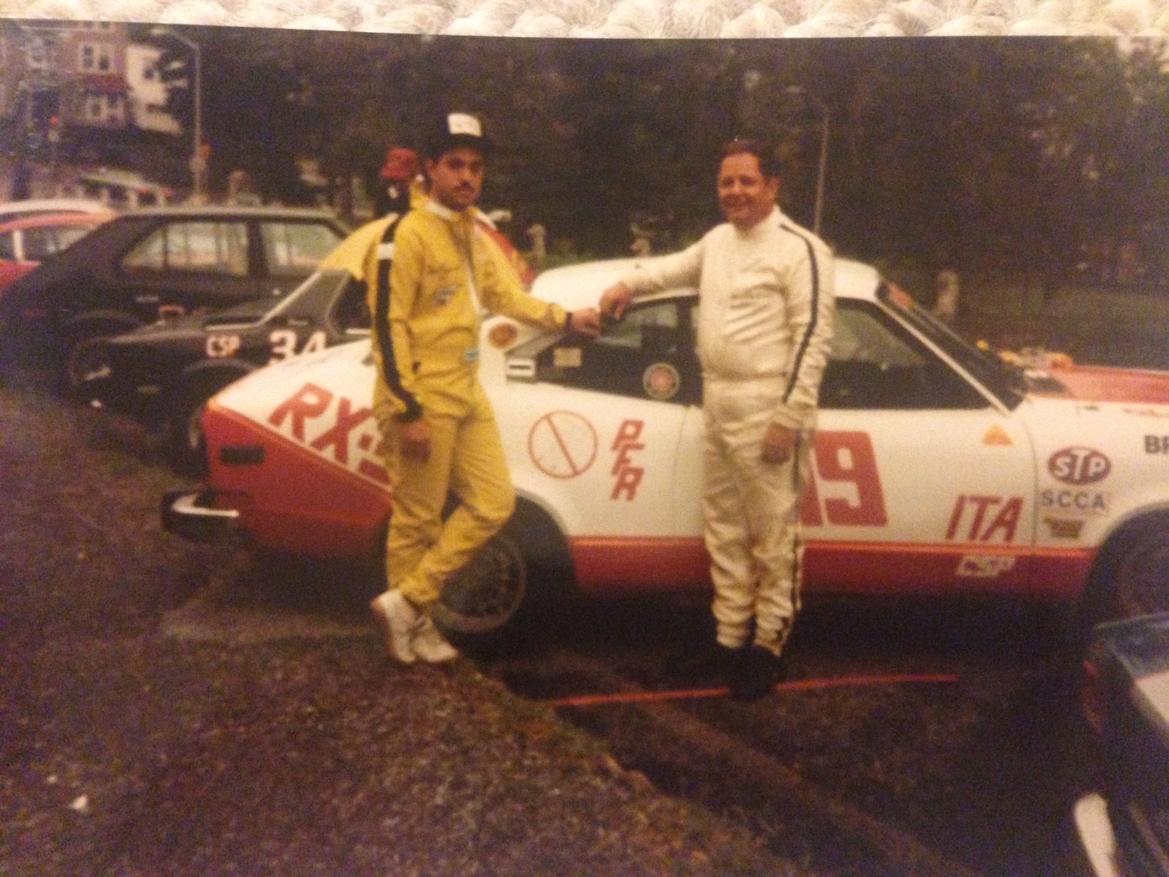
One of the first rotary race cars was the RX-2 sedan built by Jim Mederer and Ryusuke Oku of Racing Beat and raced in the 1973 IMSA RS series by Patrick Bedard of Car and Driver magazine. This car, which sported a 218-horsepower, bridgeported engine, took two wins and one second-place finish in five races.
The RX-2 had so much more top end speed than the other cars in the class (mostly Gremlins and BMWs) that Bedard nearly lapped the field at Charlotte Motor Speedway. IMSA promptly changed the rules for the 1974 season to disallow porting completely.
The car did enjoy a long racing career, despite the IMSA ruling. Nowadays the 1972 RX-2, with its svelte chrome bumpers and higher engine output, has gained somewhat of a cult following in the U.S. Mazda RX-2s are still seen in SCCA’s Improved Touring and GT ranks, despite the presence of newer and more modern cars that have displaced the RX-2. Thanks to a light curb weight, the RX-2 can also been seen at import drag races.
RX-3, 1972-78
The RX-3, which was imported beginning with the 1972 model year, was smaller and lighter than the RX-2, with a 91-inch wheelbase that was six inches shorter than its predecessor's. The RX-3 shared the same rotary engine, so it had the smoothness and power that made these engines famous.
The RX-3 was Mazda's best seller through the '70s, selling about 20,000 units in its best year (1973). It was also available in a station wagon version, which provided an interesting mix of performance and practicality.
The RX-3's engine, though identical internally to the RX-2's, was rated at just 90 horsepower in the 1973 model year due to a more restrictive exhaust system. For the 1974 season, however, the l 2A's Hitachi-Stromberg carburetor was replaced with a Nikki four-barrel, yielding increased performance. Larger intake and exhaust ports in the rotor housing also helped performance, and the apex seal material was changed from carbon-impregnated aluminum to steel, thereby improving sealing and reliability.
Also, the large O-rings that separated the water passages from the combustion chambers between the housing were given a Teflon coating, which eliminated a frequent cause of engine failures in the earlier engines.
From 1976 through 1978, Mazda produced the RX-3SP, which had a boastful tape stripe and spoiler package that would put a contemporary Trans-Am or Camaro Z28 to shame. For early rotary fans, the RX-3SP represents the Holy Grail of the model run.
The RX-3SP's extensive list of cosmetic enhancements included blacked-out trim, side window louvers, an aggressive stripe package, a rear lip spoiler and one of the largest cow catchers ever fitted to a production car. Mazda also outfitted the model with a different center console, tail lights, front seats and dash. These options teamed up to make a wild-looking production car, although technically the stripes and spoilers were options installed at the car's port of entry.
The RX-3SP also received some subtle performance upgrades, like a larger radiator and oversized oil cooler. Some of the cars also came with larger rear brakes, and every RX-3SP produced came with a fivespeed transmission.
The car also came with a short-nose differential like the one fitted to the early RX-7. This differential accepts a wider variety of rear end gears than the one fitted to standard RX-3 cars, but required Mazda to use a longer driveshaft.
The RX-3SP's engine differs from the rest of the RX-3 production in only one way, as a unique dual-runner intake manifold with longer primaries and shorter secondaries carried the stock four-barrel carburetor in 1976. "Sounds like it should make 15 extra horsepower," says Ground Control's Jay Morris, a long-time rotary racer, "but it doesn't seem to be." Testing between the RX-3SP intake manifold and the stock one doesn't seem to make any difference in power or driving manners, Jay reports.
If you're in the market for an RX-3SP, there is an easy way to tell a real one from a fake: the genuine article will feature a small dent on the inside of the hood so the oversized radiator fits. The RX-3SP also came with an emblem on only the right side of the car, so don't be put off if the car looks like it's missing one.
Like the RX-2, the RX-3 was a success in the racing world, with wins in IMSA, SCCA and even drag racing. In 1974, Racing Beat prepared a 13B engine to 280 horsepower, installed it in an RX-3, and turned it over to Don Sherman for an attack on the Bonneville Salt Flats. Sherman, who was also an editor at Car and Driver, set a new G Production class record at 160 mph.
RX-4, 1974-'78
The RX-4 was the largest and pretty much the last of the rotary sedans. Introduced in 1974, it sported a 99-inch wheelbase and weighed more than 2700 pounds, making it about 400 pounds heavier than the RX-2. Offsetting this weight, however, was the new 13B engine, which displaced 80 cubic inches (1308cc) and produced 110 horsepower in stock form. This was enough to propel the RX-4 to low-nine-second 0-60 times, making it the quickest Mazda to date.
Unfortunately, the improvements to the RX-4's engine compartment did not carry over to its suspension, which was adequate at best. The car had McPherson struts up front and leaf springs in the back, an arrangement similar to that of the RX-3; this design tended towards heavy understeer in stock form.
Busy interior and exterior styling, poor drivability thanks to primitive emissions equipment and dismal fuel economy (remember, the gas crunch was in full swing) did nothing to help RX-4 sales in the U.S.
Cosmo (RX-5), 1976-'78
You can't tell the story of the early Mazda rotary cars without at least mentioning the Cosmo. Basically, Mazda built a luxury cruiser out of the RX-4. Although it shared many specs with the RX-4 (wheelbase track, engine), the Cosmo looked lower. wider, and just bigger.
The extra size didn't exactly help performance or fuel economy, and the Cosmo sold in very small numbers. The car's high point probably came in 1976, when Ray Walle, owner of the Z&W Mazda dealership, drove a Cosmo to an 18th-place finish at the 24 hours of Daytona.
We should also mention, in the same breath as the ill-fated Cosmo, that Mazda built a rotary-powered pickup. Sold in the U.S. from 1974 through 1976, the appropriately-named Rotary Pickup featured the same 110-horsepower 13B found in the RX-4.
Modifications Galore
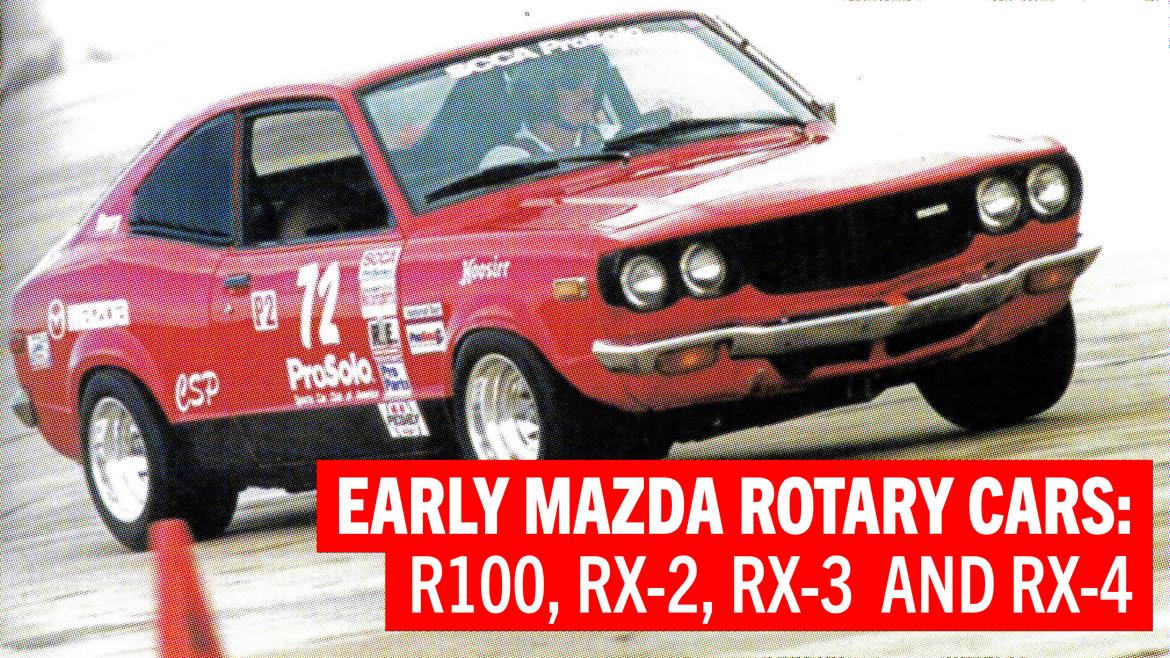
Mazda sedans have become extremely rare on the streets, but still populate the race tracks of the U.S. They are particularly popular on the SCCA Improved Touring circuit, where they run in ITA. In SCCA Solo II autocross competition, the RX-2 and RX-3 models are classified in C Street Prepared, while the heavier RX-4 and Cosmos are put in D Street Prepared.
If a rust-free body can be found, almost everything else on the car is buf!etproof, which makes for a very enjoyable race weekend. When looking over a prospective Mazda sedan purchase, check for rust on the frame rail underneath the battery box at the right front corner. Repair of this area can be very difficult.
The most popular engine in use is the 1974 12A rotary, due to its larger port size. Properly prepared, this engine is capable of about 150 horsepower. Also popular are 1974 13B engines–which are used in the RX-4–and the RX-3SP 12A engines with their unique, crossed intake manifold.
The secret to extracting horsepower from a rotary is to help it breathe better. Although SCCA requires stock carburetors in IT, the original Nikki four-barrel works quite well up to 170 horsepower with the proper jetting. IT rules do allow the complete removal of all emissions control paraphernalia, which is highly recommended to clean up the intake manifold flow.
The real secret is the exhaust system. Most of the top teams run what is known as a longprimary system, which means that the tubes from the two rotors are not collected until just before the rear axle. Two-inch-diameter tube headers should be used with the same size pipes hooked to a three-inch SuperTrapp muffler with no baffles. The idea is to have as little restriction as possible in the exhaust. This system is very noisy, but meets the usual 105 db limit with several decibels to spare. However, ear plugs are recommended.
While most of the dead cars have already been sent to the crusher, a few boneyard tricks do exist. "At least around here, you won't find old RXs in the yards anymore," explains Shannon McMasters, owner of Dallas' Import Motorsports, a Mazda tuning and repair shop.
"The only junkyard stuff that will work now is early RX-7 parts. 1979-'80 RX-7 five-speeds fit in the 2s and 3s, but you will have to shorten the driveshaft. 1979-'82 Posi units fit the 2s, but not all of the 3s (only SPs). The second-gen motor fits if you can find a carb setup for it. The cheapest setup is a '79-'85 12A carb motor swap-gets you the motor and carb all in one and still lots of parts around.
"There are still parts around–stock and race–from Mazda Comp and small shops like mine that have been working on RXs for a long time and still have new and used stuff around."
Buying a Car
For a lot of enthusiasts, the early Mazda RX cars represent the cool side of the '70s-like having a '78 Bandit Edition Trans-Am or Donohue AMX Javelin on a smaller scale. While the RX cars weren't super fast in stock trim, take heart that really nothing else of the time was. Fortunately, a whole subculture of tuners are waiting to help turn that once-dodgy RX-4 into a fire-breathing beast.
"As for best early car, it would have to be the '71 RX-2," explains Shannon. "It was the lightest of the cars, had a true vented hood, coilover rear suspension, and the RX-2 had the motor mounted farther back in the chassis. The RX-3 had a shorter wheel base and a leaf-spring rear suspension, but a smaller frontal area. The '76-'78 RX-3SP is a rare and neat car also. They had a bitchin' body kit for their day."
On the other side of the coin, thanks to the heavy, federallymandated bumpers, the 1974 RX-2 and 1974 RX-3 are the heaviest of the series, so you may want to avoid them. Still, over the last 25 or so years, lots of these cars have had their bugs removed.
"Most of these cars by now are far from stock," Shannon explains. "Stock was not very good anyway. Most already have newer motors and updated suspension systems in them. Mine, for example, has a six-port 13B with Dellorto carbs, MSD, lightweight flywheel, five-speed transmission, Posi, 4.11 rear end, and a few suspension mods. But yet it looks like a stock '71 RX-2, which really surprises the Mustangs and newer RX-7s when it spanks them."
Like a lot of cars from the '70s, these early Mazda sedans are known to rust–especially in areas where the roads are salted in the winter. "When looking at older cars to buy, the RX-2s were known for the trunk areas ru ting out," Shannon notes. "The RX-3s had a problem with the body splitting around the bottom of the door frames."
The Rise and Fall of the Rotary
These early rotary-powered Mazdas were only a glimpse of what was to come. In 1979, the year after the RX-3, RX-4 and Cosmo left U.S. shores, Mazda unleashed the rotary-powered RX-7 upon U.S. consumers and finally struck pay dirt.
But as most enthusiasts know, even the RX-7 had a rocky ride. Things started off with a bang in 1979, as dealers were completely unable to keep up with demand. The RX-7 frenzy slowed with the 1986 release of the second-generation RX-7, which was more of a boulevard cruiser than an outright sports car, but picked up again with the super-fast, turbocharged third-gen RX-7 in 1993. However, reliability problems with those final cars left many fans with a sour taste in their mouths, and the last rotarypowered Mazda was sold in the U.S. only a few years later.
Or was it? Word on the street is that Mazda has more rotary-powered cars bound for U.S. shores. There's talk of a couple of pos ible Wankel offspring appearing in the near future, including an RX-7 replacement and/or a sedan. There's no official word from Mazda on this point, so we can only watch, wait–and hope.








 ) Sadly, they sacrificed longevity for more power in the later engines, at the same time piston engine longevity was increasing.