

I was too poor to afford the listed cars when new, but I am fortunate enough to have driven/be driving some of tomorrow's classics today.


Photography courtesy the manufacturers
Old cars suck. They leak, they smell funny and they’re not terribly fast by today’s yardstick. But they also turn heads, make memories and provide a simpler experience: no touch screens, no self-parking, no over-the-air updates.
More to love: They embrace more of the outside world. Thinner roof pillars provide a wider view of the road, while open windows peacefully welcome in fresh air. Everything isn’t soundproofed to the point of boredom.
You can easily fix these cars, too, as a repair manual, test light and common hand tools will take you far.
So, how to wade into this classic car scene, especially if you didn’t grow up in the era of whitewall tires and ashtrays for rear seat occupants?
We can help with some guidance, direction and a few ideas to get those wheels turning. Here are five cars that could scratch that itch for simpler times. All represent milestones in their segment and enjoy strong support today.
How much to pick up a car on our list? Figure $5000–maybe not even that much–can get you started with a decent example, while less than the cost of a new Miata can buy a choice one.
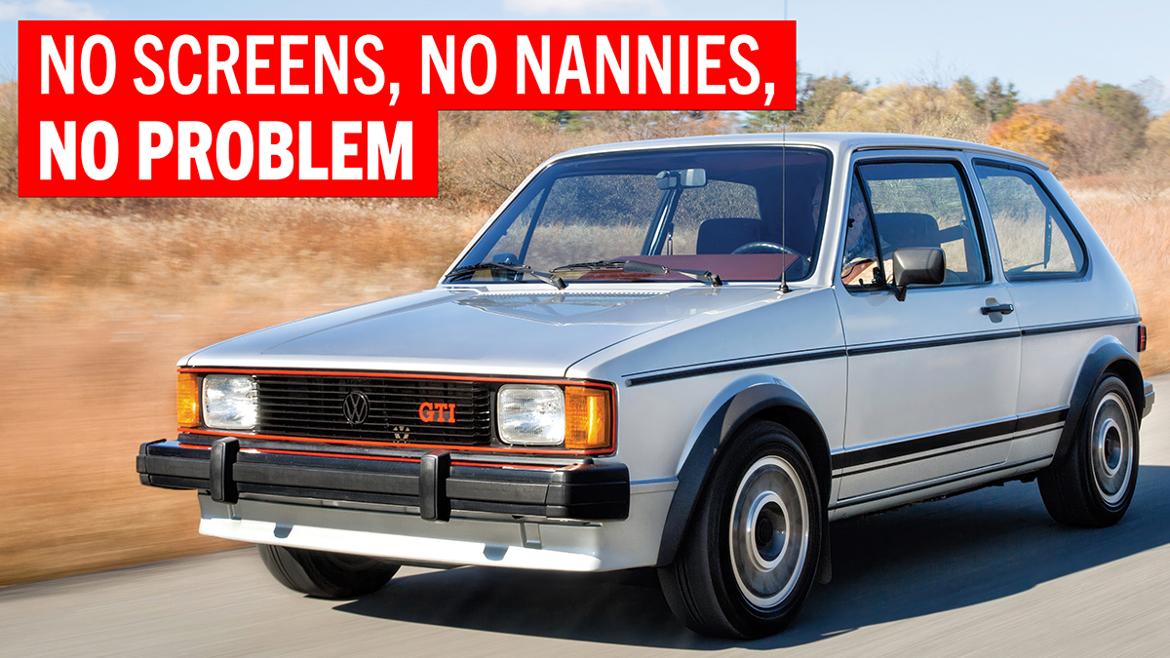
All it took was 90 horsepower to rock the automotive world–and, at the same time, outrun a new TransAm. Welcome to the Volkswagen Rabbit, which, after a few years germinating overseas, finally landed stateside for 1983.
And it arrived with much fanfare, quickly rewriting America’s definition of a performance car. The drive wheels could now be up front. “Everything about this car is calculated to make an enthusiast salivate in anticipation,” Car and Driver wrote in its initial review. “From suspension to seats, all the important parts have been uprated to full autobahn-class standards–quite an accomplishment considering the long arm of the cost accountants.”
Americans could now have performance and practicality in one hot package: room for four–plus a handy hatch–along with 26 miles per gallon and a zippy 9.7-second sprint to 60. Then add in the sticky Pirellis, a close-ratio, five-speed gearbox and those grippy velour buckets. Price for all of this wonderfulness? Just $8440, about $27,000 in today’s dollars.
The GTI quickly saw competition in the showrooms from Dodge, Mitsubishi, Honda, Toyota, Mazda and more. No matter the brand name written on the valve cover, though, all of these hot hatches followed similar formulas: Take a humble hatchback and cram it full of the good stuff. They weren’t as flashy as a Mustang or Camaro, yet autocross grids were flooded with them.
Which hot hatch to get today? There’s something special about the original GTI, as it represented the total package. Bonus: styling by Giorgetto Giugiaro, the man behind legendary creations like the BMW M1, Lotus Esprit and Maserati Ghibli.
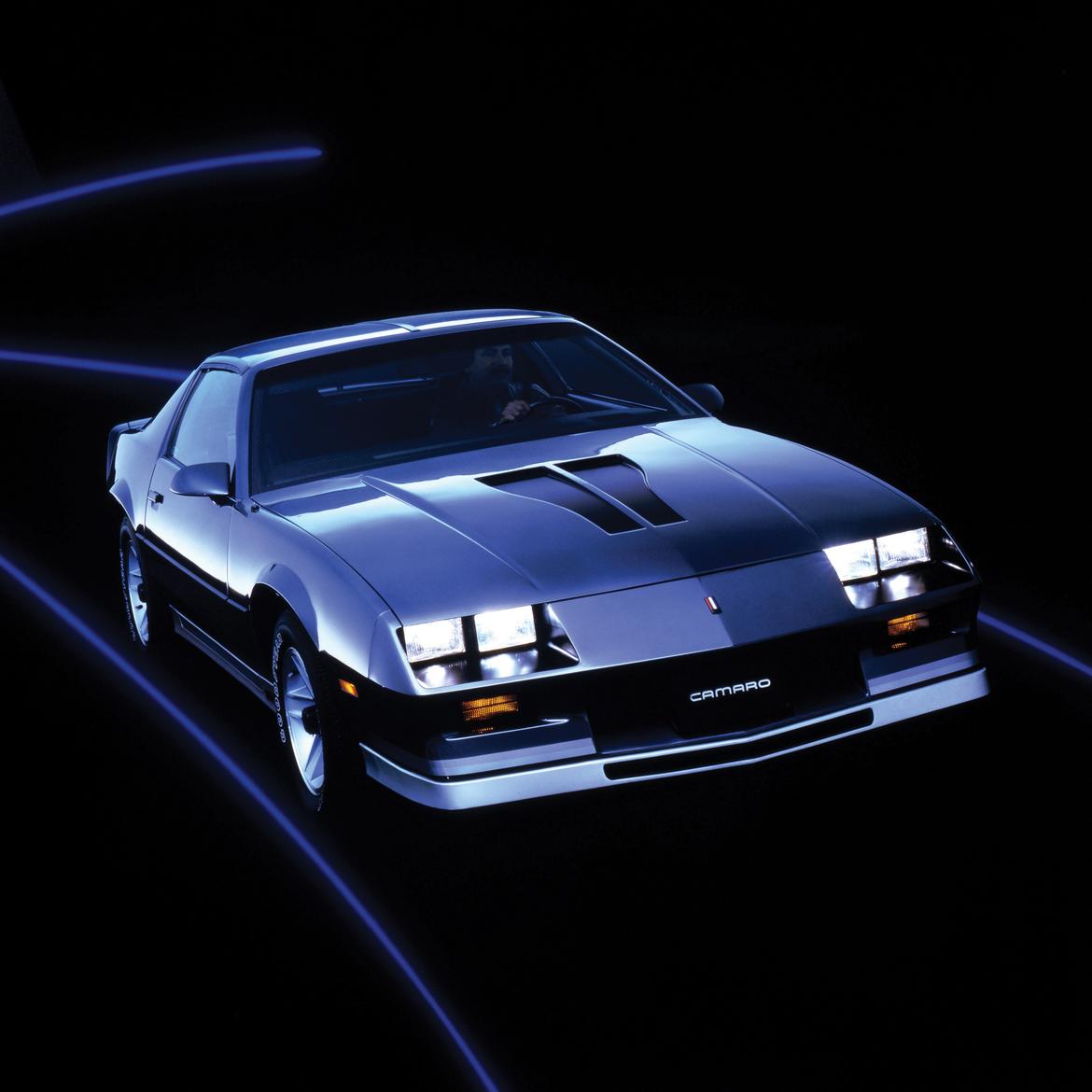
Know what Americans do well? Put V8 engines into things that can then leave long, black marks on the pavement. But what if you’d like to go a little newer than a traditional ’60s pony car–maybe something that came from the factory with fat radials, shoulder belts and modern dual-circuit brakes? Why not something from the ’80s, the decade that saw the pony car bounce back?
The second half of the ’70s weren’t too kind to performance cars of every ilk: Engines got weaker, bumpers got heavier. Everything was painted brown.
Pony cars emerged from this funk circa 1982. After a 13-year hiatus, the Mustang GT was back, while GM gave us all-new Camaros and Firebirds. Crisp, modern styling. Low-profile tires. Seats with side bolsters. No more optional hubcaps.
That year’s Camaro Z28 and Firebird Trans Am, the hot ones, came with a 145-horsepower V8. A year later, the Z28 could be had with 190 horsepower; fuel injection arrived for 1986, helping the Camaro top 200 horsepower for the first time since 1974.
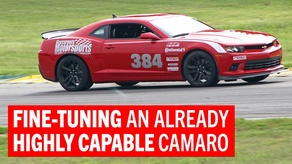
The ultimate iteration of this third-generation GM pony car? Perhaps a V8 Camaro or Firebird fitted with the new-for-1988 1LE package. It was aimed at transcending the shortcomings found in the day’s showroom stock race series by adding things like bigger brakes, upgraded suspension and a bit more power.
It wasn’t even listed on the ordering form. To get one, you had to select the performance rear axle without a/c. That unlocked the rest of the goodies.
So, ’80s Camaro or ’80s Mustang? It’s a personal decision, but going opposite the Mustang could help you stand out in today’s crowd.
We know the easy answer here: For the ultimate classic roadster experience, why not an early Mazda Miata? It’s perfect, right? Double-wishbone suspension at all four corners, a rev-happy engine and that now-legendary gearbox.
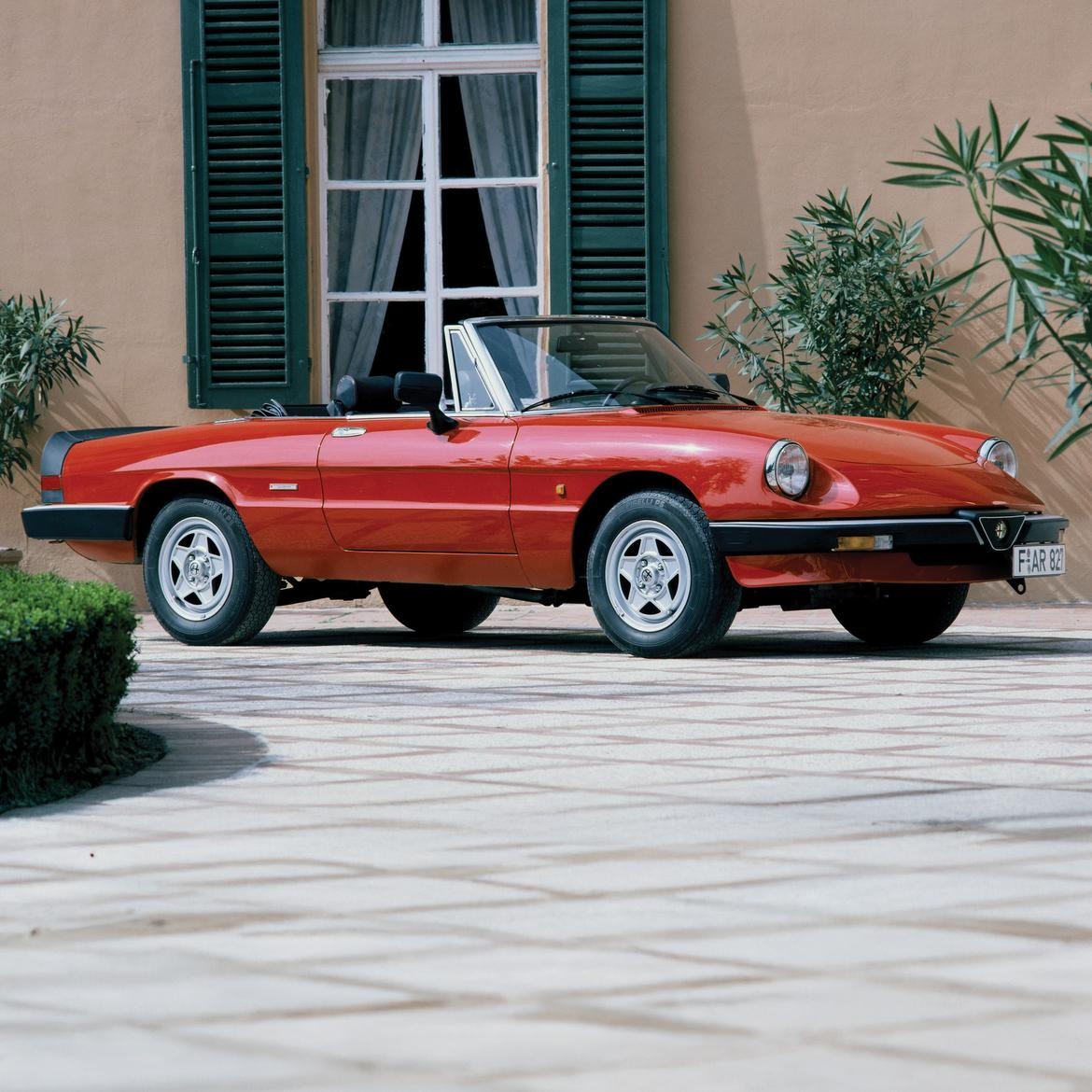
But if you want to go older and experience something a bit more classic, check out an Alfa Romeo Spider. Unlike its contemporaries from England, this masterpiece features a twin-cam engine, five-speed transmission and styling more on par with its Italian heritage.
Alfa Romeo released the original, initially called the Spider 1600, back in 1966, with the basics carrying on all the way through 1994. What changed along the way? Displacements grew periodically, fuel injection replaced carburetors for 1969, and bumpers were regularly beefed up to meet the day’s impact standards.
Alfa occasionally tweaked the model’s official name, too, with most containing the words Spider, Veloce, Duetto or, for a spell, Graduate. You’ll quickly figure it out. Two more big changes to note: Alfa chopped off the original rounded boat tail for 1970, while the car gained a contemporary aero kit for 1991.
One thing that remained the same throughout the long run, though: that classic arms-out Italian driving stance. And when you go for that first test drive, you’ll immediately know where the Miata got its door handles from.
The GT touring car has represented the combination of three attributes: enough comfort to devour the highway, enough power to overtake the dawdlers, and enough presence to tell the masses you have arrived. For prime historical examples, check out Ferrari’s heritage.
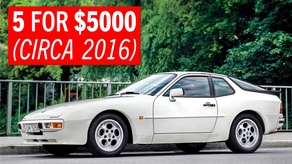
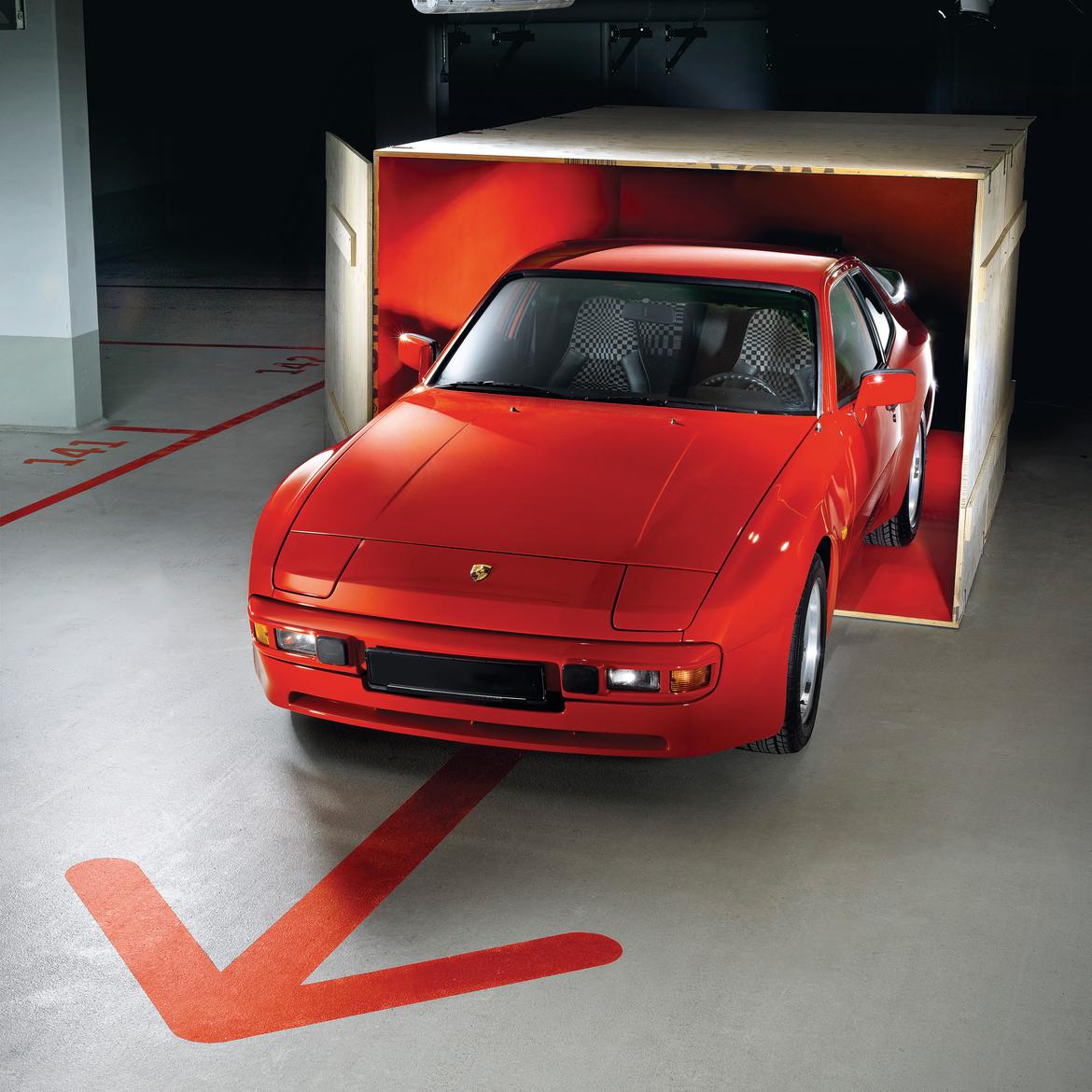
But those Ferraris are expensive. How about a Porsche 944 instead?
Is it historic enough, though? Well, the 944 lineage dates back nearly half a century to the year 1976, when the 924 replaced the 914 as Porsche’s entry-level model.
But that didn’t mean the 924 was basic, as it featured what could be called high tech for the day: MacPherson struts up front, a lift-back rear end and engine cooling by water, something new for the manufacturer. It even had a rear-mounted transaxle. The 924 made about a hundred horsepower, but the final product felt more BMW 3Series than Volkswagen Beetle–luxurious appointments merged with sporty underpinnings.
The 924 sold well–it was the brand’s bestseller at that time–but perhaps it wasn’t quite fast enough. For 1983, Porsche turned the 924 into the 944, fitting a 2.5-liter engine and tacking on fender flares ripped from the brand’s Le Mans effort. In U.S. trim, it made 143 horsepower, putting it on par with Camaros and Mustangs.
Porsche kept refining the 944 through the decade and eventually split the line with Turbo and naturally aspirated options. By the end of the 944’s run in 1991, a non-turbo 944 could make a tick more than 200 horsepower while the Turbo cars flirted with the 250 mark. A modern SUV easily makes more, but is it going to greet you with those iconic VDO gauges and the smell of German leather?
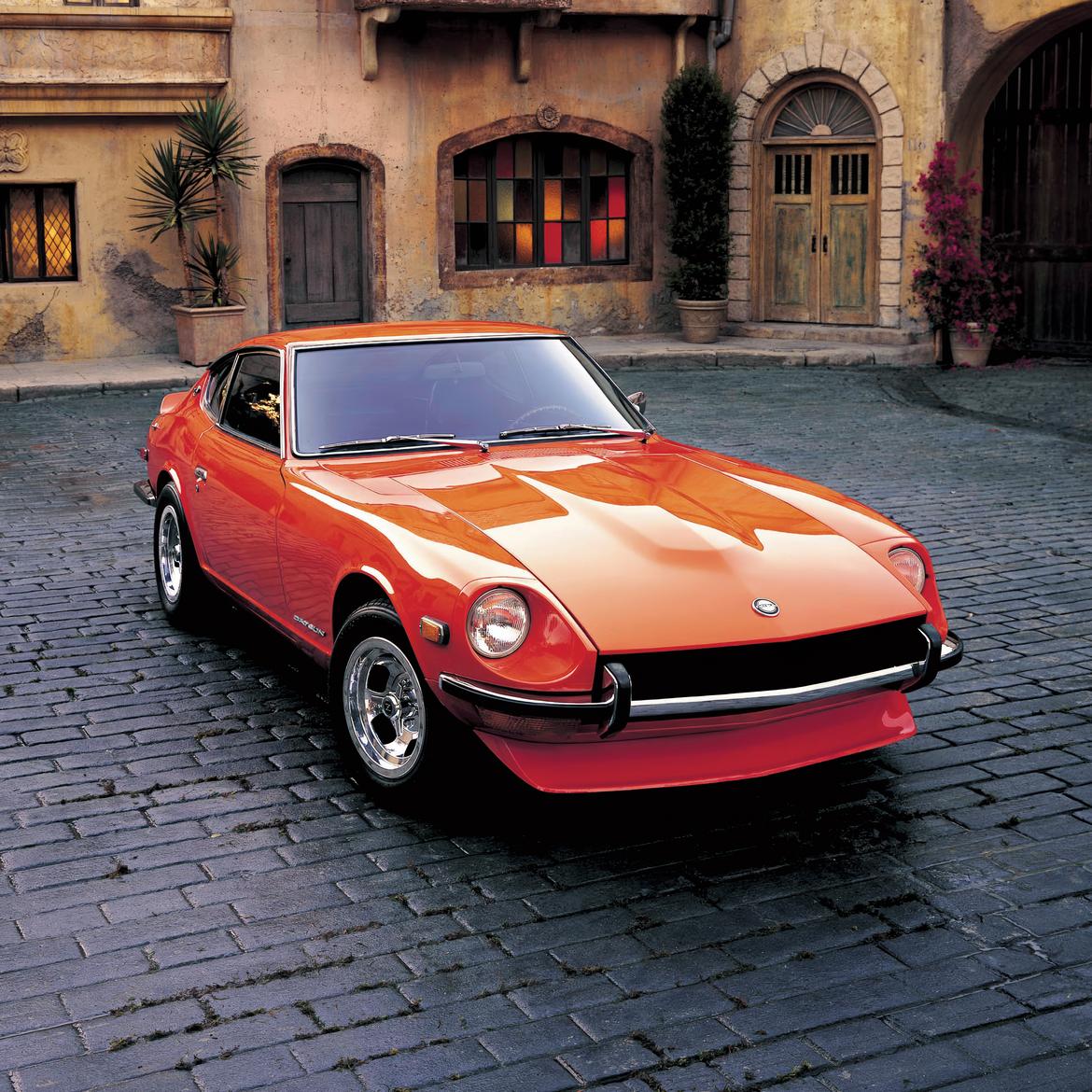
The Datsun 240Z was both the best and worst thing to happen to the day’s sports car scene: Its 1970 release gave enthusiasts a truly modern machine while rendering everything else old, outdated and stale. And the Z didn’t cost a premium, either.
Up until this point in recorded history, inexpensive sports cars usually featured some kind of opening top–not always, but usually. It was part of the code. Witness the MGB, Alfa Spider, Fiat Spider, Porsche 914, Austin-Healey Sprite, Datsun roadster, TriumphTR and others.
The 240Z, though, only came as a coupe. Modern. Fresh. It simply looked higher-end than its contemporaries, too, sporting hints of Jaguar, Ferrari and Porsche. On track, thanks to the efforts of Peter Brock’s race team as well as others, the new Datsun whipped the competition, too.
Part of that new formula? A smooth inline-six paired with an independent rear suspension, something not always a given at the time. A solid unibody, not an outdated body-on-frame design, delivered further refinement.
Another break with the past: no wood dash, no ergonomics dating back a decade or so. The center gauges were right in the driver’s line of sight. Lots of contemporary black vinyl, much like in a new 911, draped the interior.
The original 240Z ran through 1973. Subsequent increases in displacement from the original 2.4 liters to 2.6 and then 2.8 gave us the 260Z (just for the 1974 model year) and 280Z (1975-’78). While these later versions weigh a little more than the original, these will all feel like go-karts compared to anything currently offered.

I was too poor to afford the listed cars when new, but I am fortunate enough to have driven/be driving some of tomorrow's classics today.

In reply to Coniglio Rampante :
It's kind of a fun game to play, trying to guess which of today's cars are going to be tomorrow's classics.
(I know some are more obvious than others, but still.)

I'm starting to get the itch to try and find a Fox body, older GTI, MKIII Supra, etc. But we only have the 2 car garage and I'm not parking anything outside.
I think there is room on the side between garage and fence line to build a small covered area, but I have no idea about necessary permits would be and such.
In reply to z31maniac :
I sometimes feel like not having a garage or a driveway is more of a blessing than a curse.
Far too much temptation and enablement on here. 

In reply to z31maniac :
As you know I bought a Foxbody last year.
It is absolutely the easiest to own classic I've ever had. Literally every part on the car is available to ship today.
They are stupid fun to drive and of course you they make V8 noises.
Why yes, yes I am trying to enable you.
Tom1200 said:In reply to z31maniac :
As you know I bought a Foxbody last year.
It is absolutely the easiest to own classic I've ever had. Literally every part on the car is available to ship today.
They are stupid fun to drive and of course you they make V8 noises.
Why yes, yes I am trying to enable you.
And I'm here in case you need enablement backup.

I had a lot of fun driving a friend's 1980s Camaro in college while being the bad guy for a student film. They filmed me accidentally hitting a handicapped sign with the Camaro's nose. (The brakes were soft, I say.) Yeah, that's how bad I was (or the film) - parking in a handicapped spot.
The Mk1 Rabbit/GTI/Scirocco were a hoot to drive. They were so light and although not powerful, they had a willing engine and a manual transmission. With mild suspension upgrades and sticky tires they were like a lot cars. Another model from that era that was quite similar was the Ford Fiesta. The Mk1 Scirocco Champagne Edition is still one of my favorite cars that I owned.
J.A. Ackley said:I had a lot of fun driving a friend's 1980s Camaro in college while being the bad guy for a student film. They filmed me accidentally hitting a handicapped sign with the Camaro's nose. (The brakes were soft, I say.) Yeah, that's how bad I was (or the film) - parking in a handicapped spot.
Dang. Did you pop a kid's balloon, too?
The 91 Z28 I had will always be my favorite car I've ever owned.
2 of the 5 on this list are current residents in my garage. I really need to get a build thread out there for them.
Displaying 1-10 of 25 commentsView all comments on the GRM forums
You'll need to log in to post.