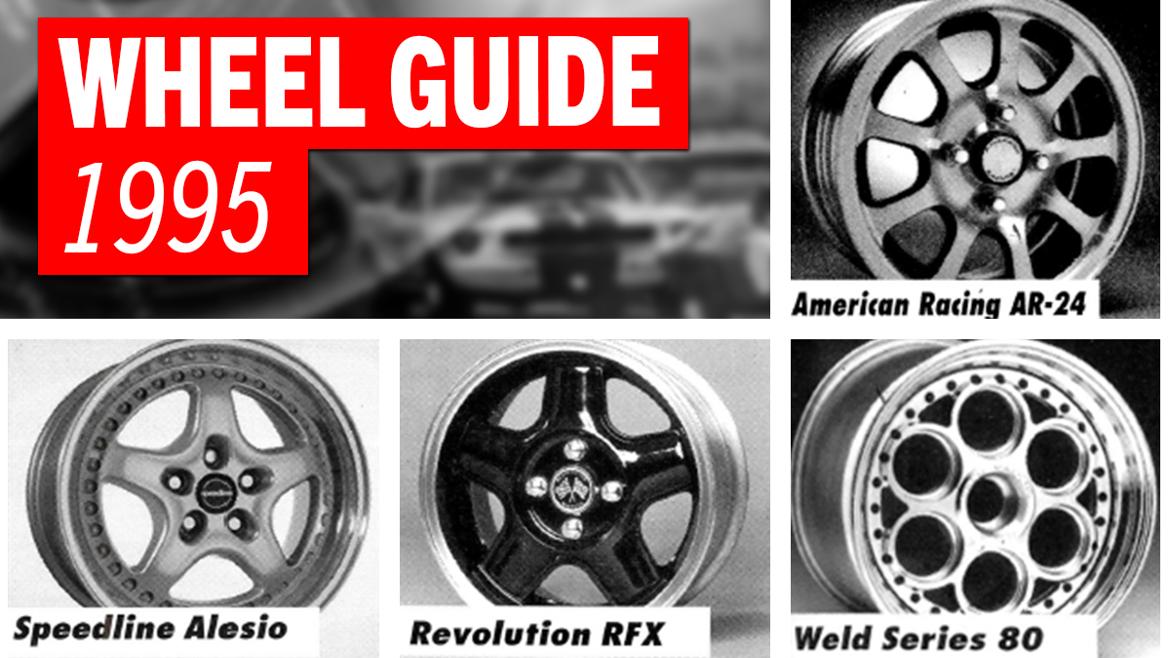
Picking wheels for your race car usually boils down to what fits (more or less), what's available and what's on sale. And in too many cases, deciding what wheels to use simply means using what …
Sizing up your rolling stock
If you have decided to make a change in your wheel selection, you must consider two important measurements: backspace dimensions and offset. Selecting the right backspace for wheels is critical on two counts. First, so you can slide the biggest wheels and tires into the smallest space; and also so you can save the most amount of money. Stuffing fenders might not be a big problem for race cars with massive wheel wells, but if you campaign your street car on the weekend, this can provide more than its fair share of headaches–especially if the car is wheel-well-limited (and that can includes anything from a late-sixties Camaro or Mustang to a modern econobox). In these cases, one mistake on the backspace dimension will mean that the wheels and tires don't fit (or the car isn't legal).
On the other hand, "guesstimating" the offset can create an equally substantial pain in the pocketbook–especially if you try to return wheels that have already had tires mounted. It's no secret that most shops simply won't accept an exchange if 1he wheels show any signs of having been mounted with tires (can you blame 'em?).
In order to solve the "tight quarters" wheel problem, a wheel with a back space/offset dimension that is close to stock will often 'be required. Now, that doesn't necessarily mean that wheels that 1he same width as stock are mandatory. Instead; the backspace dimension must be tailored to the race car.
While this might sound difficult, it isn't. Lightweight race wheels are available in myriad dimensions. For example, you might be able to purchase a 15x10-inch wheel with backspaces that range from two inc.bes all the way up to seven or eight inches. This means that the slick can either be tucked into the stock wheel well or it can hang out in the breeze like a low rider. The current trend favors the "tucked up" e-xamples (thankfully), and because of this, it only makes sense to check and double check dimensions before you step up to the parts counter with an armload of cold, hard cash.
In order to measure backspace, try one of the two followjng methods. Flip over a mounted original equipment wheel and tire so that the brake disc/drum pad mounting pad is facing up. Place a straightedge across the face of the tire and, using a second straightedge, measure down to the mounting pad. This figure is the OE backspace with the tire "bulge" included. Now place a straightedge across the wheel rim inside the tire bulge. Again measure down to the mounting pad. This will give you the true wheel backspacing. These figures should be used as· reference points when purchasing new race wheels. The difference between the mounted and unmounted numbers will give you an indication of the clearance required for the tire sidewall bulge. Using this method, you can easily purchase an aftermarket wheel that is (as an example), two inches wider than stock, but with the actual tire contact patch centerline in exactly the same spot as the factory wheel.
If you don't have a set of OE wheels in your possession, or if the car has a narrower- or wider-than-stock rear axle, you'll have to use the following method to determine the wheel offset you need for your application. This is slightly more complex, involving some careful measurements to put all of the dimensions into perspective (you can make a few rough sketches to help). By using this method, you can calculate the backspace dimension and also the required rear axle width if the housing has been narrowed. The routine goes like this:
1) Create a plumb bob from string and a weight (a bolt will work as a weight). Install (tape) the plumb bob to the inner lip of the fender. This is your major point of reference.
2) Measure the distance from the plumb bob to the inside of the fender well or to any suspension component that intrudes into the well. Due to the fender well configuration, there can very well be several different dimensions. Use the smallest figure. You can make a small drawing of the wheel well showing the smallest possible inside dimension. Call this dimension "A."
3) Measure·the distance between the plumb bob and the wheel mounting pad on the drum of rotor. Include this dimension in your drawing. Call it dimension "B."
4) Subtract dimension B from dimension A. Then subtract a minimum of one inch as a clearance dimension and call the final figure dimension C. This is the largest possible overall rear backspace figure that will fit into your existing fender.
5) Subtract a minimum of one inch from dimension B. Call it dimension D. This is the 'largest possible curbside or face width of the wheel in question.
Note: The subtraction of one inch (respectively) in steps four and five is included so that ample clearance is provided as the tire distorts or moves during driving. If you choose to provide for less clearance (say, ½-inch per side of the tire), then there is a chance of the tire rubbing against sheet metal or suspension components.
6) Dimension D added to dimension C is the maximum wheel-tire width possible in your application. Remember that this is the maximum tire section width you can use–not the maximum wheel width.
When it comes to the front of the car, the process is the same, but there are a few more variables. The steering must be turned to full lock (both sides) and measurements should be taken to the closest sheet metal, suspension and/or steering components. Typically, the tire will rub first on the inner wheel well. Additionally, the car should be "rocked" on the suspension (which is tough to do if the car is heavily sprung) to insure that suspension movement doesn't create more interference.
In most situations that include wider-thanstock wheels, you will find that you can increase the backspace by at least one inch from the OEM combination. Keep this in mind when purchasing wheels for your race car. Armed with the dimensions calculated from the above guidelines, you can then make a proper and rational decision in regard to rolling stock. Just remember to measure the wheel backspace dimensions before you lay down the cash. Aside from wheel well clearance (sheet metal interference), the backspace dimension is the most critical of all wheel dimensions.