On the Straße
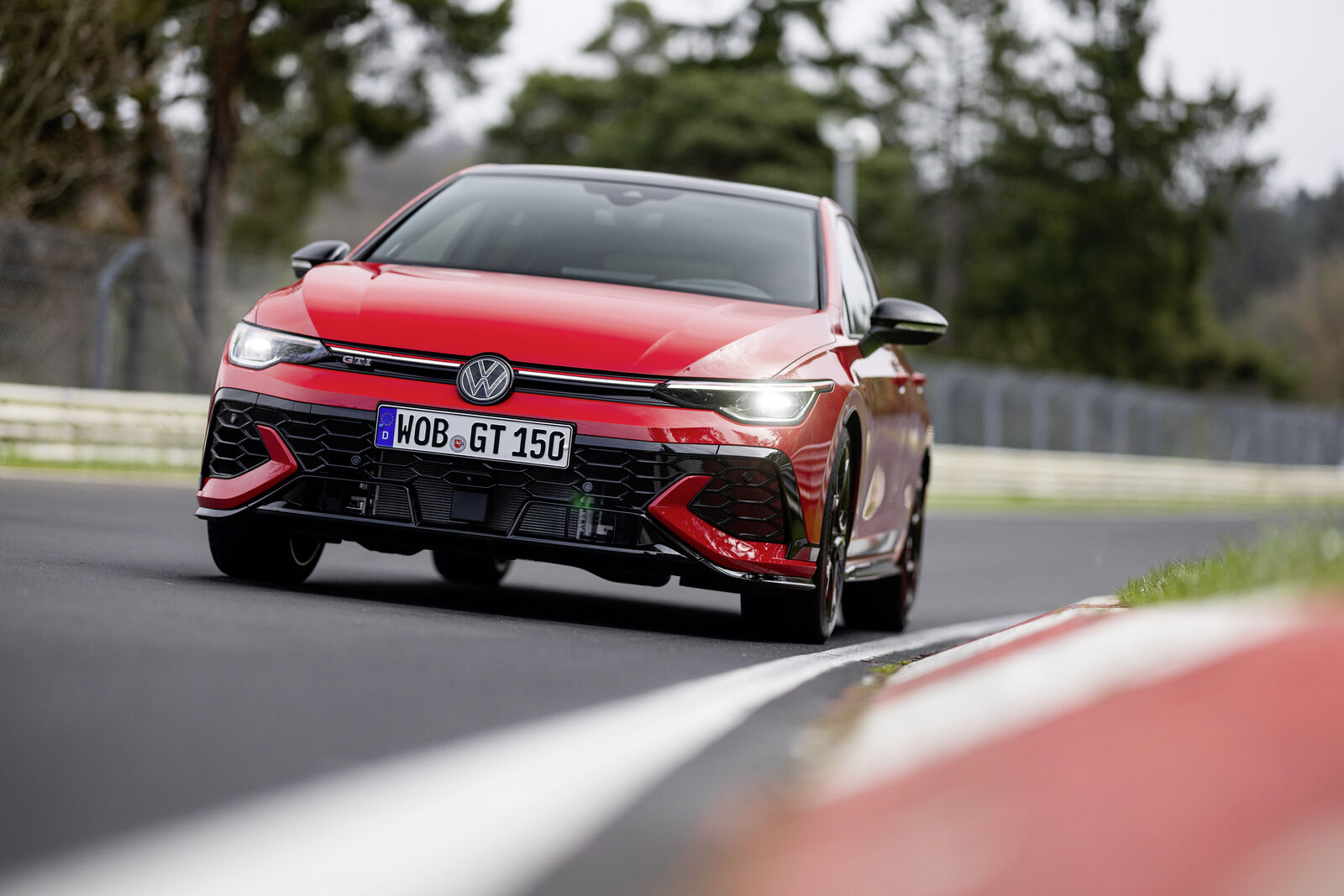
We sampled this particular 2025 Golf R Black Series in Germany–shoutout to the German VW press fleet crew, who’s always awesome to work with–so let’s start with the differences between the U.S. and German specs.
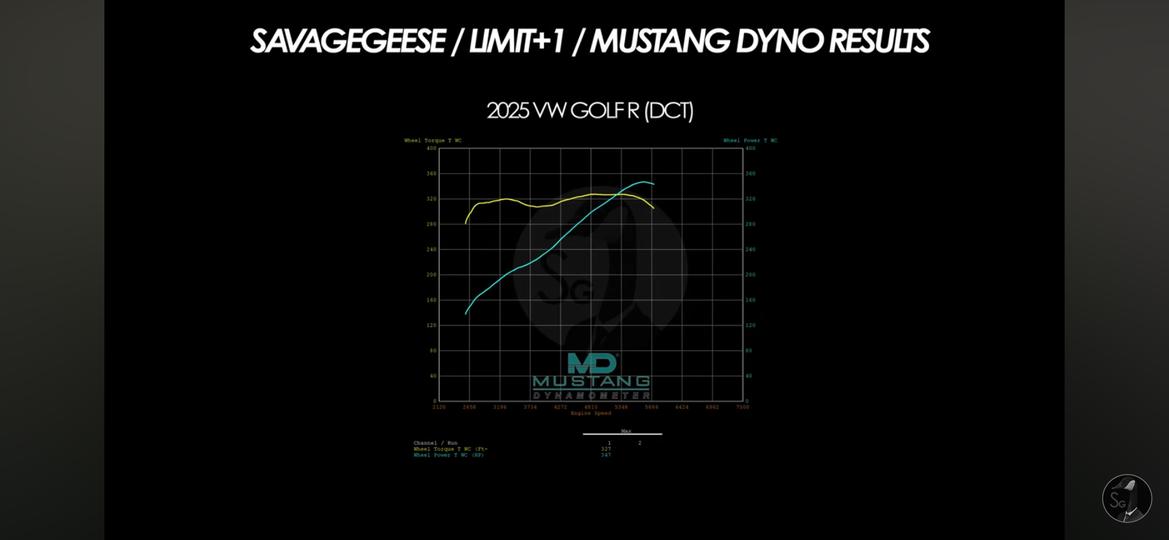
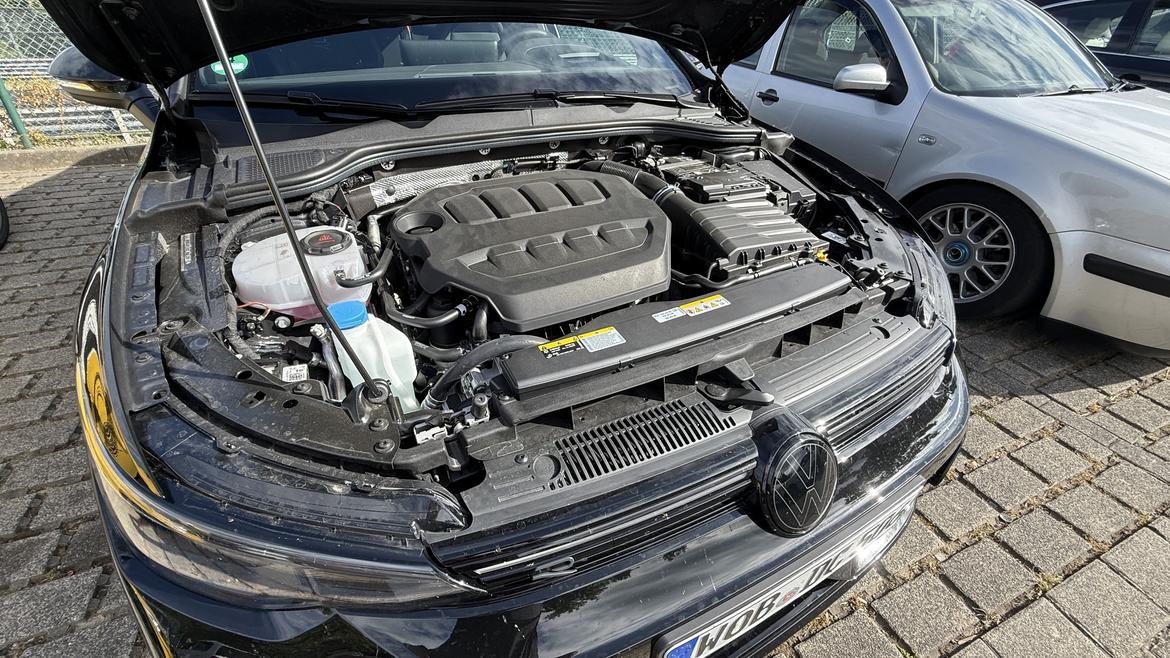
Mechanically the cars are identical, with both getting the 328 horsepower/295 lb.-ft. 2.0-liter turbocharged and direct-injected 2.0-liter engine mated to a seven-speed DSG trans. The DSG is now the only transmission option for the Golf R, with the stick and clutch six-speed being discontinued for 2025.
Photograph by J.G. Pasterjak
By the way, that 295 lb.-ft. torque peak comes all the way down at 200 rpm, and it feels flat as a board from there to redline. It’s a heck of a trick, but there’s a downside: On track in manual mode, you’ll frequently hit the rev limiter if you aren’t closely watching the tach. The engine pulls strong all the way through the rev range and still feels like it has lots to give when the ECU shuts down the party.
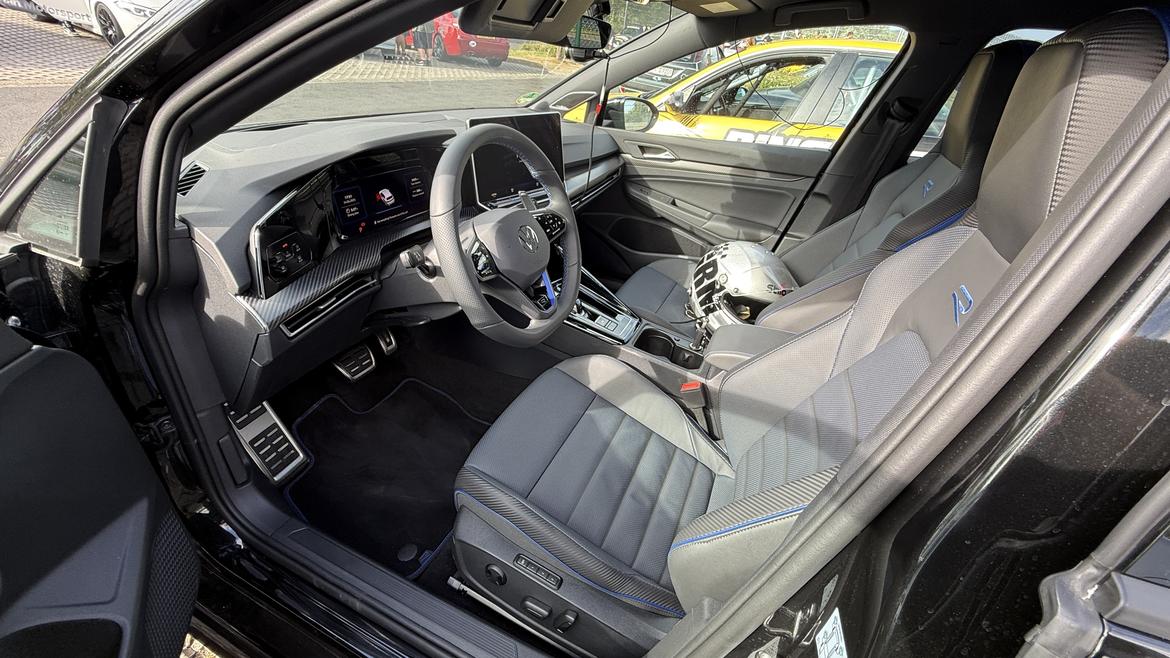
But we’re getting ahead of ourselves. Let’s talk more about the differences between the Euro and U.S. Golf R models, which will be a short chat because there aren’t many. The big ones are the sunroof, which the Euro model that we drove did not have. Most U.S. models will be sunroof-equipped, though, with the slicktop only available with a “lightweight” package that also foregoes power front-seat adjusters. Our Euro model benefitted from the additional headroom of the hardtop, but it also had the convenient power seat buttons.
The other big difference is tires. U.S. models get either Hankook Ventus S1 EVO3 rubber or Bridgestone Potenza S005s. Both are solid summer choices.
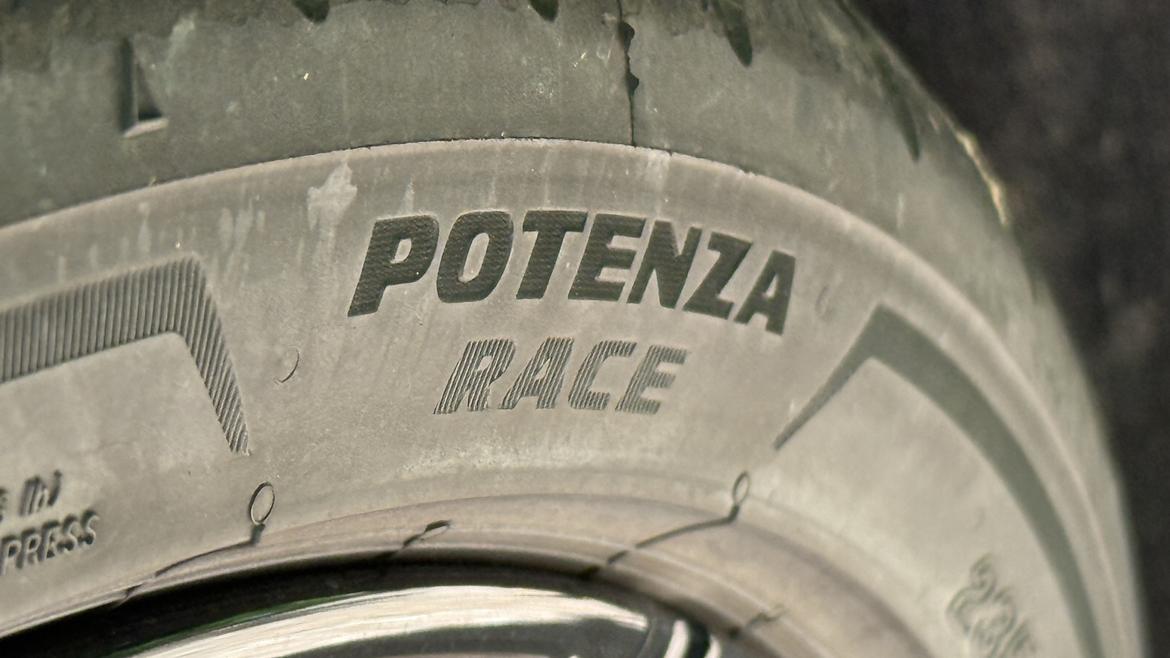
But our Euro tester stepped it up a notch with Bridgestone Potenza Race 235/35R19s on those blackest-of-black wheels. While Europe doesn’t always have UTQG stampings on its tires–these Bridgestones did not–those tires are marketed in the U.S. as 200tw and are regarded as highly track-capable. Maybe not quite as fast as the RE-71RS in our testing, but certainly no slouch on track for a tire that’s equipped as stock on several supercars (and now a Euro-spec hot hatch).
Photograph by J.G. Pasterjak
Selecting Comfort mode from the VW’s DIC turns the car into a machine perfectly suited for long-distance cruising, in-town errands or daily commuting. The mode selection is actually quite transformative at times, with the switch from the more street-focused options to the track-focused selections having a huge delta regarding feel, feedback and performance.
The throttle timing in particular is impressive. In Comfort mode, there’s never any surging or much indication that the Golf R is even turbocharged. In the higher-performance modes, the more linear throttle better controls power delivery (although far from perfectly–more on that in the track section) and delivers a higher-resolution experience. It’s a big switch that feels more like bolting on a set of hard parts than changing some lines of code, but we’re fans.
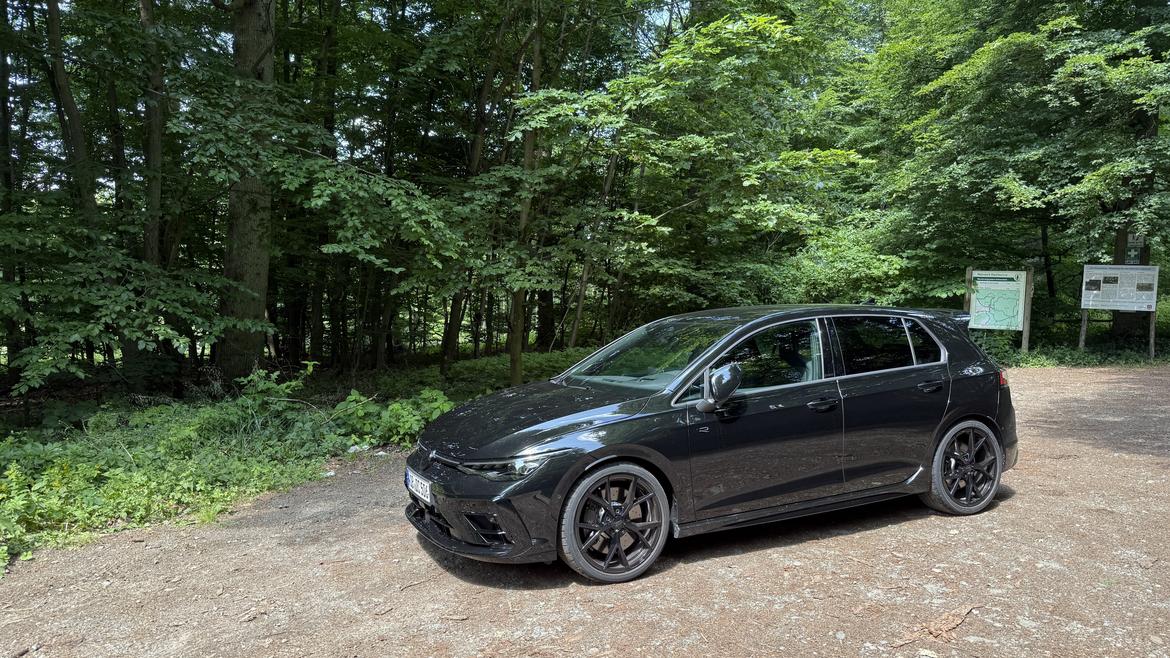
The Golf R can feel big at times, but never unwieldy. And remember, we were driving it on tiny German streets, so put that criticism in context. But really, it feels large and more substantial than its GTI roots would lead you to believe. This feels more like a car aimed at competing with the BMW 3 Series than the Civic Type R in its level of sophistication and civility.
Photograph by J.G. Pasterjak
If we did our math correctly, we saw the equivalent of high 20s for mixed mpg readings, which is pretty impressive given the driving conditions in Germany. Freeway driving is less consistent cruising and more fast blasts on the Autobahn punctuated by on- and off-throttle sections. We just didn’t see a lot of cruise control opportunities on the highways, and did a lot of city driving, so nearly 30 mpg is impressive for such a capable car.
The Golf R is still a Golf, so even though it has grown over the years, it’s still a well-appointed German car. The Golf R-specific seats, with their fixed headrests, are a nice combination of solid bolstering and long-distance comfort, which is a tough trick to pull off. And, of course, the rear hatch provides legendary usefulness in an era when hatchbacks are becoming more and more scarce.
Photograph by J.G. Pasterjak
VW’s combined touch screen DIC remains, although a few analog buttons have sprouted since it was introduced a few years ago. In that time, the UI has become a bit more intuitive, although it still takes multiple touches to do simple stuff like change the HVAC fan speed. It’s a better system than it was when it was introduced, and the look of it is spot on.
We’d still love to see a bit more work on streamlining the UX, as other companies (cough, Hyundai, cough) are accomplishing the same goals with a cleaner, easier-to-use interface. To VW’s credit, though, it’s improved its DIC to a point where it’s loads better than some other competing brands (cough, Lexus, cough).
On the Rennstrecke
Since we drove this car in Germany, we were not able to test it at the Florida International Rally & Motorsport Park, our official test track, where we have legacy data from the Mk8 Golf R.
We were able to run it at an alternative, however, in the form of an out-of-the-way little track called the Nürburgring Nordschleife, where we laid down half a dozen laps over a couple days of Touristenfahrten.
First, we’ll hearken back to our previous test of the Mk8 Golf R at the FIRM, where we set our best lap with the car in Drift mode. This allowed for more rear slip angle than other drive modes, letting us get the car rotated in tighter corners.
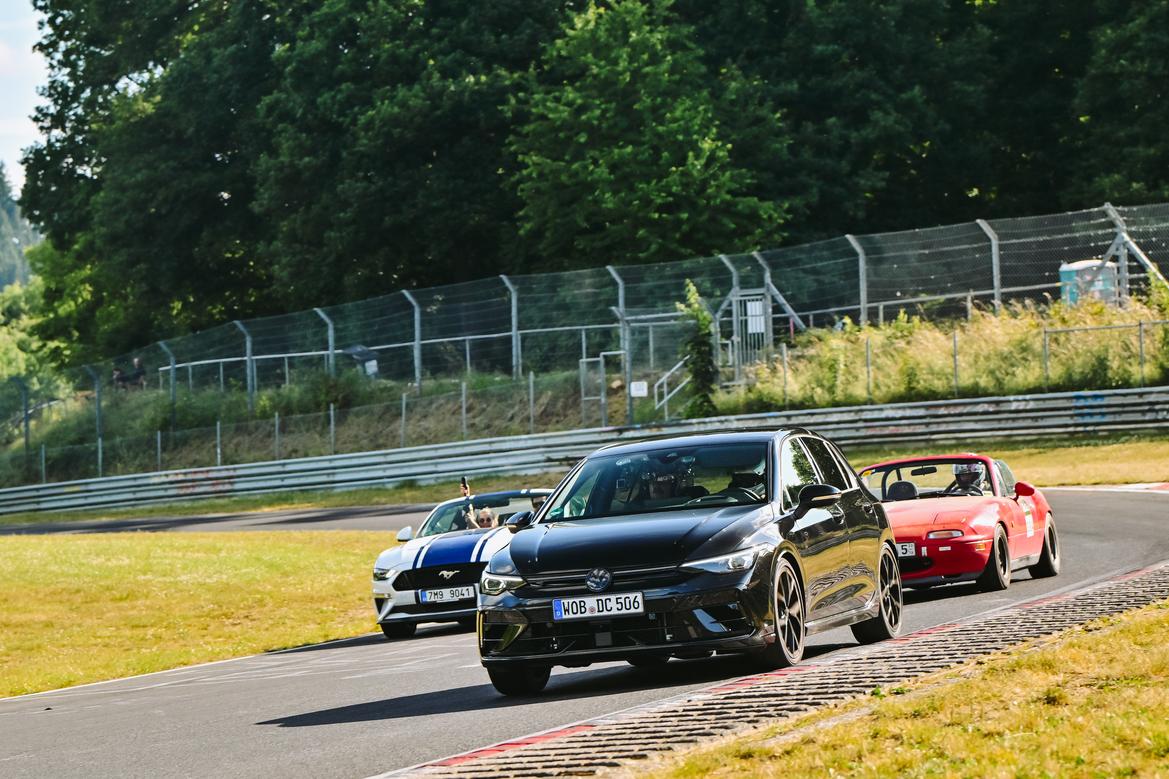
On the Nürburgring, the Mk8.5 Golf R still exhibits a lot of the same tendencies that the Mk8 did when pushed hard. You can feel the car intervening, but the effect is far less pronounced on the Nürburgring’s highly complex and undulating pavement.
Photograph by racetracker.de
At the FIRM, where 99% of the tire and chassis loading comes from driver input, the perception of the electronics calming things down is far more pronounced. But on the ’Ring, where a lot of the inputs are produced by track and surface contours, the perception of the effect is far less pronounced.
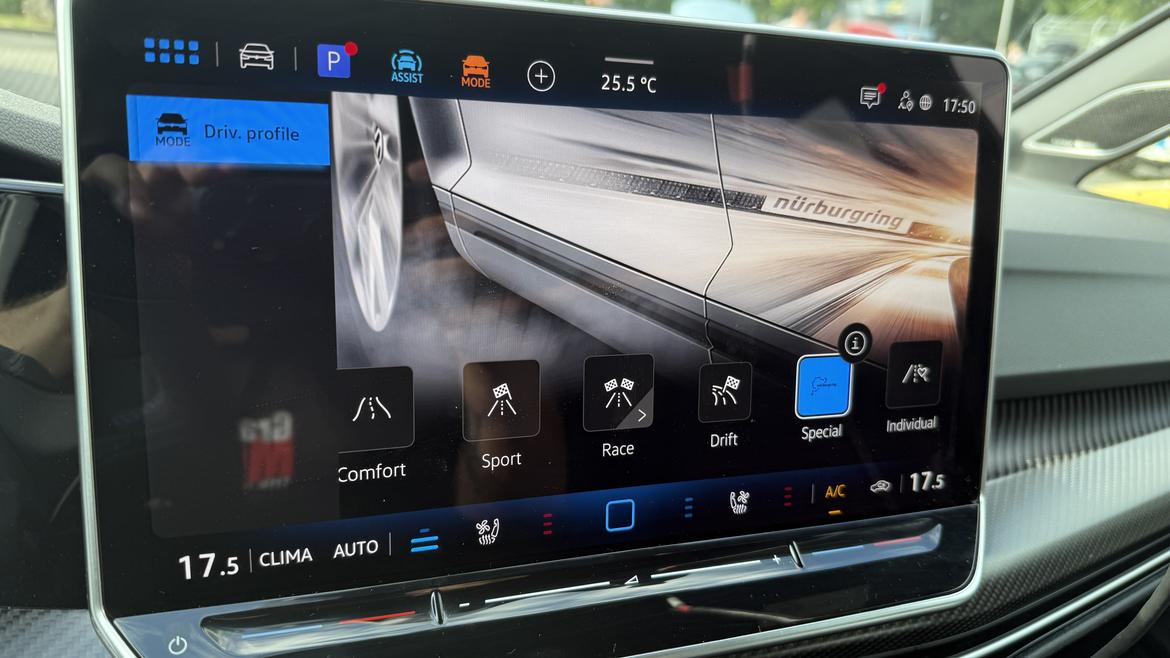
The setting that we had the most success with at the Nürburgring was, perhaps unsurprisingly, the Special setting, which is a subsetting of the Race setting, which is specifically optimized for the Nordschleife. There’s even a little Nürburgring logo on the selector button. U.S. versions of the Golf R will also have this setting available, and while we have to throw a flag for taunting on that one, the setting really is far more drivable on tracks with bumps or a substantial vertical load component than any of the other settings we tried. Just tape a picture of Sebring over it and call it a day, Americans.
Photograph by J.G. Pasterjak
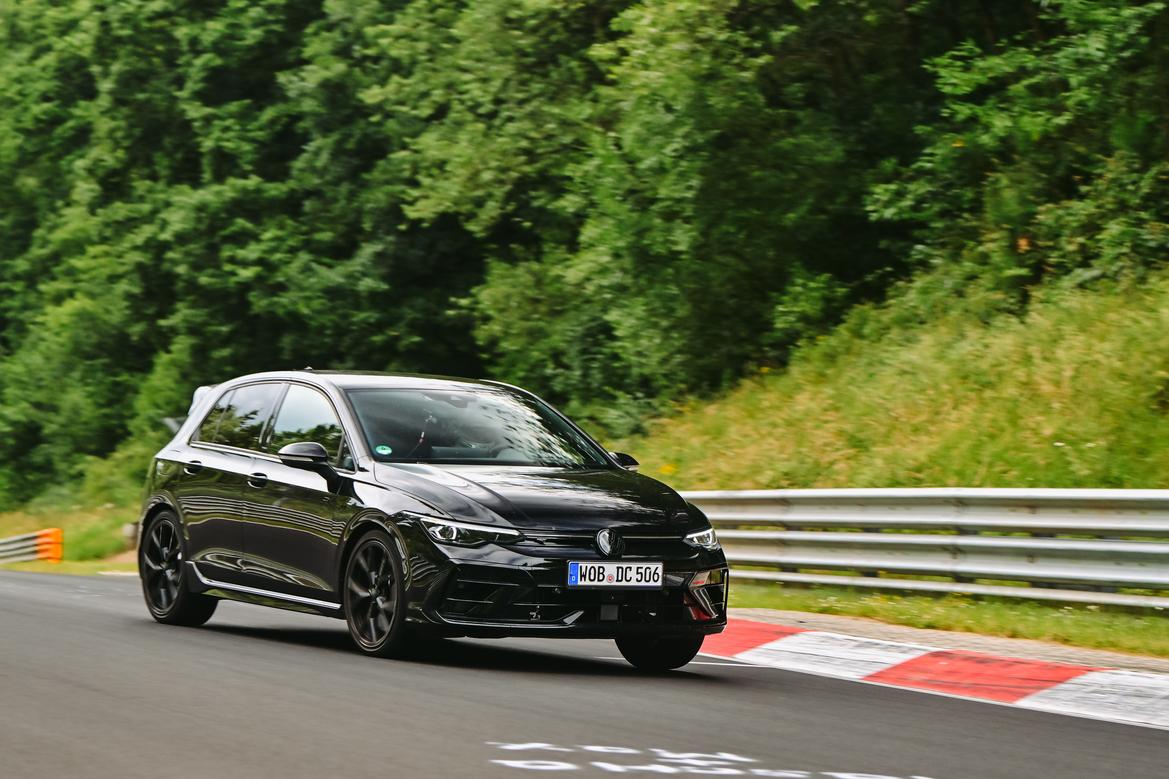
The Potenza Race rubber is also a big upgrade for the Golf R, giving it a lot of lateral grip once it’s loaded, even on the less-grippy-than-the-FIRM, newish Nürburgring asphalt.
But the Golf R still wants you to take your time developing those loads, and it really wants you to be delicate when trying to do more than one thing at a time. Because of this, we gave up on left-foot braking pretty quickly into the test. The Golf just wanted a gentler transition from throttle to brake, giving the chassis time to unload, neutralize, then reload in the other direction.
Likewise, trail braking took a deft foot and a little more initial brake release on turn-in than the car could tolerate back in Florida. Now, a lot of this is due to the track configuration, as all that vertical motion and irregularity needs to be accounted for. But overall, the Golf R doesn’t like to play toss and catch. It will do it, but you’ll also feel your momentum dropping as those sticky Bridgestones generate a lot of friction in directions other than the one you’re trying to go. But driven with some restraint, carving corners instead of pounding into them, and focusing on mid-corner and exit speed instead of entry speed, turns the Golf R into a very rewarding track companion.
It feels very much like a car that’s optimized for 99% operation but suffers a lot of momentum loss from 101% operation. To be fair, it is perfectly comfortable operating outside of the friction circle–we never really felt a single dodgy moment from the chassis or tires, even when we made some admittedly clumsy inputs–but that’s not going to be the fast way around this or any track with the Golf R. It’s far too classy for that kind of brutish action.
The VBox data backs up our seat-of-the-pants impressions in most cases as well. The Golf R definitely CAN do multiple things at once, and the data shows that. Look at the first tricky entry into the tight right-hand corner at the end of the Döttinger Höhe straight, where the car is braking at over 0.8g of longitudinal acceleration while cornering at nearly 0.6g of lateral load–it just doesn’t like to initiate those multiple vectors too quickly. But take your time building those loads and it will let you get away with a lot.
Typical max deceleration g we saw on the ’Ring was a bit lower than we were seeing at the FIRM, but there are a couple things going on here. First, there are very few threshold braking entries on the Nordschleife, and a good portion of the braking applications is of the 40-70% variety. Second, we were driving a media loaner car on the world’s scariest race track with hundreds of drivers of unknown skill and attention levels, so we naturally left ourselves a healthy safety margin.
Photograph by racetracker.de
Still, the braking initiation looks surprisingly good on the speed trace, with minimal drag or pitchover time evident. The data actually looks better than the car feels, which in hindsight kind of adds up as almost none of the braking initiations are done on level ground. Every brake zone is either uphill or downhill (so many downhill brake zones) that comparing feel from the very flat FIRM to the Nürburgring can be a bit deceiving.
Laterally, the Potenza Race rubber definitely gives the Golf R some tenacious hold on the relatively un-grippy German asphalt. We saw sustained loads of over 1.2g in the right-hand Aremberg corner, which is a nearly 180°, mid-speed, downhill right that does you no favors with any beneficial road camber. Once the car takes a set in these longer corners, it holds on tightly, without the tiptoes feeling of its American counterpart on a less grippy true street tire.
Transitionally, again, wonderful things come to those with patience. With calm hands, we saw transitional combos that easily shifted the car from 1.2g of cornering smoothly to 1.2g of cornering in the other direction. Looking at comparative data from multiple laps, we saw some evidence that when we tried to rush these transitions, we were slapped with a mid-transition slowdown, but with softer hands we were rewarded with excellent cornering in both directions.
So What Is the Golf R?
Photograph by J.G. Pasterjak
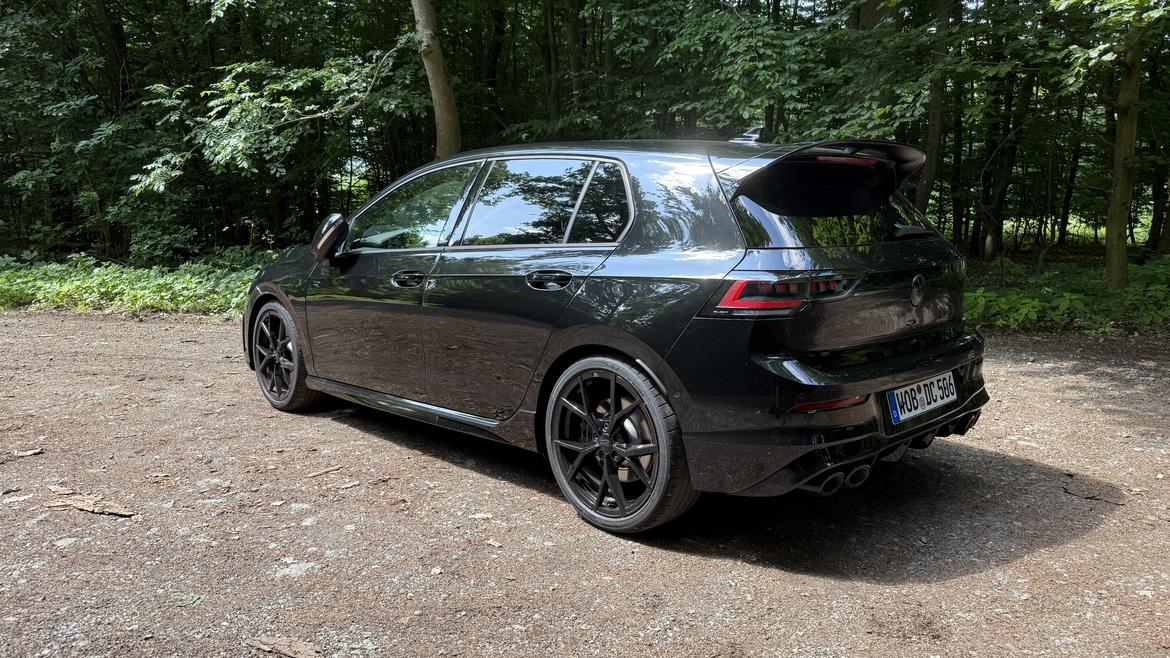
If you think of the Mk8.5 Golf R as a traditional GTI on steroids, you’re kind of missing the point. It’s just not the uber version of the flingable pocket rocket that many of us grew up with. What it is, though, is a fast, sophisticated and highly capable GT car that rewards a bit of restraint with some absolutely stellar capabilities.
Those massive, 14.1-inch-diameter front rotors with six-piston calipers hint at a lot of the story here. This is a car more at home crushing high-speed corners and tricky downhill braking zones than carving up cones in a parking lot. Give the Golf R a few extra hundredths of a second to do its thing and you’ll get to watch it shine in effortless, capable fashion.
What if it’s your only car? As a dual-duty car–especially if it’s the only one in your driveway–this nearly $50,000 VW does make a compelling argument for being the class of the class.